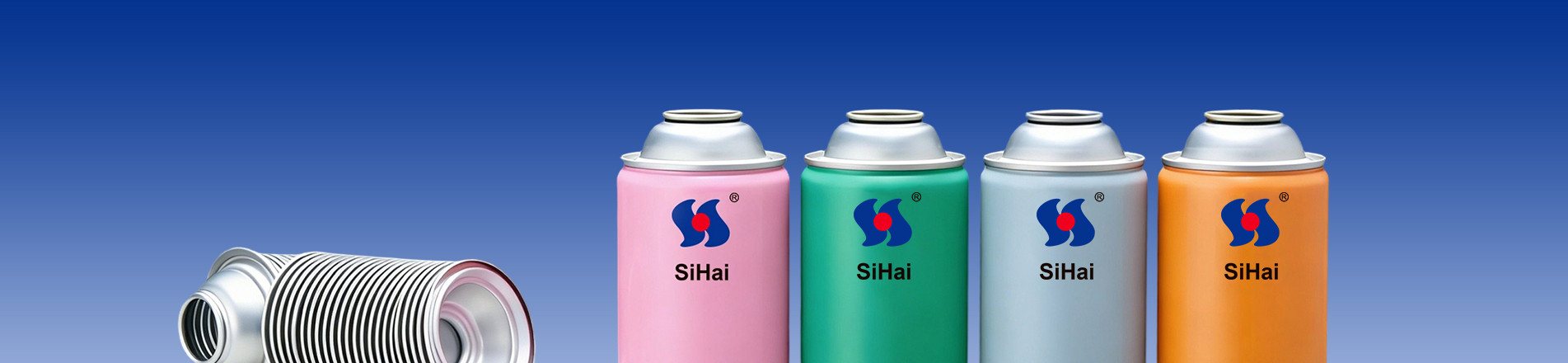
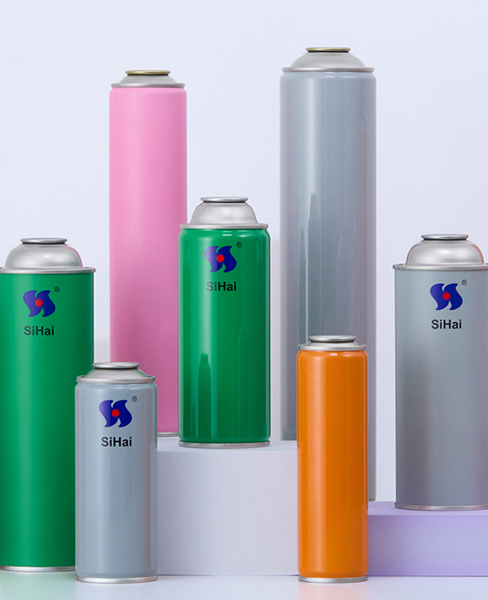
When choosing aerosol packaging, selecting the right material is an important decision for product manufacturers and brand owners. Aluminum and tinplate are two widely used materials for aerosol cans, each offering distinct advantages in terms of design flexibility, mechanical properties, production methods, and cost considerations.
But which is better for your product: aluminum aerosol cans or tinplate aerosol cans?
The answer depends on your product formulation, packaging requirements, production volume, budget, and brand positioning. Understanding the differences between these two options can help you make a more informed decision.
As a manufacturer offering both aluminum and tinplate aerosol cans, Sihai provides packaging solutions tailored to different product applications and customer requirements.
1. What Are Aluminum and Tinplate Aerosol Cans?
Before comparing their advantages, it is helpful to understand how these two types of aerosol cans are made.
Aluminum Aerosol Cans
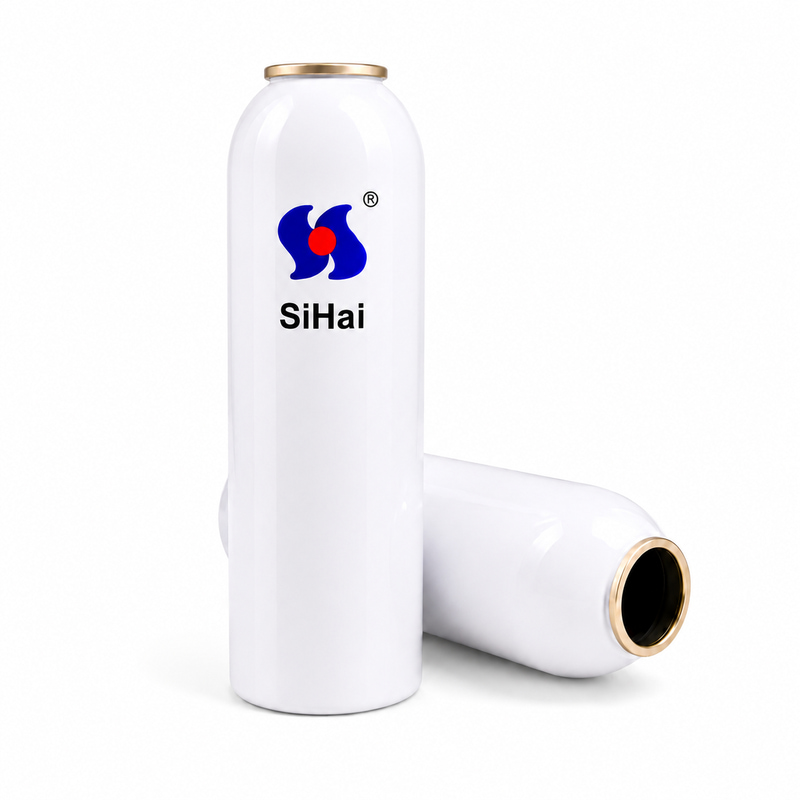
Aluminum aerosol cans are commonly manufactured from aluminum slugs through an impact-extrusion or drawing-and-ironing process, depending on the can design and production technology.
Many conventional aluminum aerosol cans feature a seamless, one-piece body, giving them a smooth exterior surface and a clean, premium appearance.
Aluminum is lightweight and naturally forms a protective oxide layer. However, the suitability of an aluminum can for a particular aerosol product still depends on the formulation, internal coating requirements, and compatibility testing.
Aluminum aerosol cans are commonly used for personal care products, cosmetics, pharmaceutical sprays, and other applications requiring a refined packaging appearance.
Tinplate Aerosol Cans
Tinplate aerosol cans are generally manufactured from steel sheets coated with a thin layer of tin. The steel substrate provides mechanical strength, while the tin coating helps protect the underlying steel from corrosion.
Three-piece tinplate aerosol cans typically consist of a cylindrical body, a top component, and a bottom component. The body is formed and welded, while the top and bottom components are attached during production.
Tinplate cans offer flexible printing options and can accommodate a wide range of dimensions and packaging designs. With appropriate internal coatings, they can also be used for many aerosol formulations that require additional protection against product-container interaction.
Common applications include spray paints, household insecticides, air fresheners, automotive care products, cleaning sprays, and various industrial aerosol products.
The suitability of either material should always be evaluated against the specific formulation, pressure requirements, and applicable packaging standards.
2. Aluminum vs. Tinplate Aerosol Cans: Key Differences
Although both materials are widely used in aerosol packaging, they differ in several important areas.
| Comparison Factor |
Aluminum Aerosol Cans |
Tinplate Aerosol Cans |
| Base Material |
Aluminum |
Tin-coated steel |
| Typical Construction |
Often seamless, one-piece construction |
Commonly three-piece construction |
| Weight |
Generally lightweight |
Generally heavier for comparable packaging formats |
| Surface Appearance |
Smooth surface, suitable for premium packaging |
Suitable for a wide range of printed designs and finishes |
| Printing Options |
Supports various decorative and printing techniques |
Supports high-quality CMYK and PANTONE printing |
| Mechanical Properties |
Performance depends on alloy, wall thickness, and can design |
Steel substrate provides strength; performance depends on design and specifications |
| Shape and Size |
Depends on available forming technology and tooling |
Depends on body-forming, component tooling, and production capabilities |
| Internal Protection |
Coatings may be required depending on the formulation |
Internal coatings may be required depending on the formulation |
| Typical Applications |
Personal care, cosmetics, pharmaceutical and specialty sprays |
Spray paints, household products, automotive care, and industrial sprays |
| Cost Considerations |
Influenced by aluminum prices, can design, and production volume |
Influenced by tinplate prices, material usage, production efficiency, and order volume |
Important: Neither material is universally better. Actual performance, cost, and suitability depend on the can design, dimensions, internal coating, product formulation, and manufacturing process.
Conclusion
Aluminum and tinplate aerosol cans each offer distinct advantages.
Aluminum cans are often selected for their lightweight construction, smooth appearance, and design possibilities. Tinplate cans offer a steel-based structure, flexible printing options, and a wide range of established applications across household, automotive, and industrial aerosol markets.Neither material is the right choice for every product. The best solution depends on the formulation, pressure requirements, packaging design, production volume, and overall project cost.
At Sihai, we offer both aluminum and tinplate aerosol can solutions to help customers identify packaging options that meet their product requirements.


 en
 ru
 es
 pt
 zh-CN