Three-piece aerosol can manufacturing depends on more than forming a metal cylinder and attaching two ends. The quality of the longitudinal weld, the precision of the end seams, and the inspection of the finished container all influence whether an aerosol can can safely contain a pressurized product. Even small variations in these processes may lead to leakage, deformation, coating damage, or inconsistent assembly.
For aerosol packaging buyers, understanding how welding, seaming, and quality control work together makes it easier to evaluate a manufacturer. Guangdong Sihai Iron-Printing and Tin-Making Co., Ltd. specializes in three-piece tinplate aerosol cans, with production capabilities covering tinplate processing, printing, component forming, can making, and inspection. This article explains the key manufacturing controls behind reliable three-piece aerosol cans.
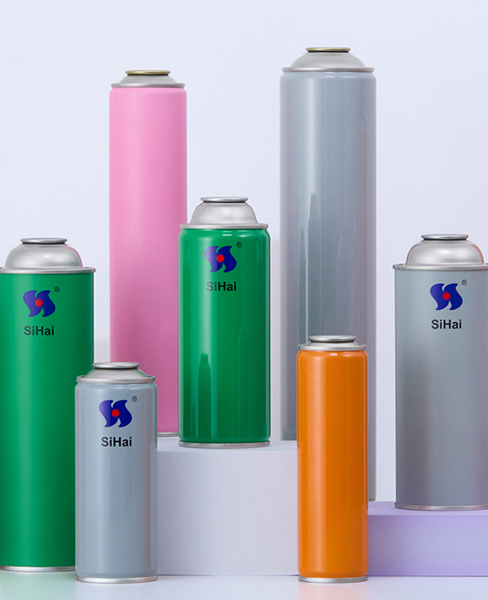
Three-piece tinplate aerosol can bodies and components.
What Is a Three-Piece Aerosol Can?
A three-piece aerosol can is made from three main metal components: a cylindrical body, a top cone, and a bottom dome. The body is formed from a flat tinplate sheet that is rolled into a cylinder and joined along its longitudinal edge by welding. The cone and dome are manufactured separately and then attached to the body through mechanical seaming operations.
This construction method is widely used for tinplate aerosol packaging because it offers flexibility in can diameter, body height, and product design. It also allows manufacturers to produce the body and end components through separate processes before bringing them together during final can assembly.
Sihai manufactures three-piece aerosol tin cans in multiple diameters, including 45mm, 52mm, 57mm, 60mm, 65mm, and 70mm. Both straight-wall and necked-in configurations are available within its product range. Buyers can explore the Sihai aerosol packaging range to review available can formats and applications.
How Welding Works in Three-Piece Aerosol Can Manufacturing
Welding is the process that connects the two longitudinal edges of the rolled tinplate body. After the sheet is cut and formed into a cylindrical shape, the edges are brought together and joined using a specialized can body welding machine. This creates a continuous side seam along the length of the can.
Unlike the end seams, which connect the cone and dome to the body, the side seam is a welded joint. It must maintain consistent bonding along the full body height because it forms part of the container wall that holds the pressurized contents.
Why Weld Seam Consistency Matters
A consistent weld helps maintain the structural integrity of the can body. If the joint contains incomplete bonding, irregular gaps, excessive heat damage, or other defects, the can may become vulnerable to leakage or local deformation under pressure.
Welding quality also affects the next manufacturing stages. An uneven or distorted body can create difficulties during necking, flanging, and end seaming. This is why manufacturers need to control the welding process before the body moves further down the production line.
Key Parameters That Influence Welding Quality
Edge alignment: The two edges of the rolled sheet need to meet in a controlled position. Poor alignment may create an irregular joint or inconsistent weld formation.
Welding current and pressure: The welding machine must operate within the process window established for the selected tinplate thickness and material condition. Incorrect settings can affect bonding quality and the appearance of the seam.
Material thickness and surface condition: Variations in tinplate thickness, coating condition, or surface contamination may influence welding stability. Material inspection before production helps reduce avoidable process variations.
Machine condition: Welding electrodes, contact components, and machine alignment require regular monitoring. Equipment maintenance helps keep the process stable during continuous production.
Aerosol can production equipment used in the manufacturing process.
What Is Seaming and Why Is It Critical?
Seaming is the mechanical operation used to attach the top cone and bottom dome to the cylindrical can body. Unlike the longitudinal body weld, seaming does not join two flat sheet edges through welding. Instead, the prepared edges of the components are mechanically interlocked and compressed to form a secure connection.
In aerosol can production, the top and bottom components must match the body diameter and the intended can design. The body edges are prepared through forming operations, and the components are positioned before the seaming equipment completes the joint.
A properly formed seam helps prevent leakage and supports the mechanical strength of the container. Since aerosol cans are designed to hold pressurized contents, end-seam quality is an essential part of packaging safety and product reliability.
Understanding the Double-Seaming Process
Double seaming generally involves two forming operations. During the first operation, the flange of the can end and the prepared edge of the body are rolled together to create an initial interlocking structure. During the second operation, the seam is compressed and tightened to achieve the specified final profile.
The exact seam geometry depends on the can design, component dimensions, and equipment setup. Important inspection characteristics may include seam thickness, seam width, countersink depth, overlap, and tightness. These measurements help determine whether the components have been joined consistently.
Buyers should also understand that the top cone and bottom dome are not interchangeable components. Their shapes, dimensions, and functional requirements are different. Sihai supplies matched aerosol can cones and domes for different three-piece can sizes, with options for internal coatings and surface finishes.
Common Welding and Seaming Defects to Watch For
Welding and seaming defects do not always appear as obvious damage on the outside of a finished can. Some problems require dimensional inspection, specialized equipment, or performance testing to identify. Understanding typical defect types helps manufacturers establish appropriate process controls.
Potential Defect
Possible Cause
Quality Concern
Incomplete weld bonding
Incorrect welding settings or poor edge contact
Weak side seam and possible leakage
Weld seam irregularity
Misalignment or unstable machine operation
Inconsistent body geometry
Excessive seam thickness
Incorrect seaming roller adjustment
Poor component fit or dimensional nonconformity
Insufficient seam tightness
Incorrect setup or component mismatch
Potential leakage under operating conditions
Coating damage near joints
Forming stress or inadequate protection
Increased corrosion risk
These are general defect categories rather than a statement that every issue occurs in Sihai production. Actual root-cause analysis should consider the material, equipment, process settings, component design, and inspection results together.
Quality Control at Different Manufacturing Stages
Quality control for three-piece aerosol cans should not be limited to the final inspection area. A reliable system checks the materials, monitors critical operations, and verifies the finished container against the agreed product specifications.
Incoming Tinplate Inspection
Before production begins, tinplate should be checked for thickness, dimensions, surface condition, and other requirements specified for the order. Material inconsistencies can affect printing, forming, welding, and the final appearance of the can.
In-Process Welding and Forming Inspection
During body production, manufacturers should monitor the consistency of the longitudinal weld, body roundness, and relevant forming dimensions. The inspection frequency and acceptance criteria should be established according to the production process and product specification.
Seam Dimension and Appearance Inspection
End seams should be checked for uniform appearance and specified dimensions. Sectional seam inspection can help evaluate internal seam characteristics that cannot be confirmed through external visual checks alone. This is particularly important when verifying the relationship between the body flange and the formed end component.
Leak and Pressure-Related Testing
Aerosol cans must be suitable for their intended pressure conditions. Depending on the product specification and applicable requirements, inspection may include leak detection, pressure resistance evaluation, and other relevant performance tests. A can that looks acceptable externally should not be considered qualified without the required testing.
Leak testing is particularly important because a small defect in the side weld or end seam may compromise the container's ability to retain its contents. Manufacturers should use defined test methods, documented acceptance criteria, and appropriate sampling or inspection plans.
Coating and Corrosion Protection Checks
Protective coatings help prevent unwanted interaction between the metal container and its contents. Inspection should consider coating coverage, adhesion, and potential damage around formed or joined areas. The internal coating must also be suitable for the actual product formulation.
Production equipment for aerosol can manufacturing.
How Automation Supports Consistent Aerosol Can Quality
Automated equipment helps manufacturers maintain repeatable production conditions and reduce variation caused by manual handling. In high-volume aerosol can manufacturing, stable equipment operation is important for maintaining consistent body dimensions, weld formation, and production efficiency.
Sihai reports that its aerosol can production facilities include 10 can-making lines equipped with SOUDRONIC welding machines, together with air inspection equipment and infrared automatic inspection systems. These capabilities support production monitoring and the identification of potential defects during manufacturing.
Automation does not replace quality management or technical inspection. Equipment settings, maintenance, operator supervision, and verification procedures remain necessary. A well-managed production line combines automated monitoring with defined inspection standards and corrective action when abnormalities are identified.
Choosing a Three-Piece Aerosol Can Manufacturer
For packaging buyers, selecting a manufacturer should involve more than comparing unit prices. The supplier needs to understand the required can dimensions, product application, pressure conditions, printing design, and applicable quality requirements.
Manufacturing equipment: Ask whether the factory operates dedicated aerosol can production lines and suitable welding and inspection equipment.
Component compatibility: Confirm that the body, cone, dome, valve, and cap are designed to work together. The aerosol valve and accessory range should be considered as part of the complete packaging specification.
Quality documentation: Review the supplier's quality management system, applicable product standards, inspection records, and test requirements.
Customization capability: Check whether the manufacturer can support the required diameter, height, can structure, printing artwork, and internal or external coating.
Sample evaluation: Before mass production, review samples and confirm that the dimensions, appearance, sealing performance, and other project-specific requirements are acceptable.
Sihai has operated in the metal packaging industry since 1998 and integrates tinplate cutting, printing, aerosol can production, and related component manufacturing. The company states that its aerosol packaging is managed under an ISO 9001:2015 quality system and manufactured in accordance with GB 13042-2008. Buyers can review the Sihai three-piece aerosol tin can product information when evaluating specifications for a new project.
What Information Should Buyers Include in an Aerosol Can Inquiry?
Clear technical information helps a manufacturer assess production feasibility and recommend a suitable can structure. Before requesting a quotation, buyers should prepare the following details where available:
Can diameter and required body height.
Can structure: necked-in or straight-wall.
Tinplate thickness or required material specification.
Product application and filling medium.
Required pressure and testing specifications.
Internal coating and corrosion protection requirements.
Cone, dome, valve, and cap requirements.
Printing artwork, colors, and surface finish.
Order quantity, packaging method, and delivery destination.
If the buyer has an existing sample, technical drawing, or product specification, sharing it with the manufacturer can make the evaluation more accurate. Any unconfirmed pressure, testing, or compliance requirements should be clarified before production begins.
Three-Piece Aerosol Can Manufacturing by Sihai
Reliable three-piece aerosol can production requires coordinated control of body welding, end seaming, component dimensions, and finished-can inspection. These operations are closely connected: a stable weld supports accurate forming, correctly matched components support consistent seaming, and effective inspection helps identify problems before products are shipped.
Guangdong Sihai Iron-Printing and Tin-Making Co., Ltd. provides tinplate aerosol can manufacturing and related packaging components for customers across different application sectors. With dedicated production equipment, in-house component capabilities, and an established quality management system, Sihai supports customers looking for customized aerosol tin can packaging.
If you are sourcing three-piece aerosol cans for household, personal care, automotive, or industrial products, contact Sihai with your required dimensions, application, and technical specifications to discuss a suitable packaging solution.
FAQ About Three-Piece Aerosol Can Manufacturing
What are the three components of a three-piece aerosol can?
A three-piece aerosol can consists of a cylindrical body, a top cone, and a bottom dome. The body is welded along its longitudinal edge, while the cone and dome are attached through mechanical seaming.
What is the difference between welding and seaming in aerosol can production?
Welding joins the two longitudinal edges of the rolled tinplate body to create a cylinder. Seaming mechanically joins the top cone and bottom dome to the body, forming the end closures of the can.
Why is weld seam quality important for aerosol cans?
The longitudinal weld is part of the can body wall. Incomplete bonding, irregular weld formation, or other defects may weaken the joint and increase the risk of leakage or deformation under pressure.
How is the seam of a three-piece aerosol can inspected?
Seam inspection may include visual checks, dimensional measurements, and sectional examination. Typical characteristics include seam width, thickness, overlap, countersink depth, and tightness. The applicable inspection method depends on the product specification.
What quality tests are important for three-piece aerosol cans?
Important checks may include tinplate inspection, weld inspection, seam dimension verification, leak detection, pressure-related testing, and coating evaluation. The required tests should follow the applicable standards and customer specifications.
What welding and inspection equipment does Sihai use?
Sihai states that its aerosol can production facilities include 10 can-making lines equipped with SOUDRONIC welding machines, as well as air inspection equipment and infrared automatic inspection systems.
Which standards does Sihai follow for aerosol can manufacturing?
Sihai states that its aerosol packaging is manufactured in accordance with GB 13042-2008 and managed under an ISO 9001:2015 quality management system. Buyers should confirm any additional destination-market or project-specific requirements.
{
"@context": "https://schema.org",
"@type": "FAQPage",
"mainEntity": [
{
"@type": "Question",
"name": "What are the three components of a three-piece aerosol can?",
"acceptedAnswer": {
"@type": "Answer",
"text": "A three-piece aerosol can consists of a cylindrical body, a top cone, and a bottom dome. The body is welded along its longitudinal edge, while the cone and dome are attached through mechanical seaming."
}
},
{
"@type": "Question",
"name": "What is the difference between welding and seaming in aerosol can production?",
"acceptedAnswer": {
"@type": "Answer",
"text": "Welding joins the two longitudinal edges of the rolled tinplate body to create a cylinder. Seaming mechanically joins the top cone and bottom dome to the body, forming the end closures of the can."
}
},
{
"@type": "Question",
"name": "Why is weld seam quality important for aerosol cans?",
"acceptedAnswer": {
"@type": "Answer",
"text": "The longitudinal weld is part of the can body wall. Incomplete bonding, irregular weld formation, or other defects may weaken the joint and increase the risk of leakage or deformation under pressure."
}
},
{
"@type": "Question",
"name": "How is the seam of a three-piece aerosol can inspected?",
"acceptedAnswer": {
"@type": "Answer",
"text": "Seam inspection may include visual checks, dimensional measurements, and sectional examination. Typical characteristics include seam width, thickness, overlap, countersink depth, and tightness. The applicable inspection method depends on the product specification."
}
},
{
"@type": "Question",
"name": "What quality tests are important for three-piece aerosol cans?",
"acceptedAnswer": {
"@type": "Answer",
"text": "Important checks may include tinplate inspection, weld inspection, seam dimension verification, leak detection, pressure-related testing, and coating evaluation. The required tests should follow the applicable standards and customer specifications."
}
},
{
"@type": "Question",
"name": "What welding and inspection equipment does Sihai use?",
"acceptedAnswer": {
"@type": "Answer",
"text": "Sihai states that its aerosol can production facilities include 10 can-making lines equipped with SOUDRONIC welding machines, as well as air inspection equipment and infrared automatic inspection systems."
}
},
{
"@type": "Question",
"name": "Which standards does Sihai follow for aerosol can manufacturing?",
"acceptedAnswer": {
"@type": "Answer",
"text": "Sihai states that its aerosol packaging is manufactured in accordance with GB 13042-2008 and managed under an ISO 9001:2015 quality management system. Buyers should confirm any additional destination-market or project-specific requirements."
}
}
]
}

 en
 ru
 es
 pt
 zh-CN