Definition:
Aerosol means that the drug-containing, emulsion or suspension is packaged together with a suitable propellant in a pressure-resistant container with a special valve system. When in use, the content of the propellant is sprayed as a mist. Inhaled in the lungs or sprayed directly to the mucosa, skin and space disinfection preparations.
Classification:
Decentralized system
Solution aerosol: The solid or liquid drug is dissolved in the propellant to form a uniform solution. After the spray, the propellant volatilizes, and the drug reaches the action site in the state of solid or liquid particles.
Suspension aerosol: The solid drug is dispersed in the propellant in the form of particles to form a suspension. After the spray, the propellant volatilizes and the drug reaches the action site in the state of solid particles. Such aerosols are also called powder aerosols.
Emulsion-type aerosol: liquid drug or drug solution and propellant (insoluble liquid) form W/O or O/W Type emulsion. The O/W type is ejected in the form of foam as the internal phase propellant vaporizes during injection, and the W/O type follows the external phase propellant vaporizes to form a liquid stream.
By route of administration:
Inhalation aerosol: refers to medicinal solution, suspension or emulsion, together with suitable propellant or liquefied mixed propellant, sealed in pressure-resistant container with fixed valve system and certain pressure. The pressure of the propellant ejects the contents as a mist and inhales the preparation deposited in the lungs by the mouth. It is also commonly called pressure metered dose inhaler. The pressing valve can quantitatively release the active substance, the medicine is dispersed into particles or mist droplets, and inhaled through the respiratory tract to exert local or systemic therapeutic effects.
Non-inhalation aerosol: such as aerosol for skin and mucosa. Aerosols for skin are mainly used to protect wounds, clean and disinfect, local anesthesia and hemostasis. Nasal aerosol refers to a formulation deposited in the nasal cavity by nasal inhalation. Aerosols for nasal mucosa are used for the administration of some protein and peptide drugs and can exert systemic effects. Aerosols for vaginal mucosa are usually O/W foam aerosols. They are mainly used to treat vaginitis caused by microorganisms and parasites, and can also be used for birth control
External aerosol: refers to the aerosol used for skin and space disinfection
Application:
Aerosols can be used for local or systemic treatment. Local therapeutic effects such as: Yansukang aerosol for the treatment of pharyngitis, compound naphazoline spray for the treatment of rhinitis, compound metronidazole aerosol for the treatment of vaginitis, and lidocaine aerosol for local anesthesia and pain relief; Systemic therapeutic effects such as: glucocorticoid budesonide aerosol, antianginal nitroglycerin aerosol, antipyretic and analgesic indomethacin aerosol, etc..
More and more companies are resuming to work recently, we must do protection during working, how we can disinfect by saving time?
Alcohol is a natural astringent that can help to tighten pores and leave your skin feeling refreshed. Apply after cleansing your skin and before applying moisturizer or sunscreen.
Using 75% alcohol is more friendly for using on your skin, also an effective way to prevent coronavirus, the elimination rate reach about 99.99%. Using alcohol spray is quick dry spray, short lasting duration, quick effect, and small skin damage, which is more convenience then traditional alcohol .
Alcohol spray can be used in office, factory, school, house...
Pls note alcohol spray should be stored in a cool place, and must keep away from fire and children.
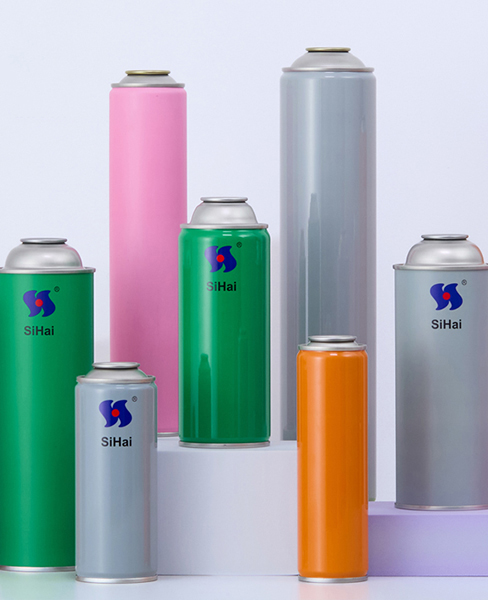
Our products with popular sizes for alcohol spray aerosol tin can for diameter 45/52/65mm for alcohol spray.
Portable size: diameter 45mm, height: 85~240mm
Medium size: diameter 52mm, height: 100~240mm
Larger size: diameter 65mm, height: 100~300mm
Welcome to send your inquiry if you are interested in our products.
As we all known, aerosol is a colloid of fine solid particles or liquid droplets, in the air or another gas. Aerosols can be natural or artificial.
Frederick G. Donnan presumably first used the term aerosol during World War I to describe an aero-solution, clouds of microscopic particles in the air.
The concept of an aerosol originated as early as 1790 when self-pressurized carbonated beverages were introduced in France. In 1837, a man called Perpigna invented a soda siphon incorporating a valve. Metal spray cans were being tested as early as 1862. They were constructed from heavy steel and were too bulky to be commercially successful.
In 1899, inventors Helbling and Pertsch patented aerosols pressurized using methyl and ethyl chloride as propellants.
On November 23, 1927, Norwegian engineer Erik Rotheim (also spelled Eric Rotheim) patented the first aerosol can and valve that could hold and dispense products and propellant systems. This was the forerunner of the modern aerosol can and valve. In 1998, the Norwegian post office issued a stamp celebrating the Norwegian invention of the spray can.
During World War II, the U.S. government funded research into a portable way for servicemen to spray malaria-carrying bugs. Department of Agriculture researchers, Lyle Goodhue and William Sullivan, developed a small aerosol can be pressurized by a liquefied gas (a fluorocarbon) in 1943. It was their design that made products like hair spray possible, along with the work of another inventor Robert Abplanalp.
In 1949, 27-year-old Robert H. Abplanalp’s invention of a crimp on valve enabled liquids to be sprayed from a can under the pressure of an inert gas. Spray cans, mainly containing insecticides, were available to the public in 1947 as a result of their use by U.S. soldiers for preventing insect-borne diseases. Abplanalp’s invention made of lightweight aluminum made the cans a cheap and practical way to dispense liquids foams, powders, and creams. In 1953, Robert Abplanalp patented his crimp-on valve "for dispensing gases under pressure." His Precision Valve Corporation was soon earning over $100 million manufacturing one billion aerosol cans annually in the United States and one-half billion in 10 other countries.
In the mid-1970s, concern over the use of fluorocarbons adversely affecting the ozone layer drove Abplanalp back into the lab for a solution. Substituting water-soluble hydrocarbons for the damaging fluorocarbons created an environmentally friendly aerosol can that did not harm the environment. This put the manufacture of the aerosol spray can products into high gear.
Robert Abplanalp invented both the first clog-free valve for spray cans and the "Aquasol" or pump spray, which used water-soluble hydrocarbons as the propellant source.
We, Guangdong Sihai Aerosol, specialized in manufacturing aerosol tin cans since from 1988.

 en
en ru
ru es
es pt
pt zh-CN
zh-CN