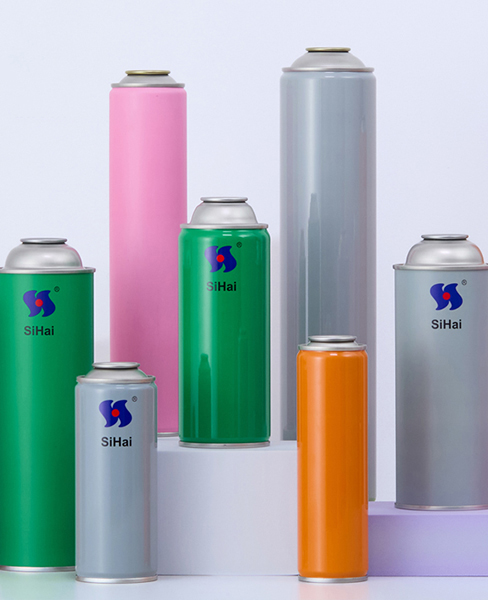
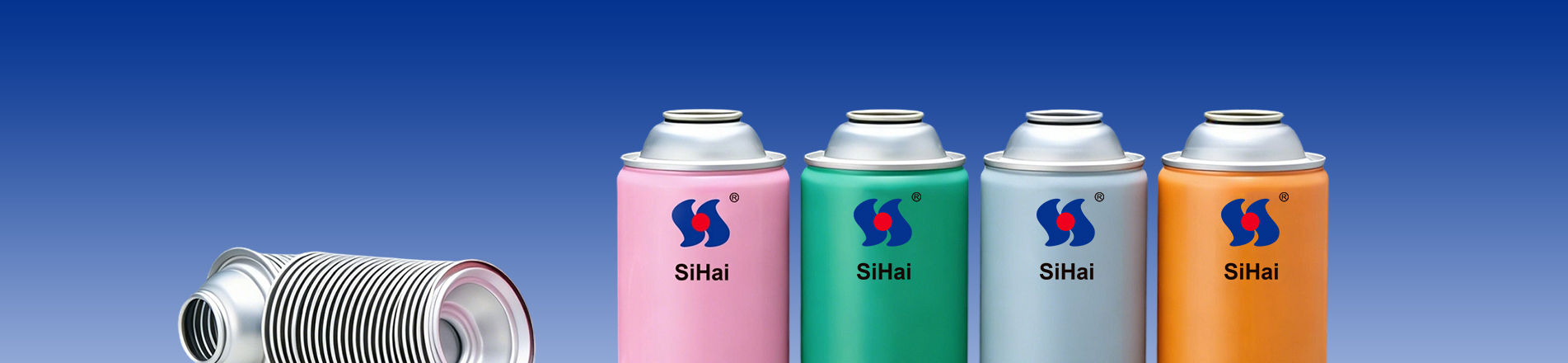
An empty aerosol tin can is make by tinplate, it’s sheet steel covered with a thin layer of tin. As empty aerosol tin cans can be used for many kind of products, such as air freshener, hair spray, shaving foam, deodorant, spray paint, snow spray, car care products, butane gas..., but the formulas for different products are not the same.
Especially some chemical compositions are easy to react with metal material, also it relates to the material, percentage, concentration, temperature and many factors. And some products need inner lacquer to keep the fragrant longer or protect the products better, we require customers to test samples before placing orders if you are using a new formula. So we suggest to test our aerosol spray tinplate cans with your formula before you proceeding mass production, to check if it can be match our aerosol tin can and the aerosol valve..., you can adjust your formula if it’s not compatible with the aerosol tin can or valve, it will be reduce unnecessary trouble or loss before mass production.
We Guangdong Sihai is a professional aerosol tin can factory over 22 years, our products including diameter 45/52/57/60/65/70mm, height from 85~300mm, welcome contact us know the detail sizes of your products, we can send you the samples if needed.
As we all known, aerosol is a colloid of fine solid particles or liquid droplets, in the air or another gas. Aerosols can be natural or artificial.
Frederick G. Donnan presumably first used the term aerosol during World War I to describe an aero-solution, clouds of microscopic particles in the air.
The concept of an aerosol originated as early as 1790 when self-pressurized carbonated beverages were introduced in France. In 1837, a man called Perpigna invented a soda siphon incorporating a valve. Metal spray cans were being tested as early as 1862. They were constructed from heavy steel and were too bulky to be commercially successful.
In 1899, inventors Helbling and Pertsch patented aerosols pressurized using methyl and ethyl chloride as propellants.
On November 23, 1927, Norwegian engineer Erik Rotheim (also spelled Eric Rotheim) patented the first aerosol can and valve that could hold and dispense products and propellant systems. This was the forerunner of the modern aerosol can and valve. In 1998, the Norwegian post office issued a stamp celebrating the Norwegian invention of the spray can.
During World War II, the U.S. government funded research into a portable way for servicemen to spray malaria-carrying bugs. Department of Agriculture researchers, Lyle Goodhue and William Sullivan, developed a small aerosol can be pressurized by a liquefied gas (a fluorocarbon) in 1943. It was their design that made products like hair spray possible, along with the work of another inventor Robert Abplanalp.
In 1949, 27-year-old Robert H. Abplanalp’s invention of a crimp on valve enabled liquids to be sprayed from a can under the pressure of an inert gas. Spray cans, mainly containing insecticides, were available to the public in 1947 as a result of their use by U.S. soldiers for preventing insect-borne diseases. Abplanalp’s invention made of lightweight aluminum made the cans a cheap and practical way to dispense liquids foams, powders, and creams. In 1953, Robert Abplanalp patented his crimp-on valve "for dispensing gases under pressure." His Precision Valve Corporation was soon earning over $100 million manufacturing one billion aerosol cans annually in the United States and one-half billion in 10 other countries.
In the mid-1970s, concern over the use of fluorocarbons adversely affecting the ozone layer drove Abplanalp back into the lab for a solution. Substituting water-soluble hydrocarbons for the damaging fluorocarbons created an environmentally friendly aerosol can that did not harm the environment. This put the manufacture of the aerosol spray can products into high gear.
Robert Abplanalp invented both the first clog-free valve for spray cans and the "Aquasol" or pump spray, which used water-soluble hydrocarbons as the propellant source.
We, Guangdong Sihai Aerosol, specialized in manufacturing aerosol tin cans since from 1988.

 en
en ru
ru es
es pt
pt zh-CN
zh-CN