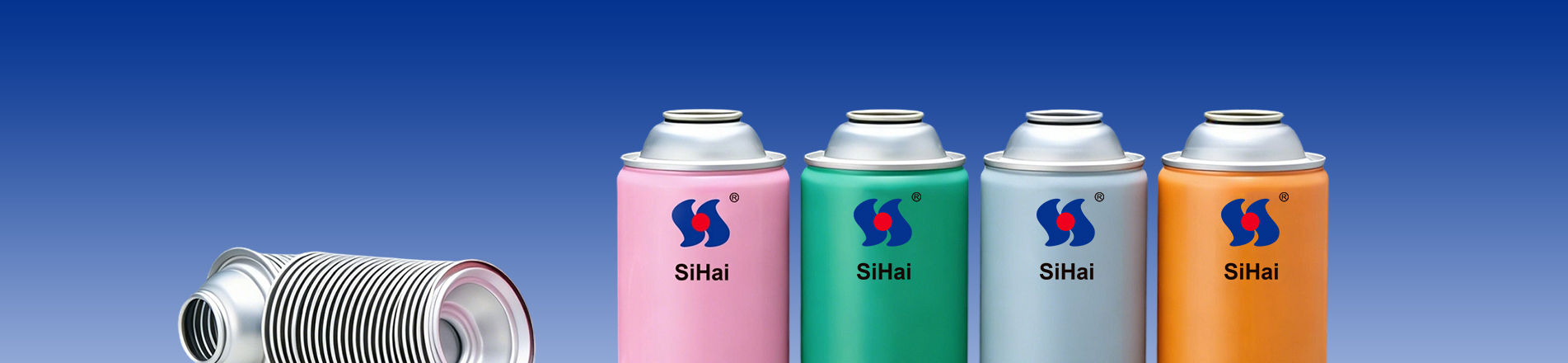
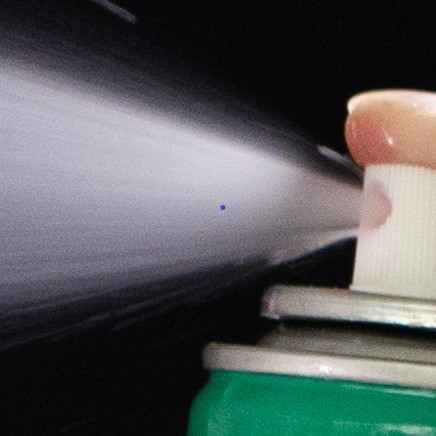
We always prioritize both quality and safety in aerosol packaging. Aerosol cans are widely used in industries for products such as paints, lubricants, cleaners, adhesives, and personal care items. While convenient, they require proper handling to prevent accidents.
Potential Hazards of Aerosol Cans
Aerosol cans contain compressed gas propellants, making them potentially hazardous if misused. Key risks include:
Fire & Explosion – Flammable contents (like solvents or propellants) can ignite if exposed to heat, sparks, or open flames. When atomized, these substances become highly combustible.
Pressure-Related Injuries – If punctured, crushed, or overheated, aerosol cans may rupture violently, causing injuries from flying debris or chemical exposure.
Toxic Exposure – Some aerosols contain harmful chemicals that can cause respiratory issues or skin irritation if inhaled or sprayed directly on the body.
Environmental & Disposal Risks – Improper disposal (e.g., in landfills or incinerators) can lead to leaks, pollution, or compaction hazards.
Best Practices for Safe Aerosol Can Use
To minimize risks, follow these safety guidelines:
1. Proper Storage
Store aerosol cans in a cool, dry, well-ventilated area, away from direct sunlight, heat sources, and open flames.
Keep them upright to prevent leaks or accidental discharge.
Avoid stacking too high to prevent tipping or crushing.
2. Safe Handling & Usage
Do not puncture, crush, or incinerate aerosol cans—even empty ones may retain pressure.
Use in well-ventilated areas to avoid inhaling fumes.
Wear protective gear (gloves, goggles, masks) when handling hazardous aerosols.
Never spray toward the face, skin, or ignition sources.
3. Disposal & Recycling
Follow local regulations for aerosol can disposal.
Empty Tinplate cans can often be recycled with metals—check with your waste management provider.
Never dispose of aerosol cans in regular trash if they still contain product.
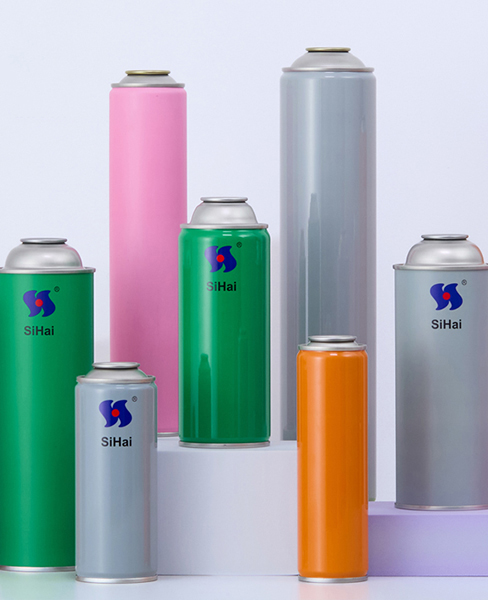
An empty aerosol tin can is make by tinplate, it’s sheet steel covered with a thin layer of tin. As empty aerosol tin cans can be used for many kind of products, such as air freshener, hair spray, shaving foam, deodorant, spray paint, snow spray, car care products, butane gas..., but the formulas for different products are not the same.
Especially some chemical compositions are easy to react with metal material, also it relates to the material, percentage, concentration, temperature and many factors. And some products need inner lacquer to keep the fragrant longer or protect the products better, we require customers to test samples before placing orders if you are using a new formula. So we suggest to test our aerosol spray tinplate cans with your formula before you proceeding mass production, to check if it can be match our aerosol tin can and the aerosol valve..., you can adjust your formula if it’s not compatible with the aerosol tin can or valve, it will be reduce unnecessary trouble or loss before mass production.
We Guangdong Sihai is a professional aerosol tin can factory over 22 years, our products including diameter 45/52/57/60/65/70mm, height from 85~300mm, welcome contact us know the detail sizes of your products, we can send you the samples if needed.
At present market, from the perspective of materials, there are three main types of aerosol cans: aluminum can and tinplate can. But how to choose the proper can to your products? It is important for all of purchaser and buyer.
The first two questions will determine if the product is a standard aerosol or a barrier package product.
Will the propellant be part of the products formulation or will the propellant need to be kept separated from the product?
If the propellant is mixed in with the product such as in whipped cream and pan spray, then a standard aerosol product is being filled. If the propellant and product are kept in separate chambers within the can, such as in aerosol cheese, then a barrier package is required.
What is the product’s viscosity?
If the product has a viscosity near water, it can be packaged as a standard aerosol. If the product’s viscosity is too high and will not flow freely enough to continuously feed the valve then a barrier package is used. A test would be to shake the can and see if the product flows freely. Products that are generally thicker than gels, like save cream, most likely would require a barrier package.
To solve this problem, we have to know the different types aerosol cans.
3-Piece Steel, straiht-wall: A three-piece steel can is
constructed from a body that starts as a flat sheet, then rolled and welded into a
tube. This forms a seam that runs the vertical length of the can’s body. The top
dome and bottom are then seamed onto the body of the can. The standard style
can has chimes, the point at which the top dome and bottom are seamed to the
can body, outside the diameter of the can’s body.
3-Piece Steel, Necked –In: The 3-Piece Steel, Necked-In can is
similar to the standard 3-piece can above but, the chimes are slightly smaller
in diameter then the can’s body. In this case, if an overcap is used that has the
Page 7 of 32
same diameter as the can’s body you will end up with a smooth transition
between the can and the overcap. The welded seam on 3-Piece Steel can, which runs the length of the can’s
body, poses a potential problem for some products. The can manufacture has
ways to add protection to the seam. You should discuss your product with
them and ask them if it will affect the integrity of the seam.
An aluminum can is formed from a single slug of
aluminum. The slug is impacted with high force by a ram slightly smaller in
Page 8 of 32
diameter than the cylinder the slug is in. The impact force, forces the
aluminum up between the cylinder wall and ram forming an open topped tube.
The tube then goes through other process such as washing, applying the inside
liner, printing and more before it comes to the necking stations. Through a
number of stations the top of the tube is formed into the dome shape of the
can. The valve opening and bead are also formed at this time.
The bead is important because this is where the valve will be attached.
Because of the forming process, the bead has a condition called eyelashing
(see Figure 5). Eyelashing occurs as the top of the tube is reduced in diameter
to form the dome and valve opening. As a result of the reduction in diameter
of the aluminum small wrinkles are formed. These wrinkles on the bead will
play an important part in the valve selection for your product. A valve with a
lathe cut gasket may be required to obtain a good seal between the can and
valve. There is a process called machining which removes the eyelashing.
You will need to speak with your can supplier if this is required.
The common usage of 75% ethanol disinfectant is to use it to wipe or soak items for sterilization.
The correct methods are:
Dumping method: Take an appropriate amount of 75% ethanol and apply it evenly to the hands, skin or objects to dry. This method saves time and effort, but it is not easy to control the amount. When the amount is small, it may not be disinfected. When the amount is large, it is easy to cause unnecessary waste.
Wiping method: Infiltrate 75% alcohol with a sterile cotton swab or cotton ball, and then wipe and disinfect the cotton swab or cotton ball on the skin or object surface that needs to be disinfected. At present, there are ready-to-use alcohol disinfected cotton tablets on the market, which can be used directly. This method has better control of the dosage, but it requires the use of sterile cotton swabs, cotton balls or cotton pads, and has a limited wiping area. It can be used to sterilize the surface of small objects such as switches, door handles, and mobile phones.
Spraying or spraying method: Use a watering can to fill 75% ethanol disinfection solution, and use the method of pressing to disinfect the surface to be disinfected. This method is suitable for hand disinfection, spraying and disinfecting the hands, skin and various objects is convenient and quick. Wipe as much as possible with alcohol, and use less spra, especially have to be keep away from fire.
How you use 75% alcohol can choose the appropriate method according to your actual situation. However, it should be noted that 75% ethanol is flammable and explosive. Avoid contact with open flames and keep away from fire sources during storage or use to avoid damage to life or property.
How to store alcohol
Alcohol should be stored in glass bottles to prevent falling and damage.
The alcohol left in the home should not be placed in the heat source environment such as the balcony, stove, etc., or near the power socket, the wall, the corner of the table, etc. to prevent accidental falling. Can be stored in a cool place, such as a cabinet, protected from light. Keep the cover tight to prevent evaporation.
For families with young children, alcohol should be kept out of the reach of children. For older children, parents can explain the characteristics of alcohol to children, educate children to treat alcohol safely, and not to light it with fire.
Alcohol burns accidentally, how to extinguish it?
Fire fighting methods:
Can use dry powder fire extinguisher, carbon dioxide fire extinguisher, etc.
Small areas of fire can also be covered with wet towels and wet clothing
Can also be covered with sand outdoors
It is strictly forbidden to use water or dry towels or clothing for flapping. Otherwise, the fire will spread largely if it is ignited by alcohol.
Attn: Any order of disinfection use aerosol can, we'll arrange it preferentially.