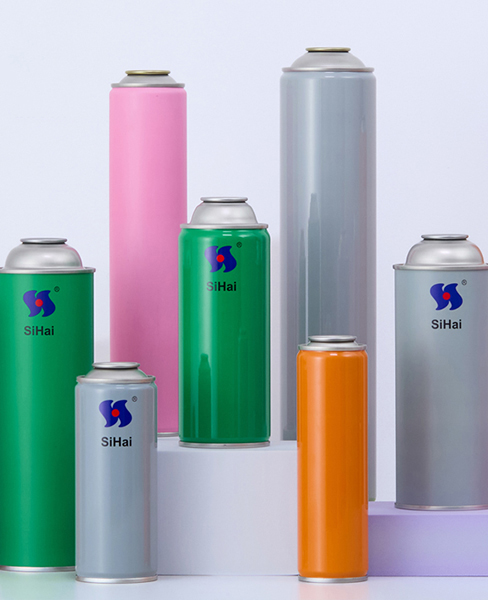
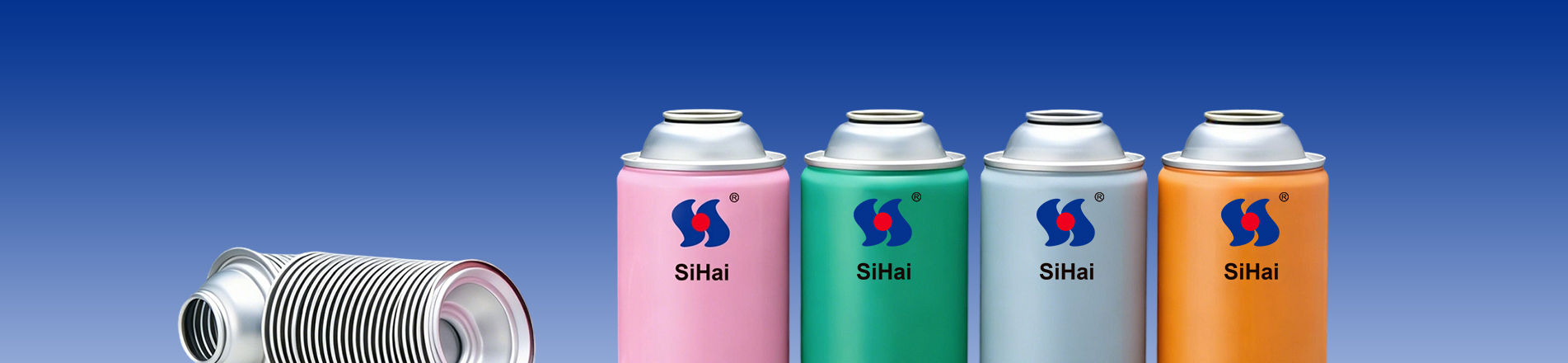
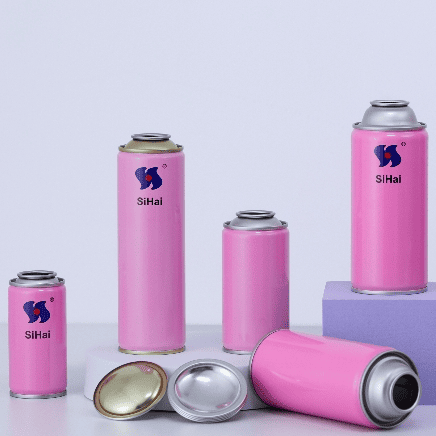
As a trusted manufacturer of empty three-piece aerosol cans, we understand the critical role these containers play across industries. Unlike two-piece cans, three-piece aerosol cans are constructed from three separate components: the body, the cone (top), and the dome (bottom). These parts are welded and sealed to create a robust, high-pressure vessel ideal for countless products.
Why choose three-piece cans? First, they offer exceptional design flexibility. You can easily adjust the height, diameter, and decoration to fit your branding and filling needs. Second, their welded side seam provides superior strength, making them perfect for products requiring higher pressure, such as automotive sprays, industrial lubricants, paints, or household cleaners. They also support a wider range of valve and actuator systems.
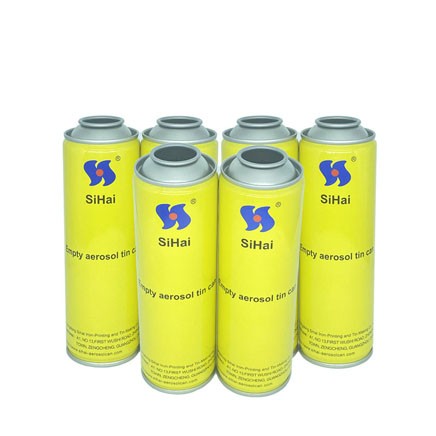
Our Guangdong SIHAI as a professional manufacturer of empty aerosol tin cans, has accumulated nearly 30 years of production experience to date. Our empty cans are manufactured to strict safety standards, ensuring leak-proof performance and compatibility with various propellants. Whether you are launching a new air freshener, insect repellent, or personal care product, our three-piece aerosol cans deliver reliability and customizability. Partner with us for quality cans that empower your brand from fill to finish.
An aerosol can is a self-contained dispensing system that stores and releases products in a fine mist,spray, or foam. These cans are widely used for everything from household cleaners and personal care products to industrial lubricants and medical treatments. But how do they work?
The Five Key Elements of an Aerosol Can
1. Active Ingredient– This is the primary substance being dispensed, such as insecticide, paint, deodorant, or even antibiotics in medical inhalers.
2. Solvent – A liquid that keeps the active ingredient at the right consistency, ensuring smooth application. Without it, some products might separate or clog the nozzle.
3. Propellant – A pressurized gas (like butane, propane, or nitrogen) that forces the active ingredient out of the can when the valve is opened.
4. Container – A sturdy, leak-proof canister (usually made of steel or aluminum) that protects the contents from contamination, evaporation, and external pressure changes.
5. Valve – A spring-loaded mechanism (often activated by a button or nozzle) that controls the release of the product. When pressed, it opens to let the propellant push the mixture out.
How Aerosol Cans Work
When you press the valve button, the propellant—which is stored under high pressure—forces the active ingredient and solvent out through the nozzle. The design of the nozzle determines whether the product comes out as a fine mist, a steady stream, or a foam.
- Solvent’s Role – The solvent ensures even distribution. For example, in spray paint, it prevents clumping, while in asthma inhalers, it helps deliver medication as a fine, breathable mist.
- Shaking Before Use– Many aerosols require shaking to remix ingredients that may have settled (like paint pigments or sunscreen agents). This ensures the propellant can effectively push out a consistent mixture.
Safety & Environmental Considerations
- Pressurization Risks –Aerosol cans can explode if punctured or exposed to high heat due to the compressed gas inside.
- Environmental Impact – Traditional propellants like chlorofluorocarbons (CFCs) were phased out for harming the ozone layer. Modern aerosols use safer alternatives like hydrocarbons or compressed air.
- Recycling –Empty aerosol cans are often recyclable, but must be completely empty to avoid pressure hazards in recycling facilities.
Aerosol technology continues to evolve, offering precise, convenient, and efficient ways to deliver a wide range of products—making them a staple in homes, industries, and healthcare.
Key points for choosing aerosol cans
1. Stability/compatibility
For any aerosol can product, the first thing is to ensure the stability and reliability of the product. The cans of the selected products are tested for compatibility and stability based on the type of product and the characteristics of the formula. Only with data support can we have a theoretical basis for products to flow into the market. Of course, the stability test does not mean that there is no problem 100%. It is only a representative test. There may be unknown problems in the follow-up, but it can represent the vast majority.
2. Security
Safety is the first priority for any project. The safety here includes usage safety, pressure safety, environmental safety, toxicological safety, the proportion of the contents in the aerosol can’s full water weight, etc. What R&D engineers develop is not only products that can bring profits to the boss, but more importantly, safe products that can bring benefits to society.
3. Economical
Excessive use of packaging materials is actually a waste of resources, so choosing suitable packaging materials is a suitable way to protect resources.
Empty Aerosol Tin Cans: Sustainable Solutions for a Greener Tomorrow Empty Aerosol Tin Cans: Sustainable Solutions for a Greener Tomorrow
Empty aerosol tin cans might seem like mere waste at first glance, but in the realm of sustainability, they hold untapped potential for a greener future. These seemingly discarded containers can be repurposed, recycled, and contribute to a more environmentally conscious society.
Repurposing Empty Aerosol Tin Cans:
Instead of relegating them to the landfill, consider giving empty aerosol tin cans a second life. With a bit of creativity, they can be transformed into various DIY projects. From storage containers to artistic sculptures, the possibilities are vast. Get inspired and turn what was once considered waste into something functional and aesthetically pleasing.
Recycling for Resource Conservation:
Empty aerosol tin cans are highly recyclable. Recycling these cans not only conserves valuable resources but also reduces the energy required for the production of new materials. Many local recycling facilities accept aerosol cans, so make sure to check with your community recycling program. By participating in recycling initiatives, you contribute to the circular economy and minimize the environmental impact of these containers.
Reducing Carbon Footprint:
Choosing products packaged in aerosol tin cans with a focus on sustainability is another way to make a positive impact. Many companies are now adopting eco-friendly packaging practices, using recycled materials for their cans, and investing in carbon-neutral initiatives. By supporting such brands, you play a role in promoting a more sustainable approach to aerosol can manufacturing.
Innovations in Aerosol Can Technology:
The empty aerosol tin can industry is not stagnant; innovations continue to emerge. Researchers and manufacturers are exploring alternative materials and eco-friendly propellants to further minimize the environmental footprint of aerosol cans. Stay informed about these advancements to make conscious choices that align with your commitment to sustainability.
In conclusion, empty aerosol tin cans are not just waste; they represent an opportunity for positive environmental action. Through repurposing, recycling, and supporting sustainable practices, we can collectively contribute to a future where every can plays a part in building a more sustainable and eco-friendly world.

.jpg)

 en
en ru
ru es
es pt
pt zh-CN
zh-CN