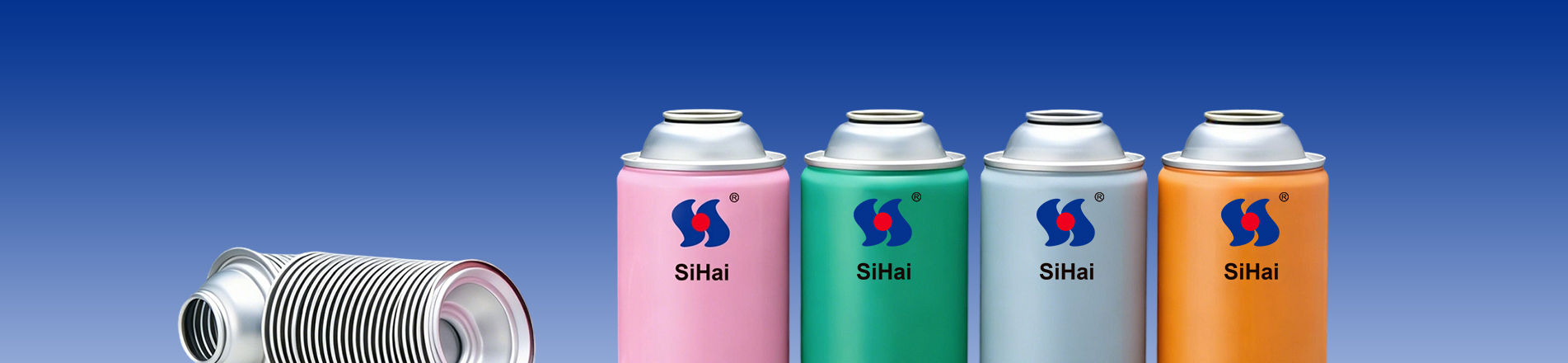
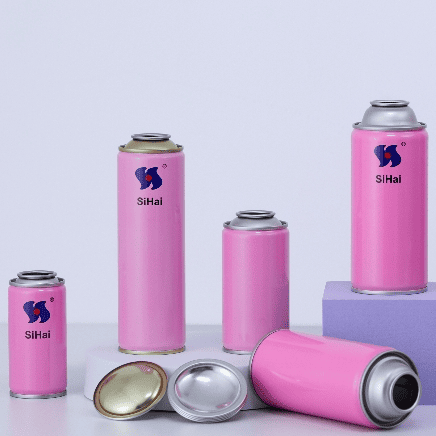
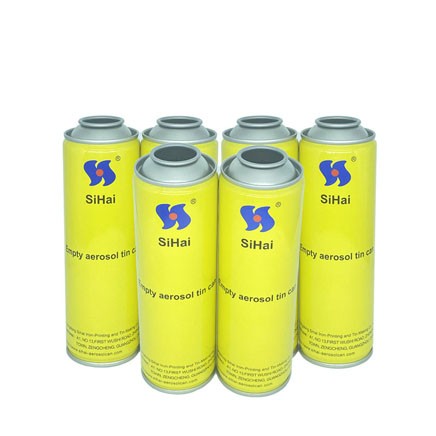
The three-piece tinplate aerosol can consists of a can body, a top cone, and dome. Its manufacturing process begins with cutting tinplate sheets into rectangular blanks. These blanks are then rolled into a cylindrical shape as can body, and the side seam is formed by soldering the two ends together longitudinally. Subsequently, the circular cone and dome are attached to the can body via a welding process to complete the can.
The production steps are as follows: Tinplate Cutting → Coating & Printing → Welding → Can Making → Leak Testing → Packing & Shipping.
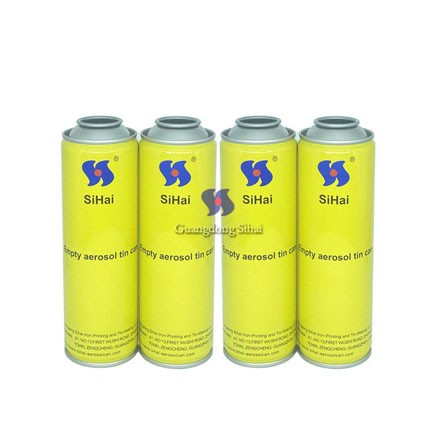
Guangdong SIHAI is a specialized manufacturer of empty three-piece tinplate cans, committed to producing the world's safest aerosol cans with 27 years of experience. We operate 3 printing lines, 25 cone and dome pressing lines, and 9 can-making lines, achieving an annual production capacity of 300 million cans.
If you have any requirements for empty aerosol tin cans, please feel free to contact us. Welcome for your inquiry!
Yarlung Tsangpo River hydropower project as a major national infrastructure projects, if the full start, may indeed have a phased impact on the steel industry.The main material of empty aerosol tin can is tinplate, now the price of tinplate will be increased, we have to adjust the price of our cans.Please let us know if you have any plan, we can prepare the material in advance.
Guangdong Sihai Iron-Printing and Tin-Making Co.,Ltd. was founded in 1998, located in the beautiful tourist city of Zengcheng, Guangzhou. Our company covers an area of 38,000 square meters and our main business is tinplate trading, coil cutting, coating, printing and tin-making.
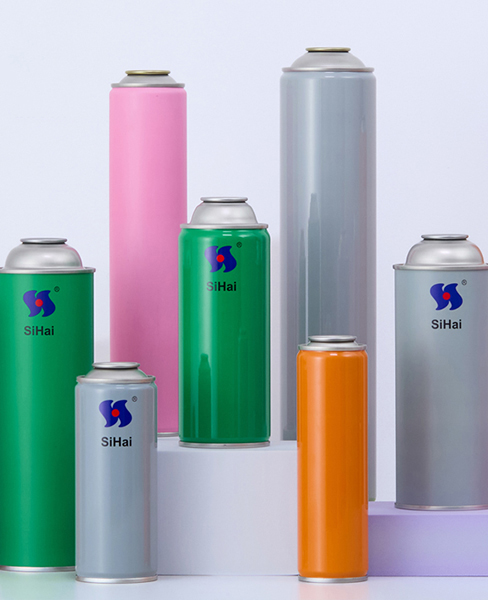
Aerosol cans are single-use metal containers for aerosol products. When in use, the aerosol product is ejected from the can under pre-pressurization through a valve in a controlled form. Guangdong Sihai is a professional manufacturer of empty tinplate aerosol cans with 27 years of experience. The main products that use aerosol cans are: air fresheners, car care products, spray paints, insecticides and so on.The capacity of Tinplate aerosol cans is usually between 100 ml to 1000 ml. Below are the common sizes of some products: Air Fresheners: Diameter 52x195mm 300ml/350ml necked-in cans Insecticides: Diameter 52x190mm 300ml/350ml and Diameter 57x216mm 400ml/450ml necked-in cans Deodorants: Diameter 45/52mm necked-in cans Shaving Foam Products: Diameter 65x158mm 400ml and Diameter 52x160mm 300ml necked-in cans Spray Paint Products: Diameter 65x158mm 400ml/450ml necked-in cans Cassette Oven Products: Diameter 65x159mm 220g/250g straight-wall cans Snow spray/colorful ribbon products: Diameter 45/52mm necked-in cans Hair spray products: Diameter 52*220/230/240mm necked-in cans Car care/Rust remover/Anti-rust agent products: Diameter 65mm necked-in cans
The specific capacity can be considered according to the amount of products used, the convenience of carrying and storage space and other factors. If you have any interest in the empty aerosol tin cans, please feel free to contact us!
An aerosol can is a self-contained dispensing system that stores and releases products in a fine mist,spray, or foam. These cans are widely used for everything from household cleaners and personal care products to industrial lubricants and medical treatments. But how do they work?
The Five Key Elements of an Aerosol Can
1. Active Ingredient– This is the primary substance being dispensed, such as insecticide, paint, deodorant, or even antibiotics in medical inhalers.
2. Solvent – A liquid that keeps the active ingredient at the right consistency, ensuring smooth application. Without it, some products might separate or clog the nozzle.
3. Propellant – A pressurized gas (like butane, propane, or nitrogen) that forces the active ingredient out of the can when the valve is opened.
4. Container – A sturdy, leak-proof canister (usually made of steel or aluminum) that protects the contents from contamination, evaporation, and external pressure changes.
5. Valve – A spring-loaded mechanism (often activated by a button or nozzle) that controls the release of the product. When pressed, it opens to let the propellant push the mixture out.
How Aerosol Cans Work
When you press the valve button, the propellant—which is stored under high pressure—forces the active ingredient and solvent out through the nozzle. The design of the nozzle determines whether the product comes out as a fine mist, a steady stream, or a foam.
- Solvent’s Role – The solvent ensures even distribution. For example, in spray paint, it prevents clumping, while in asthma inhalers, it helps deliver medication as a fine, breathable mist.
- Shaking Before Use– Many aerosols require shaking to remix ingredients that may have settled (like paint pigments or sunscreen agents). This ensures the propellant can effectively push out a consistent mixture.
Safety & Environmental Considerations
- Pressurization Risks –Aerosol cans can explode if punctured or exposed to high heat due to the compressed gas inside.
- Environmental Impact – Traditional propellants like chlorofluorocarbons (CFCs) were phased out for harming the ozone layer. Modern aerosols use safer alternatives like hydrocarbons or compressed air.
- Recycling –Empty aerosol cans are often recyclable, but must be completely empty to avoid pressure hazards in recycling facilities.
Aerosol technology continues to evolve, offering precise, convenient, and efficient ways to deliver a wide range of products—making them a staple in homes, industries, and healthcare.
1. Stability / Compatibility
Any aerosol can products, the first thing is to ensure that the product is stable, reliable, select the product cans according to the type of product, the characteristics of the formula to do compatibility, stability testing.
2. Safety
Safety is the first choice for any project, including the use of safety, pressure safety, environmental safety, toxicity safety, the contents of the aerosol cans in the proportion of full water weight and so on.
3. Comfort to use
Any product production and sales, will be used by the final consumer, the use of comfort, ergonomics, spray effect, fragrance concentration, etc., related to the longevity of the existence of the product.
4. Economy
Excessive use of packaging materials is actually a waste of resources, so the choice of suitable packaging materials is an appropriate protection of resources.
Key points for choosing aerosol cans
1. Stability/compatibility
For any aerosol can product, the first thing is to ensure the stability and reliability of the product. The cans of the selected products are tested for compatibility and stability based on the type of product and the characteristics of the formula. Only with data support can we have a theoretical basis for products to flow into the market. Of course, the stability test does not mean that there is no problem 100%. It is only a representative test. There may be unknown problems in the follow-up, but it can represent the vast majority.
2. Security
Safety is the first priority for any project. The safety here includes usage safety, pressure safety, environmental safety, toxicological safety, the proportion of the contents in the aerosol can’s full water weight, etc. What R&D engineers develop is not only products that can bring profits to the boss, but more importantly, safe products that can bring benefits to society.
3. Economical
Excessive use of packaging materials is actually a waste of resources, so choosing suitable packaging materials is a suitable way to protect resources.
1. Lightweight and easy to carry: The aluminum aerosol can is a lightweight aerosol can that is easy to carry and convenient for users to use anytime and anywhere.
2. Anti-corrosion and good sealing, At the same time, they use advanced sealing technology to effectively prevent external oxygen and other components from entering the can, ensuring the safety of the contents inside the can. Stable and extend the service life of goods.3. Beautiful and elegant: The tin aerosol can has a beautiful and elegant appearance, conforms to modern aesthetic concepts, and has a good decorative effect.4. Good stability: Because tin aerosol cans are made of iron, they have good stability and durability and are not easy to deform, age or be damaged.5. Environmental protection: Tin aerosol cans can be recycled and reused, complying with environmental protection requirements and reducing environmental pollution.6. Wide range of applications: Tin aerosol cans are suitable for many fields, such as cosmetics, food, medicine, etc., and have a wide range of applications.7. Easy to use: Tin aerosol cans are easy to use and simple to operate, and users can easily master how to use them.
At home - deodorant, shaving foam, hairspray, body spray, bug spray, air freshener
On the farm - pictured is a paint marking spray used on cattle to show if they are ready to mate or pregnantIn Medicine - Asthma InhalerOn the industrial side - cleaner sprays, rust removers, spray paintOn the pitch - Foam spray used by referees in World Cup and Premier League matches
At night - aerosols can spray reflective coatings on animals to avoid traffic accident
In the Kitchen - Olive Oil, Butane Gas
At sea - for small boats, this aerosol horn can be heard a mile away

.jpg)
.jpg)
.jpg)
.jpg)

 en
en ru
ru es
es pt
pt zh-CN
zh-CN