Aerosol Packaging Solutions for Personal Care, Household and Industrial Products
September 15, 2026
Author
Through a professional technical team, we provide customers with targeted equipment selection recommendations and comprehensive after-sales services, winning the trust and recognition of customers.
Sarah M.
Aerosol Packaging Solutions for Personal Care, Household and Industrial Products
Aerosol packaging for personal care, household, and industrial products delivers your formulations as mists, foams, or streams. This sealed, pressurized system ensures precise dosing and contamination protection. Industry leaders innovate with sustainable materials like aluminum. SiHai offers complete packaging solutions with high-quality materials and custom decoration.
Key Takeaways
Aerosol packaging gives you one-finger dispensing, product protection, and longer shelf life.
Aluminum cans are 100% recyclable. Bag-on-valve systems use safe, non-flammable propellants.
Match your package to your product: aluminum for personal care, steel for household, bag-on-valve for sensitive ingredients.
Why Choose Aerosol Packaging?
Convenience and Ease of Use
Aerosol packaging transforms how you dispense your products. With a simple finger press, consumers deliver precise amounts of your formulation every time. This mechanism eliminates spills and messes common with traditional bottles. Key benefits for brand owners include:
Ease of use: Consumers dispense product with one finger, offering superior convenience.
Control: Users regulate the amount dispensed, minimizing waste and improving efficiency.
Safety: Hermetically sealed cans reduce breakage and spills while preventing tampering.
Recyclable: Aluminum cans are 100% infinitely recyclable, supporting sustainability goals.
These advantages make aerosol packaging for personal care a compelling choice for consistent performance and consumer satisfaction.
Product Safety and Extended Shelf Life
Your product's integrity starts with its package. Aerosol cans create a hermetically sealed environment that protects formulations from contamination. This barrier keeps oxygen, moisture, and microbes out. Your product stays fresh longer. The sealed system also prevents leaks during transport and storage. Consumers receive your product exactly as formulated. This protection extends shelf life significantly compared to traditional packaging. You reduce waste and build customer trust.
Recyclability and Environmental Impact
Sustainability drives many brand owners toward aerosol packaging. Aluminum is the most recycled packaging material in North America, with a U.S. recycling rate exceeding 45%. Industry targets aim above 70% by 2030. Major brands like Procter & Gamble and Unilever have committed to sustainable packaging goals. Bag-on-valve systems eliminate propellants, addressing EPA VOC emission concerns. Regulatory policies like the EU Green Deal encourage metal packaging adoption. These trends create opportunities for brands investing in lightweighting and recycled content. Your choice of aerosol packaging positions you for regulatory compliance and environmental responsibility.
How to Select the Right Aerosol Package
Selecting the right aerosol package determines your product's performance, safety, and market success. You must evaluate materials, sizes, pressure ratings, decoration options, and regulatory requirements. Each decision impacts how your product performs on the shelf and in the consumer's hands.
What Materials and Coatings Work Best?
Your choice of material shapes everything from product compatibility to sustainability claims. Aluminum and steel dominate the aerosol packaging market. Each offers distinct advantages for different applications.
Aluminum works best for premium personal care products. This metal resists corrosion, weighs less than steel, and accepts high-quality decorative finishes. Your customers perceive aluminum as a premium material. The lightweight nature reduces shipping costs and improves user experience. Aluminum also works well with bag-on-valve systems because it handles internal pressure efficiently.
Steel provides exceptional strength for industrial and household products. Tinplate steel cans handle higher pressures and resist denting during rough handling. Many manufacturers use steel for products requiring extended shelf life. The material costs less than aluminum for large-volume production runs.
Coatings protect your formulation from reacting with the metal container. Internal linings create a barrier between your product and the can walls. Epoxy phenolic coatings work well for water-based formulations. Organosol coatings handle solvent-based products effectively. You must match your coating to your specific formulation chemistry.
Valve technology has advanced significantly in recent years. The Lindal Group developed the Bi-Power Valve, which keeps two chemical components separate until the user presses the actuator. This valve offers two dispensing options: pre-mixing in the actuator or dispensing each product separately. Toyo Aerosol Industry introduced The DUAL through a joint venture with Care Connection GmbH. This system provides automatic mixing of two product components at the push of the actuator. These innovations work well for hair color, dental products, cosmetics, adhesives, and skin care applications.
Modern aerosol valves use durable thermoplastics that reduce corrosion and extend product lifespan. Multi-function valves now allow more precise control over spray pattern and dispensing rate. Controlled release valves deliver product in specific doses, which benefits pharmaceutical and medical applications where dosage accuracy is critical. Smart aerosol systems with integrated sensors adjust spray pattern or volume based on internal can pressure.
Choosing the Correct Size and Pressure Rating
Size and pressure ratings directly affect your product's performance and regulatory compliance. You must balance consumer convenience with manufacturing efficiency.
Standard aerosol can sizes range from 1 ounce to 24 ounces for consumer products. Personal care products typically use 2 to 8 ounce cans. Household cleaners often come in 12 to 20 ounce sizes. Industrial products may require larger containers up to 24 ounces or more. Your target market and usage patterns determine the ideal size.
Pressure ratings vary by propellant type and application. Standard aerosol cans typically handle internal pressures between 40 and 180 PSI at 70°F. You must account for temperature variations during storage and transport. Cans exposed to high temperatures experience increased internal pressure. Your pressure rating must include a safety margin above expected maximum temperatures.
The propellant system affects pressure requirements. Compressed gases like nitrogen and compressed air require higher initial pressures. Liquefied propellants maintain consistent pressure throughout product life. Eco-friendly propellants including compressed air, nitrogen, and hydrofluoroolefins (HFOs) replace CFCs and meet stricter global regulations.
Bag-on-valve systems require different pressure considerations. The bag separates product from propellant, which allows higher pressures without product contamination. This system works well with compressed air and nitrogen propellants.
Decoration and Branding Options That Sell
Your decoration choices determine shelf presence and brand recognition. Premium products demand premium finishes. The printing technique you select affects durability and visual impact.
Offset printing on metal provides high durability for your brand graphics. Litho printing also delivers high durability and works well for detailed designs. CMYK offset printing resists fading, which keeps your branding vibrant throughout product life. High resolution lithographic printing holds up during shipping and handling. UV varnish protective finishes create a glossy shield against scuffs and extend shelf life appeal.
Consider these decoration options for your aerosol package:
Base coatings: White, clear, or colored base coats create the foundation for your design.
Printing methods: Digital printing works for short runs and complex designs. Screen printing delivers bold, solid colors.
Special effects: Matte finishes, metallic inks, and soft-touch coatings create premium tactile experiences.
Embossing and debossing: Raised or recessed elements add dimension and perceived value.
Your decoration must withstand the product's intended use environment. Bathroom products face moisture exposure. Kitchen products encounter grease and cleaning agents. Industrial products may face harsh chemicals. You must test decoration durability under realistic conditions.
Sustainable decoration options are growing in importance. Recyclable aluminum and plastic components are increasingly used in aerosol packaging. Water-based inks and coatings reduce environmental impact. These options support your brand's sustainability story.
Regulatory compliance protects your business and your customers. You must navigate federal, state, and international requirements for aerosol packaging.
California Proposition 65 requires warning labels for products containing chemicals known to cause cancer or birth defects. You must evaluate your formulation and packaging components for listed substances. Common Prop 65 chemicals in aerosol products include certain solvents, heavy metals, and phthalates. Proper labeling protects you from legal liability.
BPA restrictions affect aerosol packaging components. Some jurisdictions ban bisphenol A in food-contact and consumer products. You must verify that your can linings, valve seals, and other components meet BPA-free requirements. Many manufacturers now offer BPA-free alternatives as standard options.
Pressure vessel standards govern aerosol can construction and testing. The U.S. Department of Transportation regulates aerosol cans as hazardous materials for transport. You must ensure your cans meet DOT requirements for pressure resistance and leak prevention. International standards vary by country. The EU Aerosol Dispensers Directive sets requirements for European markets.
Additional compliance considerations include:
VOC regulations: Many regions limit volatile organic compound emissions from aerosol products.
Flammability labeling: Products with flammable propellants require specific warnings.
Child safety: Some jurisdictions require child-resistant actuators for certain products.
Recycling claims: You must substantiate recyclability claims with verifiable data.
Your packaging partner should provide documentation for all regulatory requirements. SiHai offers regulatory expertise to help you navigate these complex requirements. This support ensures your aerosol packaging for personal care and other products meets all applicable standards.
Bag-on-Valve: The Advanced Aerosol System
Bag-on-valve technology represents a significant leap forward in aerosol dispensing. This system separates your formulation from the propellant entirely. You gain superior product protection, longer shelf life, and greater formulation flexibility. Understanding how BOV works helps you determine whether this advanced system suits your product line.
How Bag-on-Valve Works
A bag-on-valve system uses a sealed multilayer bag inside a standard aerosol can. Your formulation stays inside this bag. Compressed gas such as nitrogen or compressed air is injected between the can wall and the bag. This creates the pressure that drives consistent spray delivery. The product never directly contacts the propellant. This separation provides better protection for sensitive formulations.
The bag collapses as you dispense the product. This design ensures complete evacuation with minimal residue. You achieve full product emptying regardless of can orientation. The system allows spraying at any angle, even upside down. This flexibility benefits applications where directional spraying matters.
Traditional aerosols rely on propellants such as butane or propane. Bag-on-valve packaging instead uses compressed air or nitrogen as the propellant. This dispensing mechanism is described as propellant-free and more environmentally friendly, reducing VOC release. Compressed air and nitrogen offer non-flammable properties. They eliminate fire hazards linked to traditional aerosol propellants. These propellants also carry lower environmental impact compared to hydrocarbon or HFC alternatives.
The valve assembly controls product release with precision. A controlled dispensing valve releases only the desired amount. This minimizes exposure to air and maintains the integrity of the remaining product. You gain consistent performance from first spray to last.
Key Advantages Over Standard Aerosols
Bag-on-valve systems deliver multiple advantages that standard aerosols cannot match. These benefits affect product quality, consumer safety, and environmental impact.
Product protection stands as the primary advantage. The sealed, controlled environment reduces contamination risk during storage and use. This protection proves critical when no preservatives are present. The aluminum canister barrier minimizes oxidation, UV degradation, and impurity introduction that would otherwise compromise stability. Your sensitive natural actives receive protection that reduces the need for preservatives and extends shelf life.
BOV technology reduces the need for preservatives in beauty and personal care products. This benefit appeals to consumers seeking clean-label formulations. Manufacturers increasingly claim sustainability using natural ingredients without preservatives. The growing consumer preference for BOV-packaged products reflects this demand for contamination prevention and eco-friendly propellants.
The table below summarizes how BOV mechanisms improve preservative-free natural product dispensing:
BOV Mechanism
How It Improves Preservative-Free Natural Product Dispensing
Sealed, controlled environment
Reduces contamination risk during storage and use, critical when no preservatives are present
Aluminum canister barrier
Minimizes oxidation, UV degradation, and impurity introduction that would otherwise compromise stability
Active ingredient protection
Protects sensitive natural actives, reducing the need for preservatives and extending shelf life
Controlled dispensing valve
Releases only the desired amount, minimizing exposure to air and maintaining integrity of remaining product
100% product completion
Flexible inner bag collapses fully, minimizing residue and waste
Compatibility with natural ingredients
Suitable for oxygen-sensitive and light-sensitive natural formulations
Additional advantages include:
Safe, non-flammable propellants (air or nitrogen) replace flammable gases
Prevents contamination, extending product shelf life
Full emptying of product with minimal residue
Works with gels, creams, liquids, lotions, and some ointments
Allows spraying at any angle for precise application
Eco-friendly and recyclable packaging
These features make BOV systems ideal for aerosol packaging for personal care products that emphasize natural ingredients and sustainability.
Best Use Cases for Bag-on-Valve
Bag-on-valve technology excels across multiple industries and product categories. The pharmaceutical segment is the dominant application in the bag-on-valve product market, capturing approximately 38.5% of total market share in 2025. This segment includes sterile product delivery, contamination-free dispensing, advanced barrier protection, and precise dosage control, supporting applications such as wound care, respiratory treatments, and topical medications.
The bag-on-valve aerosol market is projected to reach USD 2.59 billion by 2030. A key driver of this growth is the increasing adoption of BOV technology in the pharmaceutical and healthcare sectors, where companies are leveraging the technology to deliver topical medications, wound care solutions, and nasal sprays, thereby driving short-term market growth. The bag-on-valve aerosol packaging market for pharmaceutical sprays is projected to grow at a compound annual growth rate (CAGR) of 14.51% through 2030, according to Mordor Intelligence's market analysis. Rising adoption of bag-on-valve technology in topical pharmaceutical sprays is identified as a key short-term growth driver, contributing an estimated +3.2% to market growth, with accelerated uptake in developed markets.
Personal care products benefit significantly from BOV systems. Sunscreens, moisturizers, and facial mists maintain their integrity without preservatives. Sensitive skincare formulations gain protection from oxidation and contamination. Hair care products achieve even dispensing without propellant mixing.
The food industry uses bag-on-valve packaging for numerous applications beyond whipped cream:
Household products also benefit from BOV technology. Cleaning solutions maintain potency without preservative degradation. Air fresheners deliver consistent fragrance without propellant odor. Pet care products achieve precise application without contamination risk.
Industrial applications include lubricants, adhesives, and specialty coatings. These products require precise dispensing and protection from environmental exposure. BOV systems deliver both benefits reliably.
SiHai offers comprehensive bag-on-valve solutions for your specific application. The company provides custom can options, advanced valve technologies, and expert guidance to ensure your product performs reliably. You gain a packaging partner with regulatory expertise and commitment to quality.
Aerosol Packaging Applications by Industry
Aerosol systems serve diverse markets with formulations tailored to each sector's demands. You will find these packages across personal care, household, and industrial product lines.
Aerosol Packaging for Personal Care
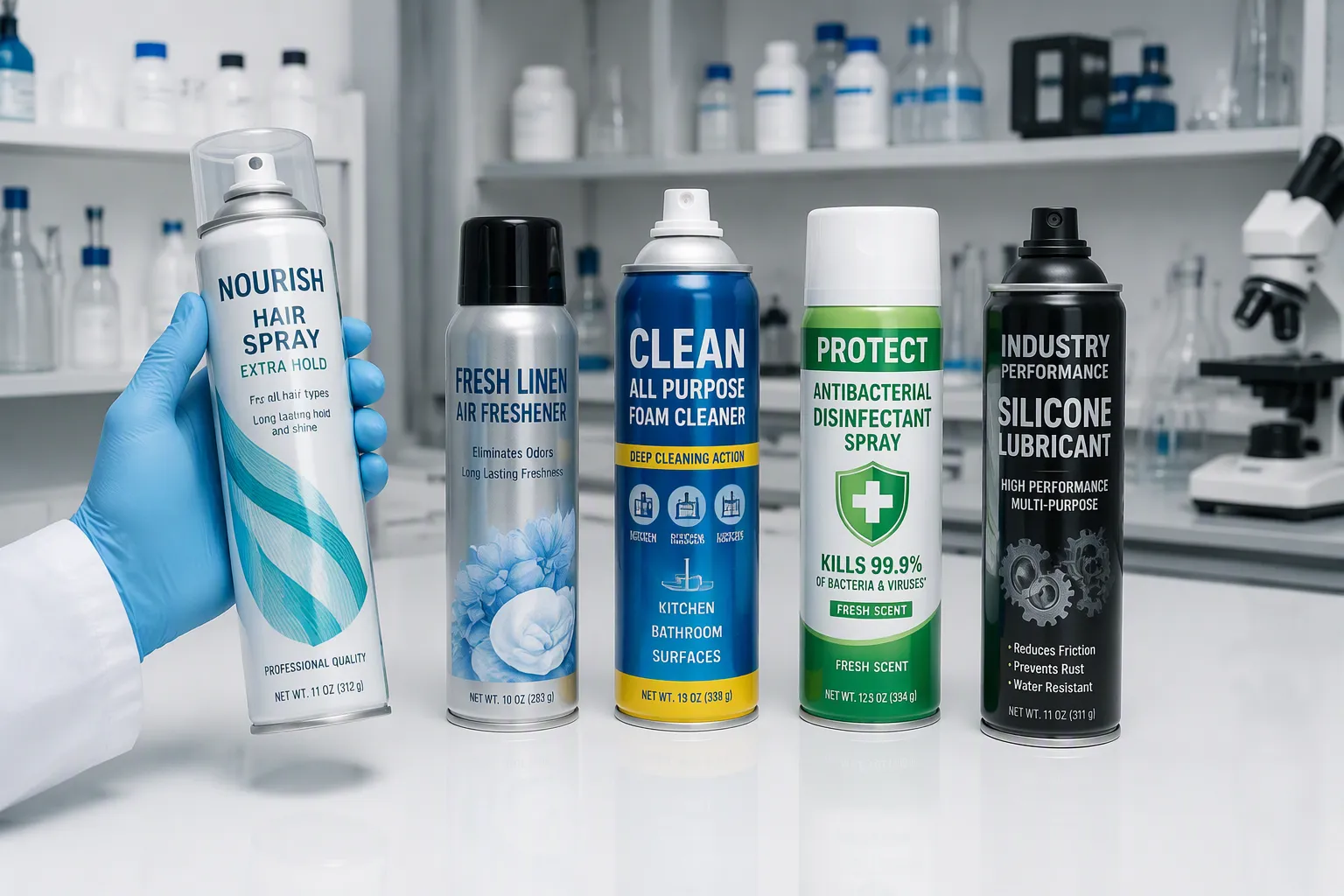
You encounter aerosol packaging for personal care in countless daily routines. Hairsprays, deodorants, shaving creams, and sunscreens rely on precise dispensing. These products demand lightweight cans with premium finishes. Aluminum suits this need perfectly. It resists corrosion and accepts high-quality decoration. Your customers expect elegant packaging that performs consistently. Bag-on-valve systems protect sensitive natural ingredients without preservatives. This technology extends shelf life and supports clean-label claims. Aerosol packaging for personal care continues to evolve with sustainable materials and advanced valve designs.
Household Product Solutions
Household care represents the fastest-growing application in the aerosol cans market, according to Coherent Market Insights. Eco-conscious consumers increasingly choose aerosol cleaning products with environmentally friendly propellants. You can capture this demand with compressed air and nitrogen systems. Furniture polishes, air fresheners, and bathroom cleaners benefit from consistent spray patterns. These products require reliable performance at competitive price points. Steel cans offer strength and cost efficiency for high-volume production.
Industrial Product Applications
Industrial aerosols face rigorous safety and transport requirements. You must comply with multiple standards when packaging flammable lubricants or solvents:
ATEX Directives govern environments with potentially explosive atmospheres.
REACH Regulation controls chemical substance registration and restriction.
TDG classifies aerosols as Class 2 dangerous goods, UN 1950.
GHS requires flammability labels throughout the product life cycle.
IMDG and DGR regulate sea and air transport respectively.
SDS documentation must include 16 items covering hazards and safe handling.
Quality assurance includes leak detection through hot water baths and internal pressure verification. SiHai provides expert guidance for your industrial aerosol packaging needs.
Aerosol packaging delivers convenience, protection, and performance for personal care, household, and industrial products. Your success depends on selecting the right materials, valve systems, and compliant components. SiHai provides turnkey solutions with custom cans, advanced valves, and expert guidance. Contact SiHai today to find the perfect aerosol package for your formulation, including aerosol packaging for personal care.
FAQ
What material works best for aerosol packaging?
Aluminum suits premium personal care products. It resists corrosion, weighs less, and accepts high-quality decoration. Steel provides strength and cost efficiency for household and industrial applications.
Why choose bag-on-valve over standard aerosols?
Bag-on-valve separates your formulation from the propellant. You gain longer shelf life, preservative-free options, and full product evacuation. This system also allows spraying at any angle.
Which regulations apply to aerosol packaging?
You must follow Prop 65 labeling, BPA restrictions, and DOT pressure vessel standards. VOC limits and flammability warnings also apply. SiHai provides regulatory expertise for your compliance needs.

 en
en ru
ru es
es pt
pt zh-CN
zh-CN