The OEM packaging process for custom printed aerosol cans covers material selection, can specification, printing and coating, valve assembly, quality testing, and bulk production. Getting specifications, linings, and valves right prevents product rejection and profit loss. As a printed aerosol cans manufacturer, SiHaiPack supports clients from artwork proofing through final delivery.
Key Takeaways
Choose the right can type and material for your product. Two-piece steel cans work well for personal care. Three-piece steel cans suit industrial products. Aluminum cans offer a premium look and resist corrosion.
Select the correct valve and lining to prevent leaks and contamination. The valve must match your product's thickness and spray needs. The lining protects the can from aggressive formulas.
Plan for costs and quality checks early. Material, printing, and customization affect the price. Artwork proofing and stability testing catch problems before bulk production.
Aerosol Cans: Types and Materials
Choosing between two-piece and three-piece steel cans establishes the structural foundation of any aerosol package. Two-piece cans form the body and bottom from a single metal sheet, leaving only the top dome to attach after filling. Three-piece cans consist of a separate body, top, and bottom, welded together along vertical and horizontal seams. This structural difference directly guides application suitability for different markets.
Two-Piece vs. Three-Piece Steel Cans
Two-piece steel cans suit personal care and household products. Their seamless construction provides strength with lighter weight, making them ideal for cost-sensitive, efficient-dispensing applications. Three-piece steel cans serve industrial and automotive markets, where the welded design gives greater flexibility for custom dimensions, valve placement, and specialized features. Manufacturers select between these constructions based on production volume, pressure requirements, and decoration needs.
Can Type
Typical Applications
Two-piece steel cans
Personal care products; household products; cost-sensitive, lightweight, efficient-dispensing applications
Three-piece steel cans
Industrial products; automotive aerosols; specialized applications requiring design flexibility and customization
Three-piece designs also appear in food packaging and non-aerosol containers where shape customization matters. Two-piece cans dominate beverage packaging and lightweight consumer goods where uniform dimensions and speed matter most.
Tinplate and Aluminum Options
Tinplate steel offers grade selection, surface finish choices, and lacquer options. Grade determines strength and formability under pressure. Finishes include matte, bright, or stone textures, each affecting print adhesion and visual appeal. Lacquer prevents chemical reaction between the can interior and the product, critical for corrosive formulations. Selecting the correct interior lining prevents product contamination and can failure.
Aluminum provides an alternative material for air fresheners, body sprays, and daily care items. Customizable empty aluminum aerosol cans resist corrosion in many cases without inner linings, simplifying production. The lighter weight reduces shipping costs, and the seamless body enables full-wrap decoration without a weld line interrupting the graphic. Brands seeking premium aesthetics often prefer aluminum for its smooth surface and consistent color reproduction.
Sizes, Dimensions, and Capacity
Standard and Custom Dimensions
Aerosol Cans follow established industry diameter and height ranges for personal care and household products. Manufacturers such as Shenzhen Huate offer standard diameters from 45 mm to 70 mm with corresponding height ranges. These specifications serve as the foundation for OEM packaging design. Narrower diameters like 45 mm suit slim packaging for on-the-go products. Wider diameters like 70 mm provide shelf stability and larger branding areas.
Diameter (mm)
Height Range (mm)
45
96 – 220
52
73 – 280
57
95 – 280
60
95 – 300
65
95 – 300
70
95 – 300
These dimensions provide a starting point for custom aerosol cans. Customization adjusts height within each diameter range to meet volume targets. A 52 mm can spans from 73 mm to 280 mm. Manufacturers modify these parameters for specialized product lines. The OEM evaluates formulation, propellant needs, and filling equipment before recommending final dimensions. Correct specifications prevent production delays and packaging failures.
Matching Capacity to Product Type
Capacity determines how much product a can holds. It affects usage patterns and pricing. A 150 ml can suits travel-sized deodorants or hotel amenities. A 400 ml can fits household cleaners or shaving foams. The manufacturer coordinates dimensions with filling line specifications for compatibility during production runs. Regional regulations may restrict certain can sizes or require specific labeling dimensions.
Product viscosity and propellant type influence can size selection. High-viscosity products require wider openings and specific valve systems. The printed aerosol cans manufacturer guides clients through these technical decisions. An OEM aerosol packaging supplier provides recommendations based on production volume, target markets, and regulatory requirements. Selecting correct capacity prevents costly filling line adjustments and reduces material waste. Partnering with an experienced OEM reduces redesign costs and accelerates time to market.
Custom Printing on Aerosol Cans
Exterior decoration transforms a plain metal container into a branded product. A printed aerosol cans manufacturer applies graphics through several techniques, each suited to different run lengths and design complexity. The choice affects color vibrancy, durability, and cost per unit.
Printing Techniques and Coatings
Basecoat application comes first. A white or colored basecoat creates a uniform surface for graphics and improves ink adhesion. Without it, the metal's natural reflectivity interferes with color reproduction.
Printing follows the basecoat. Common methods include:
Dry offset printing: transfers multiple colors in one pass, ideal for high-volume runs with simple designs.
Screen printing: deposits thick ink layers for bold, opaque graphics and specialty effects.
Digital printing: handles short runs and variable data without plate costs.
A clear topcoat seals the graphics. This protective layer resists abrasion during filling, shipping, and consumer handling. Gloss, matte, and soft-touch finishes change both appearance and tactile feel. Coatings also shield the print from moisture and chemical exposure.
High-quality graphics depend on registration accuracy. Each color layer must align precisely with the others. Misalignment produces blurry edges and color shifts. Experienced printers maintain tight tolerances throughout the run.
CMYK Printing for Regulated Products
Pharmaceutical applications demand exceptional print clarity. Drug names, dosage information, and instructions for use must remain legible under all conditions. CMYK printing supports this requirement through precise four-color process reproduction.
This method combines cyan, magenta, yellow, and black inks to create a full color spectrum. It reproduces fine text, barcodes, and regulatory symbols with high fidelity. Health authorities require specific font sizes and contrast ratios for medical labeling. CMYK printing meets these standards consistently across production batches.
Pharmaceutical Aerosol Cans also need variable data printing. Batch numbers, expiration dates, and serial codes change with each run. Digital CMYK presses handle this variation without stopping production. The result is accurate, traceable labeling on every unit.
Brands in this sector verify print quality through pre-production samples. They confirm color accuracy, text legibility, and regulatory compliance before approving bulk runs. This step prevents costly recalls and regulatory rejections.
Valves, Linings, and Can Silhouettes
Valve Systems and Compatibility
The valve controls spray rate, pattern, and pressure. A mismatch between valve and formulation causes clogging, weak spray, or leakage. Each of these faults triggers customer complaints and returns. Buyers reject entire batches when the valve cannot handle the product's viscosity or propellant. Selecting a compatible valve before production protects both the brand and the bottom line.
Valve selection depends on the propellant, the actuator type, and the fill method. A continuous spray valve suits air fresheners and insecticides. A metered valve delivers a fixed dose for pharmaceuticals and precise applications. The stem orifice diameter must match the formulation's particle size. An OEM aerosol packaging supplier tests valve performance with the actual product, not a substitute. This step confirms spray quality and prevents rejection after filling.
Custom Silhouettes and Linings
Interior linings protect the metal from aggressive formulas. Acidic or solvent-based products attack bare tinplate and cause corrosion. A failed lining contaminates the product and ruins the batch. The right lining creates a barrier that extends shelf life and preserves formula integrity. Manufacturers match lining chemistry to the product's pH and solvent content.
Brands increasingly request distinctive shapes for custom aerosol cans. Partnering with manufacturers opens access to domed tops, tapered bodies, and slim profiles. These silhouettes differentiate products on crowded shelves. A printed aerosol cans manufacturer coordinates the can body, valve, and lining as one system. This integrated approach reduces compatibility risks and shortens development time. Custom tooling requires upfront investment, yet the resulting shelf presence often justifies the cost for established brands.
Cost Factors in OEM Production
Material, Printing, and Customization Costs
Material selection drives the largest portion of per-unit expense. Tinplate and aluminum prices move with global commodity markets. Tinplate thickness directly determines material cost per can.
Thickness (mm)
Relative Cost Impact
0.20
Medium
0.25
High
A 0.20 mm wall suits most personal care products at a medium cost level. Increasing thickness to 0.25 mm raises the impact to high because the added steel weight nearly doubles metal consumption per unit. The thicker material improves structural integrity for higher-pressure formulations. Manufacturers select thickness based on product requirements and budget limits. Aluminum costs more than tinplate due to raw material pricing and processing complexity. Weight savings and corrosion resistance often justify the premium for luxury product lines and export shipments where freight weight matters.
Printing complexity adds another cost tier. Single-color designs cost less than full CMYK process printing. Each additional color requires a separate printing station and increases setup time. Five-color designs need more machine passes than two-color designs. Spot colors cost more than process colors when they require custom ink mixing. Coatings such as gloss, matte, or soft-touch finishes add material and labor expense. The basecoat and topcoat layers extend the production cycle. High-quality graphics demand tight registration tolerance, which slows line speeds and raises waste rates. A printed aerosol cans manufacturer adjusts printing methods to match client budget constraints.
Valve system selection affects component cost. Standard continuous spray valves cost less than metered or bag-on-valve systems. Custom actuators and gaskets require specialized tooling that adds upfront investment. Complex valve assemblies increase assembly time and quality inspection requirements. An OEM aerosol packaging supplier recommends valve configurations that meet performance targets without exceeding budget limits.
Customization forces additional expenses. Unique can silhouettes require custom dies for forming and necking equipment. Non-standard dimensions trigger production line adjustments and separate quality checks. Each customization element adds cost to the development phase. The upfront investment for custom aerosol cans pays off through stronger shelf presence and brand differentiation.
Logistics, MOQs, and Hidden Expenses
Minimum order quantities reflect manufacturing efficiency. High-volume production spreads setup, tooling, and printing plate costs across more units. Low MOQs increase per-unit pricing because setup expenses divide across fewer cans. Standard can sizes carry lower MOQs than custom dimensions. A brand ordering 100,000 units pays less per can than one ordering 10,000 units. Volume discounts apply when orders exceed certain thresholds.
Freight costs depend on container volume and shipping distance. Aluminum cans weigh less than tinplate, reducing freight charges for equal unit counts. Regional production facilities shorten shipping routes and lower import duties. Pallet configuration affects container utilization and final freight cost per unit.
Hidden expenses accumulate during development. Tooling charges for custom can shapes and valve components add upfront costs. Artwork proofing requires printing plates and dedicated production time. Pre-production samples consume raw materials and labor. Stability testing and regulatory documentation consume resources before bulk production begins. Color matching adjustments may require additional press runs. A transparent OEM aerosol packaging supplier discloses these costs in the initial proposal. This openness prevents budget overruns and maintains project schedules. Clients who understand these costs upfront make better budgeting decisions.
Quality Assurance and Production Control
Artwork Proofing and Pre-Production Samples
Artwork proofing confirms every technical detail before production begins. The printed aerosol cans manufacturer reviews the customer's digital file for resolution, color separation, and bleed margins. This initial QA review catches errors early. The team then contacts the customer to resolve any issues. A final digital proof goes out for approval and signature. According to Evergreen Resources, this entire digital proofing step requires 2–3 business days.
Pre-production samples follow proofing approval. These physical samples confirm color accuracy, print registration, and coating finish. They also verify can dimensions, valve fit, and lining compatibility. The customer inspects the sample against the approved proof. Most factories provide 2–3 rounds of free revisions within a reasonable scope. Additional revisions may be charged based on the required working hours.
Most factories provide 2–3 rounds of free revisions within a reasonable scope. Additional revisions may be charged based on the required working hours.
Stability Testing and Production QC
Stability testing evaluates how the filled product performs over time. The lab stores samples at elevated temperatures and monitors pressure, spray quality, and lining integrity. This testing reveals corrosion risks, valve failures, and formulation breakdowns. A failed stability test stops production before defective units reach the market.
In-line QC runs throughout the production shift. Inspectors check can dimensions, print registration, and coating adhesion at regular intervals. They test valve function on random samples. Any deviation triggers a line adjustment or batch hold. This continuous monitoring ensures safety and consistency before bulk production. The OEM aerosol packaging supplier documents every check for traceability. Brands receive full QC reports with each shipment.
SiHaiPack as Your OEM Partner
From Inquiry to Bulk Delivery
SiHaiPack manages the entire OEM workflow as a single coordinated process. The client submits an inquiry with target dimensions, capacity, and application details. The team responds with a feasibility assessment and a preliminary quotation. Artwork proofing follows, where the design file undergoes review for resolution, color separation, and bleed margins. This digital proofing step typically requires 2–3 business days. The client approves a signed proof before any physical sample moves forward.
Pre-production samples come next. These confirm color accuracy, print registration, coating finish, and valve fit against the approved proof. Most factories provide 2–3 rounds of free revisions within a reasonable scope. Once the client signs off on the sample, bulk production begins under in-line QC monitoring. SiHaiPack documents every inspection and ships full QC reports with each order, so the client tracks quality from press to pallet.
Custom Support and Scalability
As an OEM aerosol packaging supplier, SiHaiPack coordinates can bodies, valves, and interior linings as one integrated system. This approach removes the compatibility gaps that appear when a brand sources components from separate vendors. The team matches lining chemistry to the product's pH and solvent content, then tests valve performance with the actual formulation rather than a substitute.
Scalability runs from short digital runs to high-volume dry offset production. Standard diameters from 45 mm to 70 mm carry lower minimum order quantities than fully custom silhouettes. Brands can start with a modest pilot batch, validate market response, then scale into larger runs without changing suppliers or re-tooling artwork. Custom dies for domed tops and tapered bodies remain available when shelf differentiation justifies the upfront investment.
Aerosol Cans pass through material selection, size selection, printing, valve choices, lining choices, cost evaluation, and quality assurance for custom aerosol cans. Informed decisions reduce rejection risk. They improve product quality.
A printed aerosol cans manufacturer guides brands from planning to production. Request a quote, consult SiHaiPack, the OEM aerosol packaging supplier, or begin artwork proofing.
FAQ
How long does OEM production take from artwork to delivery?
Digital proofing requires 2–3 business days. Pre-production sampling and bulk production timelines vary by order size and customization level. A printed aerosol cans manufacturer confirms the full schedule during quotation.
What minimum order quantity applies to custom aerosol cans?
Standard diameters from 45 mm to 70 mm carry lower minimums than fully custom silhouettes. An OEM aerosol packaging supplier sets MOQs based on tooling, printing setup, and material sourcing.
Can SiHaiPack match a specific brand color?
Yes. The team reviews color separation during artwork proofing and confirms accuracy through pre-production samples. Most factories allow 2–3 free revision rounds before bulk production begins.
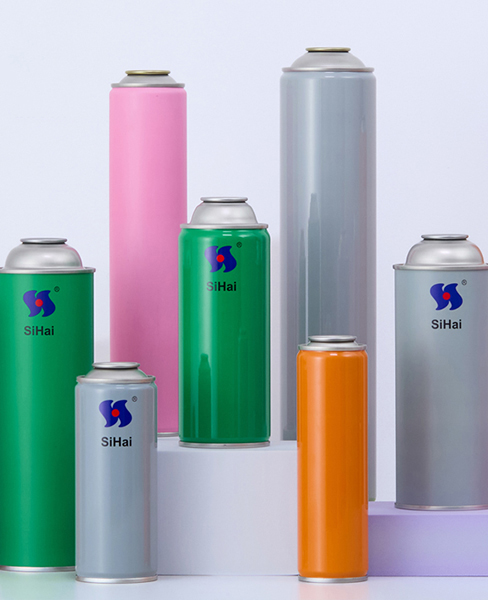
Aerosol can sprays have become an indispensable part of modern life thanks to their unique strengths and wide-ranging uses. For instance, classic straight wall aerosol cans are widely recognized for their structural stability and timeless design.
The most obvious advantage lies in outstanding convenience. Whether using standard containers or sleek necked-in aerosol cans, users only need to press the nozzle to release fine mist, foam or liquid directly, with no extra tools, dilution or complicated preparation required. This one-handed operation allows precise and even coverage on target surfaces, reaches narrow, hard-to-access corners easily, and effectively cuts down product waste. Besides, the hermetically sealed cans keep contents away from air and bacteria, extending shelf life and avoiding contamination. Portable and leak-proof, they are also easy to carry for travel or outdoor use.
Such practical merits make aerosol sprays popular across countless fields. In daily life, we use air fresheners, disinfectant sprays, hair sprays and sunscreen sprays for household cleaning and personal care. In the industrial and automotive sectors, they serve as spray paints, mechanical lubricants and rust removers for equipment maintenance. The medical industry relies on aerosol inhalers and wound relief sprays for safe, contact-free drug delivery. Even the food industry applies food-grade aerosol cans to pack cooking oil and whipped cream.
With continuous upgrades in eco-friendly propellants and recyclable packaging, such as the compact and highly versatile 45mm aerosol tin cans, aerosol sprays will maintain their important role in daily consumption and industrial production in the future.
Tinplate aerosol cans (3-piece tinplate cans) are classified as pressure packaging containers, so purchasing them requires strict attention to material quality, pressure resistance, welding stability, internal lacquer, valve compatibility, and transport safety.
Below are the essential points every buyer should check before placing an order.
Structure & Specifications
1. Confirm standard dimensions
Common diameters: 45/52/57/60/65/70 mmHeight: 100–300 mmMake sure size and structure meet local market requirements (EU/US/SEA).
2. Tinplate thickness
Typical thickness:
0.18 / 0.20 / 0.22 / 0.23 mm
Recommended:
Daily chemical products: 0.20–0.22 mm
Industrial/automotive chemicals: 0.22–0.23 mm
Pressure & Safety Standards
1. Request a full pressure test report
Reports must include:
Test
Standard Requirement
Leak/Pressure Resistance Test
≥ 12 bar (industrial products 15–18 bar)
Burst Test
≥ 18–22 bar
If a supplier cannot provide these tests, do NOT purchase.
2. Bottom dome quality
Check for:
Uniform deep drawing
No deformation or dents
No sharp edges or burrs
The can bottom supports most of the internal pressure.
Tinplate Material & Internal Lacquer
Correct internal lacquer
Internal coating must match chemical properties:
Product Type
Recommended Internal Lacquer
LPG (propane/butane)
Epoxy lacquer
Brake cleaner / Engine cleaner
Gold anti-corrosion lacquer
Insecticide
Food-grade epoxy
Strong solvents
Epoxy-phenolic lacquer
Cans without proper internal lacquer will corrode over time.
Welding Quality
High-frequency automatic welding is mandatory
Check:
Smooth welding line
Full coating on welding seam
No gaps or pinholes
Printing & Appearance
1. Color consistency & gloss quality
Check for:
Color uniformity
No oil marks, smudging, or misalignment
2. Surface defects
Reject cans with:
Scratches
Dents
Rim deformation
Any damage may affect pressure stability.
Valve & Actuator Compatibility
Even a high-quality can will fail if the valve is incompatible.
1.Valve size
Standard valve: 1-inch (25.4 mm)
2. Actuator selection
Must match the viscosity and application:
Product
Recommended Actuator
Spray paint
Fan-shaped nozzle
Foam
Foaming actuator
Lubricating oil
Straw/extension tube actuator
Supplier Capability & Quality Control
1. Manufacturing automation level
Prefer factories with:
Automatic welding
Automatic leak testing
Vision inspection systems
Automatic seaming & necking
Higher automation = more stable quality.
Top 5 Critical Points You MUST Confirm
To avoid 90% of quality issues:
Pressure test results (Leak & Burst Test)
Tinplate thickness + internal lacquer suitability
Weld seam quality and coating coverage
Valve and actuator compatibility
Printing durability (Rub Test)
If these five areas pass, the product is generally safe and reliable.
1. Stability / Compatibility
Any aerosol can products, the first thing is to ensure that the product is stable, reliable, select the product cans according to the type of product, the characteristics of the formula to do compatibility, stability testing.
2. Safety
Safety is the first choice for any project, including the use of safety, pressure safety, environmental safety, toxicity safety, the contents of the aerosol cans in the proportion of full water weight and so on.
3. Comfort to use
Any product production and sales, will be used by the final consumer, the use of comfort, ergonomics, spray effect, fragrance concentration, etc., related to the longevity of the existence of the product.
4. Economy
Excessive use of packaging materials is actually a waste of resources, so the choice of suitable packaging materials is an appropriate protection of resources.
.jpg)
.jpg)

 en
en ru
ru es
es pt
pt zh-CN
zh-CN