You should verify six factors before sourcing: material and construction quality, dimensional accuracy, pressure and safety compliance, lining compatibility, supplier qualifications, and total cost. Each factor affects product safety, filling line performance, and long-term costs. A systematic evaluation prevents costly rework and recalls. SiHai supplies empty aerosol tin cans built to these criteria, so you can benchmark every factor against a known standard and compare each empty aerosol tin can supplier with confidence.
Key Takeaways
Check can specifications like thickness, dimensions, and pressure ratings before you buy.
Choose suppliers with certifications and documented quality controls to ensure safety and consistency.
Compare total costs, not just unit price, to avoid hidden expenses from defects or delays.
Technical Specifications to Verify
Technical specifications form the foundation of every sourcing decision. You need to confirm five areas before you discuss price: the tinplate itself, the can dimensions, the pressure performance, the internal lining, and the integrity test results. Each area carries its own data points. Each one also connects to the others. A thin wall weakens pressure performance. A poor lining ruins a strong can. You should treat these specifications as a single system, not a checklist of isolated numbers.
Tinplate Material and Coating Quality
Tinplate grade and thickness drive the mechanical behavior of the entire can. You should ask for the steel substrate grade, the tin coating weight, and the exact wall thickness in millimeters. These three values tell you how the can will perform in transit, on the filling line, and under pressure.
Thickness deserves special attention because it creates a direct trade-off between cost and durability. The table below shows how gauge choice changes performance.
Tinplate Thickness Scenario
Effect on Durability
Effect on Pressure Resistance
Thicker gauge (0.20 mm and above)
Substantially boosts durability
Exponentially raises burst-pressure tolerance
Downgauging (e.g., to 0.18 mm)
Lowers cost but increases risk of denting in transit unless bottom profiling is applied
Reduced pressure tolerance compared with thicker gauge
You can see the pattern clearly. A thicker gauge buys you margin. A thinner gauge saves money on the unit price. That saving disappears fast when dented cans jam your filling line or fail in a customer's hands. If you choose a lighter gauge for cost reasons, confirm that the supplier applies bottom profiling to recover dent resistance.
Coating quality matters just as much as the steel beneath it. Ask how the supplier controls tin coating weight and how they inspect for coating continuity. Uneven coating leaves bare spots. Bare spots become corrosion sites. Corrosion sites become leaks. SiHai documents coating weight and substrate grade for every production lot, so you can verify these values against your own specification sheet.
Dimensional Accuracy and Valve Fit
A can that measures correctly on paper can still fail on your line. You need to verify the critical dimensions that govern valve crimping and filling equipment performance. The key values include the neck diameter, the curl dimensions, the body diameter, and the overall height. Each one carries a tolerance. You should request those tolerances in writing and compare them against your valve supplier's crimping recommendations.
Valve fit deserves its own test. Order a small batch of cans and crimp your actual valves onto them. Then run a leak check. A mismatch of a few tenths of a millimeter at the neck can produce a poor crimp seal. That seal may pass a quick visual check and fail weeks later in storage. Dimensional accuracy also affects your filling line speed. Cans that sit slightly out of round cause jams, mis-feeds, and downtime. Downtime costs more than the cans themselves.
Ask the supplier for a dimensional control plan. The plan should show which dimensions they measure, how often they measure them, and what tolerance limits trigger rejection. SiHai provides dimensional reports with sample shipments, so you can confirm neck and curl accuracy before you commit to volume production.
Pressure Ratings and Burst Safety Margins
Pressure performance separates a safe aerosol package from a hazard. You should collect four numbers from every supplier: the working pressure at 55°C, the hydrostatic burst pressure, the test pressure multiplier, and the expected vapor pressure of your propellant system. The table below shows typical values across common can types.
Parameter
Tinplate Cans
Aluminium Monobloc Cans
Working pressure (at 55°C)
≈ 8–10 bar
≈ 12–15 bar
Hydrostatic burst pressure
≈ 18–22 bar
> 18–20 bar
Test pressure multiplier
1.5× working pressure
1.5× working pressure
Propellant vapor pressure (propane–butane, 20°C)
≈ 6–8 bar (rises with temperature)
≈ 6–8 bar (rises with temperature)
Read the table as a safety chain. Your propellant vapor pressure sits at the bottom, around 6–8 bar at room temperature. That pressure rises as temperature climbs. The working pressure rating must cover the hottest condition your product will realistically meet. The burst pressure must sit well above the working pressure, and the standard test multiplier of 1.5× working pressure gives you a defined verification point.
You should also confirm how the supplier tests burst performance. Ask whether they test every lot or sample by batch. Ask for the test method and the acceptance threshold. A supplier who shares burst test data openly gives you a verifiable safety margin. A supplier who quotes only a single pressure number gives you nothing you can check.
Internal Lining Compatibility
The internal lining protects both your formula and the can. It separates reactive ingredients from the bare metal beneath. That separation preserves formulation integrity from filling to end use. It prevents color drift, off-odor, gas pressure changes, and metallic after-notes that surface months later. It also maintains a stable metal-formula interface under fluctuating temperatures and long storage, which reduces late-stage failure risk during storage and transport.
A good lining limits corrosion pathways such as pinholes, micro-leaks, and pressure instability. It keeps can integrity intact and protects packaged product quality. Batch-to-batch coating uniformity in thickness and cure quality maintains a uniform sensory profile, pressure retention, and discharge behavior. That uniformity means fewer quality holds and less revalidation burden for you. The lining must also withstand filling, crimping, pressure testing, and warehousing stress. Hidden defects from these steps can degrade field performance long after the cans leave your plant.
The table below maps each compatibility mechanism to its effect on stability and shelf life.
Mechanism of Internal Lining Compatibility
Effect on Product Stability & Shelf Life
Separates reactive formula (solvents, propellants, fragrances, actives, water phases) from bare aluminum
Preserves formulation integrity from filling to end use; prevents color drift, off-odor, gas pressure changes, and metallic after-notes that surface months later
Maintains a stable metal-formula interface under fluctuating temperatures and long storage
Reduces delayed/late-stage failure risk during storage and transport
Limits corrosion pathways (pinholes, micro-leaks, pressure instability)
Keeps can integrity intact, protecting package safety and packaged product quality
Provides batch-to-batch coating uniformity (thickness, cure quality)
Maintains uniform sensory profile, pressure retention, and discharge behavior; fewer quality holds and revalidation burden
Withstands filling, crimping, pressure testing, and warehousing stress
Prevents hidden defects that later degrade field performance; supports long-run stability
Enables compatibility validation and documented process controls
Stronger barrier performance means fewer shelf-life-related complaints and better lot consistency
You should treat lining selection as a compatibility exercise, not a catalog pick. Aerosol systems combine pressurization, active formulations, and long storage. The lining must resist chemical contact while keeping barrier integrity under pressure changes. Base metal quality cannot replace the lining. Aluminum provides structure, while the internal barrier prevents the chemical interaction that degrades both product and package.
Before you commit, prioritize three things: compatibility validation with your actual formula, coating consistency across batches, and documented process controls. These three items carry the most weight for reliable shelf-life performance. SiHai offers chemical-resistant and food-grade lining options and supports compatibility validation with your formula, so you can confirm barrier performance against real product rather than a generic data sheet.
Container Integrity Testing Before Filling
Integrity testing closes the loop on everything above. You should confirm which tests the supplier runs before cans leave their facility, and you should repeat key checks when the cans arrive at yours. A practical pre-filling program covers four checks: a pressure hold test on a sample from each lot, a visual inspection for coating defects and dents, a dimensional spot check on neck and curl, and a leak check after crimping your valves onto sample cans.
Ask for the supplier's sampling plan. How many cans per lot do they test? What defect rate triggers a lot rejection? Do they retain test records, and can they send them with the shipment? Documented test records turn a verbal promise into evidence you can audit. They also give you a baseline for incoming inspection, so you can compare what you receive against what the supplier certified.
Run your own incoming checks even when the supplier's reports look clean. A simple pressure hold test and a visual sweep catch handling damage from shipping. Catching damage at goods-in costs you a phone call. Catching it after filling costs you a full batch of product.
SiHai ships sample cans with test reports covering pressure, dimensions, and coating, so you can run your own verification against documented values before you place a full order.
Compliance, Supplier Vetting, and Cost
Technical specifications tell you whether a can will perform. Compliance and supplier reliability tell you whether it will perform legally, consistently, and at a cost you can live with. You should treat this second layer as a gate. A can that meets every dimensional target but lacks the right certification will stop at customs or fail an audit. A supplier who quotes the lowest price but ships late will cost you more than the price difference. Work through compliance first, vet the supplier second, and evaluate cost last.
Regulatory and Safety Standards
Aerosol packaging crosses borders, and each market applies its own rules. You need to map the standards that apply to your destination before you sign a purchase order. The table below summarizes the main requirements you will meet in major markets.
Standard / Regulation
Market / Jurisdiction
Key Requirement for Empty Aerosol Tin Cans
ADR Special Provision 327
International (cross-border)
Partially spent sprays remain classified as aerosol hazmat, not scrap; requires verified depressurization, rigid outer packaging, palletization, manifests stating drained/punctured/empty condition, and lane-specific markings
DOT (49 CFR)
United States
Governs "empty" cans lacking total depressurization (especially former flammable containers); requires pressure ratings aligned with can specs, wall thickness and crimp integrity inspection, aluminum segregation, full depressurization before baling, and separation of punctured from intact cans
REACH
European Union
Coatings contain restricted compounds; recyclers require declarations for inconsistent inbound material
ISO 14001
International (environmental management)
Non-sparking puncture systems, pass/fail leakage screening to isolate damaged valves before baling, and logged test times/dates/failures for audit trails
EPA / CPSC
United States
Enforce aerosol product regulations including limits on volatile organic compounds (VOCs) to reduce air pollution and minimize accident/injury risk
FEA standards
Industry (bulk storage)
Bulk storage and ventilation requirements; storage/segregation alignment
The U.S. market adds a second layer through the Environmental Protection Agency (EPA) and the Consumer Product Safety Commission (CPSC). These agencies enforce aerosol product regulations, including limits on volatile organic compounds (VOCs) to reduce air pollution. Practical compliance also covers daily operations. Store aerosol cans away from heat sources. Monitor expiration dates and follow usage instructions carefully. Conduct regular training so employees understand handling and disposal protocols. Test for leaks regularly to prevent hazardous situations. Review compliance with current regulations frequently to maintain safety and trust.
Transport rules deserve separate attention. Aerosol tinplate cans are specified to US DOT 2N/2P/2Q and EU standards I, II, III. The DOT framework sets clear limits for non-reusable metal containers. DOT-2P covers cans under 1 liter with an inside diameter under 3 inches, a wall thickness above 0.007 inches, and a burst pressure above 240 PSI. DOT-2Q raises the wall thickness floor to 0.008 inches and the burst pressure floor to 270 PSI. DOT-2Q1 tightens the volume limit to 0.4 liters and pushes burst pressure above 320 PSI. You should confirm which DOT designation your can carries and match it to your product's pressure profile.
Choosing a Reliable Empty Aerosol Tin Can Supplier
Supplier selection decides whether your specifications hold over thousands of units and dozens of shipments. You should evaluate an empty aerosol tin can supplier on four dimensions: documented process control, certification coverage, traceability, and honesty about failures.
Start with process control. Ask how the supplier inspects steel from incoming coils through to valve fitting and final filling checks. Request batch records, calibration dates, and evidence of corrective actions. A supplier who tracks these items can show you where a problem started and what they changed. A supplier who cannot produce them is guessing.
Move to certification coverage. ISO 9001 supports consistent production quality through documented procedures. ISO 14001 adds practical environmental controls such as solvent handling, energy monitoring, waste separation, and recyclable packaging. Ask for measurable data rather than vague "eco-friendly" claims. UN 1950 covers aerosol transport safety, and a qualified manufacturer should provide pressure-test results, leak testing, closure inspections, and clear classification documents. Inspectors may also review seam strength, internal coating quality, and carton markings.
Traceability closes the loop. A strong supplier can trace every can to its steel coil and production shift. They repeat tests after equipment changes. They explain failed samples honestly instead of hiding them. Certifications alone are insufficient. Factory audits, sample inspections, and independent laboratory reviews confirm that daily controls match documented standards. SiHai supports this vetting process with batch records, traceability data, and open test documentation, so you can verify claims rather than accept them.
Quality Assurance and Certifications
Certifications give you a common language with your supplier. They also give you a paper trail for your own customers and auditors. You should confirm which certifications apply to your product category and request the supporting documents.
The core set covers quality, environment, safety, and market access. ISO 9001 ensures consistent production quality through documented procedures. DOT compliance confirms aerosols travel safely under transport regulations. REACH certification is required for products sold into the EU to meet chemical standards. CARB compliance limits VOC emissions for spray products sold in California. TSCA compliance confirms ingredient safety for U.S. markets.
Food-grade and regulated applications add more. FDA compliance and European food contact regulations apply when the can touches edible products. OHSAS 18001 covers occupational health and safety management. The table below shows how testing frequency and documentation line up across common standards.
Standard
Requirement
Testing Frequency
Documentation
FDA cGMP
Full batch testing
Every production run
Complete batch records
EPA Standards
Environmental impact
Monthly
Emissions reports
ISO 9001
Process validation
Quarterly
Audit reports
You should also map certifications to their purpose. ISO 9001 covers the quality management system. ISO 14001 covers environmental management. OHSAS 18001 covers occupational health and safety. DOT approval covers pressure vessel and transport safety. FDA compliance and European food contact regulations cover food-grade applications. Request the certificate scope, not just the certificate number. A certificate that excludes your can type tells you nothing useful.
Production Capacity and Lead Times
Capacity determines whether your supplier can meet your forecast without stretching. Lead time determines whether your launch schedule survives. You should ask for both in writing and test them with a trial order.
Capacity questions should cover monthly output per can size, the number of production lines, and the supplier's ability to absorb seasonal peaks. A supplier running near full capacity has little room for your growth or for recovery after a line stoppage. Ask how they schedule orders when demand spikes. Ask what happens to your delivery date when a larger customer places an urgent order.
Lead time breaks into two parts. Sample lead time covers the first physical can you hold in your hand. Simple product samples typically run 7–15 days. Complex or tooled product samples run 15–30 days. Production lead time covers the full order. Conventional standard cans typically run 15–20 days. Custom printed cans including plate making run 20–30 days. Expedited orders can run 10–15 days with terms to be confirmed. For reference, most Chinese aerosol can factories set production runs at 25–35 days, with ocean freight adding 30–40 days to U.S. ports plus customs clearance and inland transit. Build these numbers into your launch plan rather than discovering them after you order.
Unit Price Versus Total Cost
Unit price is the easiest number to compare and the least useful on its own. Total cost captures everything the can touches: filling line performance, defect rates, storage, freight, and the cost of a recall. You should build a total cost model before you choose between quotes.
Start with the visible costs. Unit price per can, freight per container, duties, and packaging all belong in the model. Add the hidden costs. A can with a thin wall dents in transit and jams your line. A can with inconsistent neck dimensions causes crimp failures and product loss. A can with a poor lining triggers shelf-life complaints and returns. Each of these events carries a cost that never appears on the supplier's invoice.
Downgauging illustrates the trade-off. A thinner tinplate lowers the unit price. It also raises the risk of denting unless the supplier applies bottom profiling. The saving per can may look attractive across a large order. The cost of one jammed filling line shift can erase it. You should weigh unit price against the defect rate you can tolerate and the line speed you need to hit.
SiHai prices cans against documented specifications, so you can compare quotes on equal terms. A quote built on verified thickness, coating weight, and pressure ratings gives you a real basis for total cost analysis. A quote built on unspecified values gives you a number you cannot trust.
Order Volume, MOQ, and Delivery Terms
Order volume shapes your unit price, your lead time, and your flexibility. You should understand the MOQ structure before you negotiate, because the threshold changes with can type and customization level.
The table below shows typical MOQ ranges across can categories.
Can Type
Minimum Order Quantity (MOQ)
Blank aluminum empty cans
5,000–10,000 pcs
Printed aluminum empty cans
10,000–20,000 pcs
Standard specification empty cans
5,000–10,000 cans
Custom printed or special shaped cans
30,000–50,000 cans
New mold custom cans
Negotiable based on cooperation plans
Delivery terms carry equal weight. You should confirm five items before you sign. Confirm the deposit percentage, the balance trigger, and the currency for payment terms. Confirm FOB, CIF, or DDP, the port of loading, and the Incoterms version for shipping terms. State sample lead time and production lead time separately. Clarify one-time tooling and setup fees and who owns the tooling. Specify carton, pallet, labeling, and UV coding requirements for packaging.
Payment terms commonly run T/T 30% advance plus 70% against bill of lading copy. Flexible terms are negotiable for long-term buyers. You should treat every term as a point to verify in writing, not a detail to settle after the order. A clear MOQ and delivery agreement protects both sides and prevents disputes when volumes shift or schedules tighten.
Verify technical specifications first, confirm compliance and supplier reliability second, and evaluate cost last. The right can balances technical fit, regulatory compliance, and total cost, not lowest price alone. Request samples and test reports before you commit to a full order. SiHai supports this process with documented specifications, sample cans, and test reports, so you can verify every factor before choosing an empty aerosol tin can supplier.
FAQ
What is the typical minimum order quantity for empty aerosol tin cans?
Standard cans usually start at 5,000 to 10,000 pieces. Custom printed or special-shaped cans typically require 30,000 to 50,000 pieces. SiHai confirms exact MOQ terms before you order.
How long does production and delivery take for empty aerosol tin cans?
Standard cans take 15–20 days to produce. Custom printed cans take 20–30 days. Ocean freight adds 30–40 days to U.S. ports. SiHai provides written lead times with every quote.
How do you verify can quality before placing a full order?
Request sample cans with test reports covering pressure, dimensions, and coating. Run your own pressure hold and valve crimp checks. SiHai supplies documented samples so you verify every specification first.
You verify a reliable aerosol can manufacturer China search through four checks: certifications and audits, references and online presence, quality and production standards, and pricing and logistics terms. Skip any one check, and sourcing problems begin.
A skipped verification step — rather than a "bad factory" — was identified as the root cause of most failures in the 2023–2026 review sample.
Key Takeaways
Always verify the supplier's certificates and audit reports to confirm they are legitimate and match the factory.
Check the supplier's online presence and ask for customer references to ensure they are a real manufacturer.
Evaluate quality by requesting material data sheets, pressure test results, and pre-production samples before placing a large order.
Verify Certifications and Audits for Your Aerosol Can Manufacturer China Search
Certifications give you the first hard evidence that an aerosol can manufacturer China search has surfaced a serious operation. A certificate is a claim. Your job is to test that claim against the issuing body, the legal entity, and the production site. This section walks you through the three checks that separate verified suppliers from polished sales decks.
Check Core Quality Certifications
Start with the standards that govern aerosol can production and distribution. Each one answers a different question about the factory.
Certification / Standard
Governing Body
Scope / Purpose
ISO 9001:2015
International Organization for Standardization
Quality management best practices for product safety and quality in packaging manufacturing; supports global market entry
ISO 14001:2015
International Organization for Standardization
Environmental management system standard referenced alongside ISO 9001
DOT standards
US Department of Transportation
Ensures aerosol cans withstand distribution and end-use rigors; packaging and labeling for pressurized or flammable goods
FDA regulations
US Food and Drug Administration
Governs aerosol packaging for pharmaceuticals, cosmetics, food, and health-claim products
EPA guidelines
US Environmental Protection Agency
Environmental impact, VOC emission limits, and sustainable packaging practices
ISO 9001 deserves your closest attention. Certified plants show defect rates near 0.8% against 3.7% for uncertified plants, and they field fewer customer returns. Ask for the certificate scope to confirm it covers metal packaging production, not just trading activity.
Market-specific rules matter just as much. DOT compliance is mandatory for shipping pressurized or flammable aerosol products into the United States. REACH registration is required for European sales, and over 22% of imported aerosols failed basic chemical registration in an ECHA review from April 2024. CARB limits apply to consumer products sold in California, with penalties exceeding $500K since 2022. TSCA governs US chemical ingredients. Match the certificate list to your destination market before you shortlist any supplier.
Technical standards round out the picture. Ask whether the factory tests to ASTM F1140 for internal pressurization failure resistance. Confirm it tracks ISO TC 52 for light gauge metal containers and UN Sub-Committee guidance on transport of dangerous goods. A supplier that references EU Aerosol Dispensers Directive 75/324/EEC, US DOT 49 CFR Part 173, and the OSHA Hazard Communication Standard speaks your compliance language.
Confirm the Certificate Holder Matches the Factory
A valid certificate proves nothing if it belongs to a different company. This is the most common gap in an aerosol can manufacturer China search, and it is easy to close with a document check.
Pull the certificate PDF from the supplier and compare five fields against what you were sold.
Certificate Field
What the Buyer Should Verify
Red Flag to Watch
Holder
Match the legal name on the certificate against the contracting supplier's legal name
Brand name only, or an unexplained entity mismatch
Sites
Confirm the listed production or processing location is where the goods are actually made
Production moved to an unverified location
Scope
Check the certified activities cover the required processing
Required activity falls outside the certified scope
Product Groups
Confirm the purchased product matches a listed category
Proposed product is not listed or cannot be matched
Status
Confirm the record is current and live
Suspended, terminated, or expired status
Run the verification in a fixed order. Download the certificate PDF and copy the certificate number. Check that the company name, scope, and issue dates match the supplier's claims. Open the certification body's website or use IAF CertSearch to validate accredited status. Contact the supplier for updated PDFs, product compliance documents, or order-specific paperwork. Record the verification date and keep it in your sourcing file.
Then connect the paperwork to the physical operation. Request the full legal company name, credit code, business license, and bank account details. Confirm the bank account name matches the contracting entity. Ask which legal entity manufactures the order, which processes stay in-house, and which are outsourced. A registered office, a showroom, and a factory are often three different addresses. Verify the real production site through a buyer-directed live video tour that starts outside the main gate and shows the factory sign, warehouses, production lines, QC stations, and loading area. An onsite visit or third-party audit works equally well.
Treat any request to pay a personal bank account as an immediate stop. The same applies to a mismatch between the contract entity, the invoice entity, and the bank account without a documented legal explanation. Never rely on a single document, factory photo, or certificate. Compare information from several sources until the legal entity, the production site, and the product evidence all align.
Request Recent Audit Reports
Certificates describe a management system. Audit reports show you what actually happened on the floor. Ask for reports from the last twelve months and read the findings, not just the cover page.
A credible audit package covers raw material inspection, in-process controls, product testing, and equipment calibration. Expect container quality verification at a 0.01% defect tolerance, valve component testing at a 100% inspection rate, and propellant purity checks at a 99.99% minimum. In-process controls should include continuous monitoring, real-time data analytics, and automated quality alerts. Product testing should cover leak detection, pressure testing, spray pattern analysis, and chemical composition verification, with at least 12 quality control checkpoints during production. Equipment calibration should run daily for critical parameters, weekly for comprehensive checks, and hourly under continuous monitoring.
Standard
Testing Scope
Frequency
Required Records
FDA cGMP
Full batch testing
Every production run
Complete batch records
EPA Standards
Environmental impact
Monthly
Emissions reports
ISO 9001
Process validation
Quarterly
Audit reports
Read the nonconformities section first. A factory that documents open findings and shows closed corrective actions is more trustworthy than one with a spotless report and no detail. Ask for a sample burst test report with raw data, not just a pass or fail stamp. Confirm the report includes controlled pressure ramp testing.
Match the audit scope to your product. Cosmetic fills call for ISO 22716 certification. Inhalation products need validated pharmaceutical-grade coating and dimensional tolerance documentation. European buyers now expect recycled-content verification, and the European Commission Packaging and Packaging Waste Regulation, in force since February 2025, sets a 2030 recyclability deadline with fee modulation that favors mono-material metal bodies. UNECE GHS Revision 11 from July 2025 tightened classification language for pressurized hydrocarbon systems, so ask whether the supplier has reassessed its labels. Budget up to twelve months for audit, trial fills, and stability testing, and prioritize suppliers with documented chain-of-custody data for sustainability reporting.
A transparent partner makes this stage simple. SiHai provides verifiable certifications, in-house testing records, and customizable tinplate components, so you can check every claim against a document and a production line.
Check Online Presence and Industry References
Paperwork alone does not tell the full story. A credible aerosol can manufacturer China search also leaves a visible trail online and in the industry. You can confirm that trail with a few focused checks.
Verify the Business License and Factory Identity
Request a clear, complete scan of the supplier's business license issued by the local Administration for Market Regulation. Then work through the verification in order:
Extract the 18-character Unified Social Credit Code, the official Chinese company name, the legal representative, registered capital, establishment date, business scope, and registered address.
Cross-reference the Chinese name and credit code against the GSXT government database at www.gsxt.gov.cn, which covers over 180 million registered entities.
Confirm the entity is active and free of abnormal business listings.
Compare every field against the contract, invoice, and bank records.
English names are often trade names, not legal identity. A business scope that excludes manufacturing, unusually low registered capital, or a very recent establishment date all deserve a written explanation before you send a deposit. SiHai shares its full license and registration records upfront, so this check takes minutes rather than weeks.
Review Website Credibility and Trade History
A serious factory website shows real production photos, equipment lists, and staffed contact channels. Look for a domain that has aged, consistent company details across platforms, and trade records on platforms like Alibaba or Made-in-China. A polished site with stock photos and no verifiable history signals a trading company, not a manufacturer.
Ask for Customer References and Case Studies
Ask for two or three references in your region or product category, and contact them directly. Request case studies that name the can size, coating, and fill type. A supplier that cannot produce a single verifiable reference has not earned a trial order.
Evaluate Quality and Production Standards
Certifications and references tell you who a supplier is. Quality and production standards tell you what the supplier can actually build. This stage of your aerosol can manufacturer China evaluation moves from documents to metal, tooling, and test data. You want to see how the factory controls tinplate, how it proves pressure integrity, how it matches internal coatings to your formula, and how it handles a sample run before you commit to volume.
Review Tinplate Materials and Can Construction
Tinplate quality decides how the can performs under pressure, how well it prints, and how long it survives on the shelf. Ask for the technical data sheet (TDS) before you discuss price. A good data sheet lists the base steel type, temper, thickness and tolerance, tin coating weight per side, surface finish, oiling, roughness, weld current ranges, lacquer bake windows, and test methods. A supplier that cannot produce a complete TDS is guessing at its own raw material.
Work through the five material factors that shape can performance.
Thickness: Most aerosol bodies run 0.18–0.28 mm, with domes and bottoms slightly thicker. Validate draw ratios, dome strength, and buckle resistance before you finalize a specification.
Temper: T3–T5 suits many single-reduction applications. DR8 and DR9 support higher-strength parts like domes and valve cups. Select temper by the tightest forming radius and the pressure profile of your product.
Tin coating weight: Higher coats improve the corrosion margin and widen the weld window, but they add cost. Pair coating weight with lacquer coverage and product chemistry.
Surface finish: Bright finish gives premium graphics but needs tighter weld control. Matte or stone finish offers robust ink anchorage and handling durability for general-purpose lines.
Lacquer compatibility: Epoxy-phenolic systems are widely used. Polyester and BPA-NI variants are increasingly specified. Test cure windows against the bake schedule, then run immersion and sulfide stain tests.
Construction style matters as much as the steel. Tinplate cans are multi-piece, with a welded side seam and seamed ends. Aluminum cans are seamless one-piece bodies made by impact extrusion. Each design fits different products, and neither is universally better.
Feature
Aluminum Cans
Tinplate Cans
Construction
Seamless one-piece (impact extrusion)
Multi-piece with welded side seam and seamed ends
Joints / Leak Risk
Fewer joints; lower leak-risk interfaces
Multiple joints; higher leak risk due to seams
Rigidity
Ductile, lower rigidity
Higher dimensional rigidity
Mechanical Strength
Relies on wall thickness control and dome geometry for pressure resistance
Higher yield strength; resists deformation at high internal pressure
Corrosion Resistance
Naturally corrosion-resistant base metal
Requires mandatory internal coatings to prevent corrosion
Typical Applications
Cosmetics, pharmaceuticals, food aerosols, premium personal care
Automotive, industrial, household, paint, insecticide aerosols
Tinplate wins on cost per unit, structural rigidity, and print stability for high-volume industrial and household products. Aluminum wins on seamless integrity and 360-degree decoration for premium personal care and pharmaceutical lines. Match the material to your fill, your market, and your volume. Common aluminum grades include 1070, 1050, and 3003, chosen for corrosion resistance, light weight, and durability under pressurization and transport stress.
Defects usually trace back to a specific material or tooling decision. Body wall cracks call for adjusted tooling and softer material. Flange cracks call for optimized tool profiles and ductile edges. Weak welds call for clean surfaces and balanced parameters. Coating failure calls for strict pre-treatment and compatible coatings. Test materials before production to cut scrap and downtime.
A strong aerosol can manufacturer China partner documents all of this. SiHai offers customizable tinplate components and shares full material specifications, so you can confirm temper, coating weight, and finish against your own product requirements.
Compare Pricing, MOQs, and Red Flags
Commercial terms are the last pillar of your aerosol can manufacturer China search, and the one where small misunderstandings become large costs. A quote is not a price until you know what it includes, what it excludes, and what triggers a change.
Benchmark Quotes Line by Line
Never compare a single total number. Break every quote into the same line items and compare them side by side.
Line Item
What to Confirm
Can body
Size, tinplate thickness, temper, tin coating weight
Internal coating
Type, thickness, cure schedule
External coating and print
Number of colors, finish, artwork setup fee
Valve and actuator
Included or excluded, supplier brand
Testing
Burst, leak, and compatibility tests included or billed separately
Tooling and setup
One-time fees, ownership of tooling
Packaging
Carton, pallet, labeling, UV coding
Payment terms
Deposit percentage, balance trigger, currency
Shipping terms
FOB, CIF, or DDP, port of loading, Incoterms version
Lead time
Sample lead time and production lead time, stated separately
A low total often hides a thinner tinplate gauge, a lighter coating, or excluded testing. Ask each supplier to quote the same specification, then compare. If one quote is far below the others, request the TDS and the test plan for that quote. The gap usually explains itself.
Clarify MOQs and Lead Times
Minimum order quantities depend on can type and print setup. Use these benchmarks to plan your first order.
Can Type
Minimum Order Quantity (MOQ)
Blank aluminum empty cans
5,000–10,000 pcs
Printed aluminum empty cans
10,000–20,000 pcs
Standard specification empty cans
5,000–10,000 cans
Custom printed or special shaped cans
30,000–50,000 cans
New mold custom cans
Negotiable based on cooperation plans
Lead times follow the same logic. Simple products need 7–15 days for a first sample. Complex or tooled products need 15–30 days. A standard aerosol product using an existing formulation runs 5–10 business days per round. A custom formulation runs 5–10 business days per round across 2–3 rounds. Add buffer for Chinese New Year.
Spot Common Warning Signs
Some signals should stop a deal regardless of price.
Missing or invalid documentation: without valid test reports and Safety Data Sheets, carriers may reject shipments outright.
Non-compliant packaging and marking: each can must display GHS pictograms and the proper shipping name and UN number.
A scanned certificate that the issuing body cannot confirm.
A low unit price that hides a high total landed cost.
No sample testing under your own filling conditions.
A single-source plan with no qualified second factory.
Any one of these deserves a written explanation. Two or more should end the conversation.
Run all four checks before you commit: certifications, references, quality evaluation, and commercial terms. Start with a small trial order and a signed quality agreement. The cheapest quote rarely delivers the lowest total cost. A transparent aerosol can manufacturer China partner like SiHai — with verifiable certifications, in-house testing, and customizable tinplate components — shows you exactly what reliable looks like.
FAQ
How long does it take to verify an aerosol can supplier?
Plan two to four weeks. Document checks take days. Sample testing and audit review take longer. Start early and keep every verification record in one sourcing file.
What is the single biggest red flag during supplier verification?
A certificate holder that does not match the contracting entity. This gap signals hidden trading layers. Stop the deal until the supplier explains the mismatch in writing.
Do I need a trial order before a full production run?
Yes. A small trial order confirms real production quality under your formula and filling conditions. Sign a quality agreement first, then scale after the trial passes.
At Guangdong SIHAI Iron-Printing & Tin-Making Co., Ltd., we understand that the packaging is just as important as the product inside it. For decades, we have specialized in the precision manufacturing of high-quality metal packaging, specifically empty aerosol tin cans and empty aerosol aluminum cans.
But what is the difference between these two materials, and why does it matter for your business? As a leading supplier in the industry, we believe that understanding these nuances is key to selecting the right packaging solution for your brand.
Understanding Empty Aerosol Tin Cans
Tinplate (tin) cans are the traditional workhorse of the aerosol industry. At SIHAI, we utilize advanced iron-printing technology to ensure our empty aerosol tin cans are not only durable but also visually stunning.
The SIHAI Advantage with Tin:
· Superior Printability: Because we are an integrated iron-printing factory, we have total control over the decoration process. Tin cans offer a brilliant canvas for high-definition lithographic printing, allowing your product to stand out on crowded shelves.
· Unmatched Strength: Tinplate is highly resistant to physical damage, making it ideal for products that require high-pressure filling or robust shipping conditions.
· Cost-Effectiveness: For high-volume production runs, tin cans offer a highly economical solution without compromising on quality or aesthetics.
The Benefits of Empty Aerosol Aluminum Cans
In recent years, aluminum has taken the packaging world by storm. Our empty aerosol aluminum cans are engineered for modern demands, offering a sleek, seamless design that appeals to the premium market.
The SIHAI Advantage with Aluminum:
· Lightweight & Sustainable: Aluminum is lightweight, which reduces shipping costs and carbon footprints. Furthermore, it is infinitely recyclable, helping our clients meet their ESG (Environmental, Social, and Governance) goals.
· Corrosion Resistance: Aluminum naturally resists rust, making it the preferred choice for toiletries, pharmaceuticals, and high-moisture environments.
· High Pressure Tolerance: The seamless design of aluminum cans allows for thinner walls with high burst strength, making them perfectly suited for products like deodorants, hairsprays, and air fresheners.
Why Choose Guangdong SIHAI?
As a manufacturer, we do not just "supply" cans; we provide comprehensive packaging solutions. Here is what sets us apart:
1. Integrated Production: As our name (Iron-Printing & Tin-Making) suggests, we are a fully integrated factory. We handle the printing and manufacturing in-house, ensuring faster lead times and strict quality control from start to finish.
2. Quality Assurance: We adhere to the highest international standards, ensuring that every can that leaves our factory is hermetically sealed and structurally flawless.
3. Customization: Whether you require a specific diameter, height, or a complex 8-color print, we have the technical expertise to bring your vision to life.
Choosing between an empty aerosol tin can and an empty aerosol aluminum can depends on your specific product needs, budget, and brand positioning. At Guangdong SIHAI Iron-Printing & Tin-Making Co., Ltd., we are committed to helping you find the perfect fit.
Ready to start your next packaging project? Contact us today to discuss your specific requirements. Let our tin and aluminum expertise power your brand’s success.
Aerosol can sprays have become an indispensable part of modern life thanks to their unique strengths and wide-ranging uses. For instance, classic straight wall aerosol cans are widely recognized for their structural stability and timeless design.
The most obvious advantage lies in outstanding convenience. Whether using standard containers or sleek necked-in aerosol cans, users only need to press the nozzle to release fine mist, foam or liquid directly, with no extra tools, dilution or complicated preparation required. This one-handed operation allows precise and even coverage on target surfaces, reaches narrow, hard-to-access corners easily, and effectively cuts down product waste. Besides, the hermetically sealed cans keep contents away from air and bacteria, extending shelf life and avoiding contamination. Portable and leak-proof, they are also easy to carry for travel or outdoor use.
Such practical merits make aerosol sprays popular across countless fields. In daily life, we use air fresheners, disinfectant sprays, hair sprays and sunscreen sprays for household cleaning and personal care. In the industrial and automotive sectors, they serve as spray paints, mechanical lubricants and rust removers for equipment maintenance. The medical industry relies on aerosol inhalers and wound relief sprays for safe, contact-free drug delivery. Even the food industry applies food-grade aerosol cans to pack cooking oil and whipped cream.
With continuous upgrades in eco-friendly propellants and recyclable packaging, such as the compact and highly versatile 45mm aerosol tin cans, aerosol sprays will maintain their important role in daily consumption and industrial production in the future.
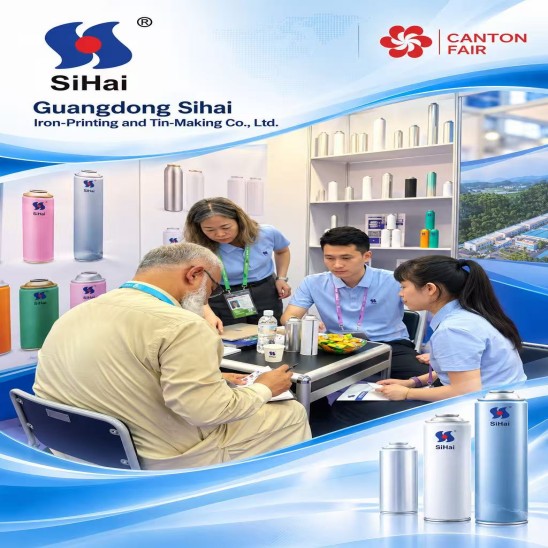
Guangdong Sihai Iron-Printing and Tin-Making Co.,Ltd. was founded in 1998, located in the beautiful tourist city of Zengcheng, Guangzhou. Our company covers an area of 38,000 square meters and our main business is tinplate trading, coil cutting, coating, printing and tin-making. Our company has 3 advanced Japan Fuji PRIMEX-F452 print lines, 3 paint lines and 9 high-speed tin-making lines, and more than 25 automatic punching machines and plastic injection machines, with an annual production capacity of 380 million tins. We are guided by the business purpose of "quality first, customer first" to provide you with high quality products and efficient services. We invite you to visit our company. Therefore, we welcome all interested companies to contact us for future business discussion. We believe we can guarantee your satisfaction by meeting all your requirements.
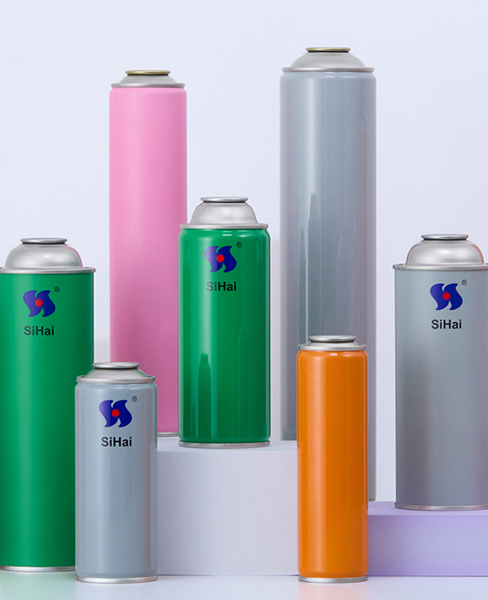
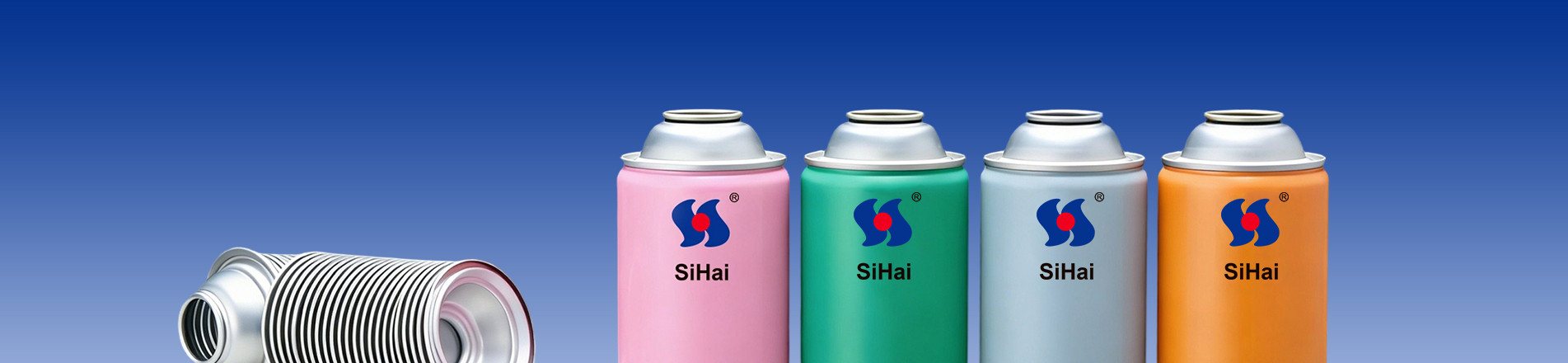
We have full series aerosol tin can, including diameter 45/52/57/60/65/70mm, height from 90-300mm.
Our Advantage
----High Quality raw material-Tinplate----Specialized technique team----Strict QC system ----Short lead time----Professional Sales Team----In time after-sales service


 en
 ru
 es
 pt
 zh-CN