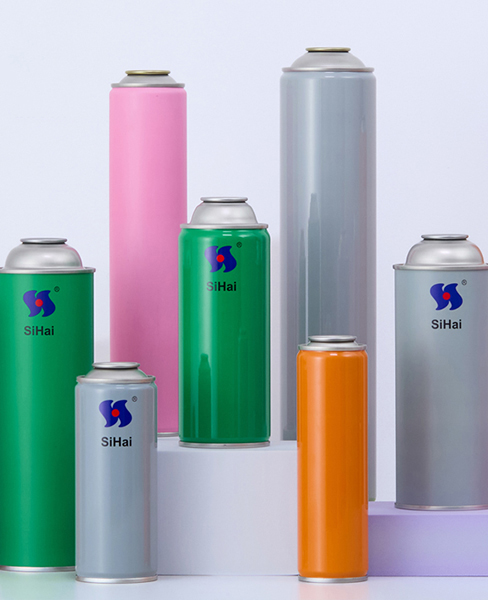
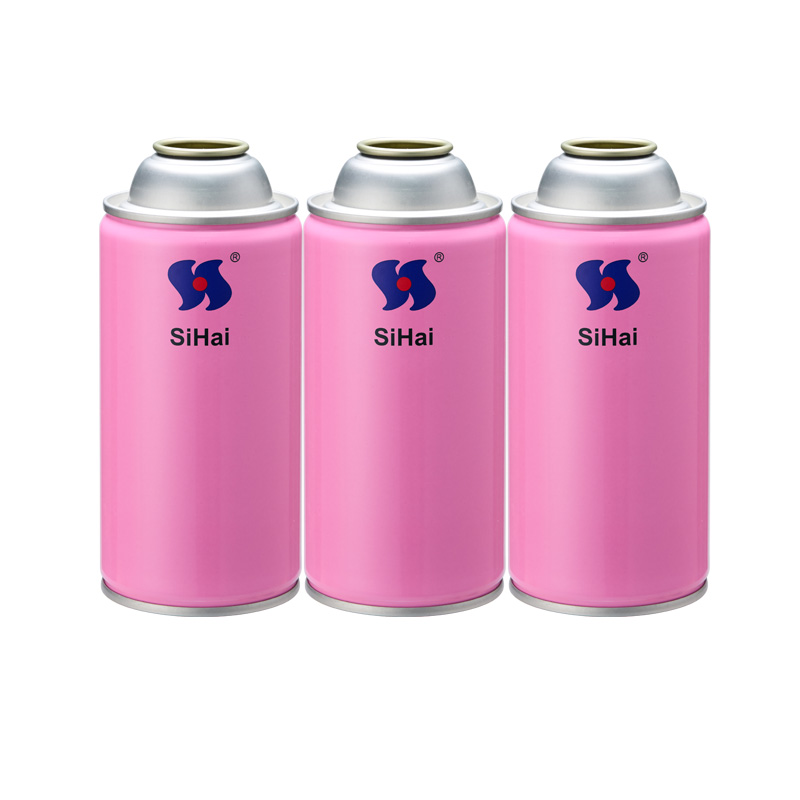
In the world of aerosol packaging, safety and reliability are non-negotiable. Whether you are filling household products, personal care items, or industrial chemicals, the container must withstand high internal pressure without compromising integrity. This is where the 60mm necked-in empty aerosol tinplate can from Guangdong Sihai Iron-Printing and Tin-Making Co., Ltd. stands out.
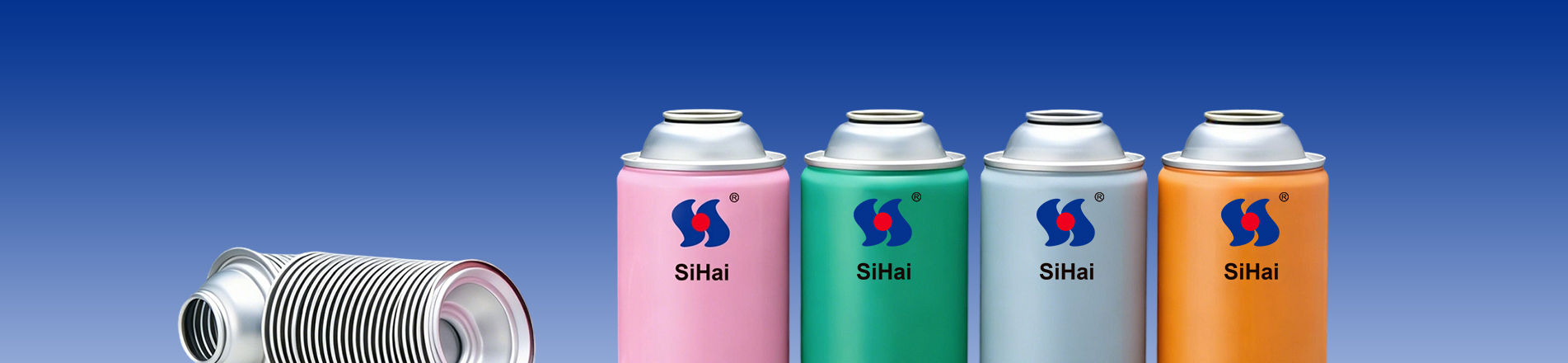
Engineered for high-pressure applications, the 60mm aerosol tin can delivers stable, safe, and reliable performance, which is widely used for spray paint products. It boasts a deformation pressure of 1.8MPa and a burst pressure of 2.0MPa, ensuring excellent pressure resistance for a wide range of aerosol products and demanding industrial applications. The necked-in design not only enhances stacking stability during transport and storage but also provides a sleek, modern appearance that appeals to end-users.
Behind this high-quality packaging is a company with a strong legacy. Founded in 1998 and located in the beautiful tourist city of Zengcheng, Guangzhou, Guangdong Sihai Iron-Printing and Tin-Making Co., Ltd. has grown into a trusted name in the industry. Our expansive 38,000-square-meter facility specializes in tinplate trading, coil cutting, coating, printing, and tin-making.
We operate 2 advanced Japan Fuji PRIMEX-F452 print lines, 2 paint lines, 9 high-speed tin-making lines, and over 25 automatic punching and plastic injection machines. With an impressive annual production capacity of 380 million tin cans, we are fully equipped to meet large-scale demands without sacrificing quality. Guided by our business purpose of "quality first, customer first," we are committed to providing high-quality products and efficient services to clients worldwide.
We invite interested companies to contact us for future business discussions. Whether you need standard aerosol cans or customized printing solutions, we are confident that we can meet your requirements and guarantee your satisfaction. Let Guangdong Sihai be your reliable partner in aerosol packaging.
We use them countless times in our daily lives—from applying deodorant and whipping cream to spraying paint and cleaning products. The aerosol can is a masterpiece of simple yet brilliant engineering, a self-contained dispensing system that we often take for granted.But have you ever stopped to wonder, how does it actually work? It all comes down to the clever interplay of its individual parts. Let's break down the anatomy of this common household object.1. The Can This is the main body, usually made of steel or aluminum. It's designed to be incredibly strong to withstand high internal pressure. The bottom of the can is almost always concave (domed inward). This isn't a manufacturing error; it's a critical safety feature. The dome is designed to invert and pop outwards if the internal pressure gets dangerously high (e.g., from exposure to heat), preventing a potentially explosive rupture.
2. The Valve
This is the heart of the entire operation. It's a spring-loaded mechanism seated at the top of the can that acts as a gatekeeper. When you press the actuator (see below), the valve opens, allowing the product and propellant to escape. The moment you release pressure, the spring snaps the valve shut again, sealing the can and preserving the contents.3. The ActuatorThis is the part you physically push with your finger. It's the trigger that depresses the valve stem to open the valve. But its job isn't just about on/off. The actuator is specially designed with a small orifice that shapes the spray, creating the mist, stream, or foam you expect from the product.4. The Dip TubeImagine a tiny straw running from the valve down to the bottom of the can. That's the dip tube! Its crucial job is to siphon the liquid product from the bottom of the can up to the valve. Without it, you'd only spray gas and whatever product was at the very top.5. The PropellantThis is the invisible engine. The propellant is a compressed gas (or mixture of gases) stored inside the can alongside the product. It creates the pressure that forces the product out. When the valve opens, the high-pressure propellant pushes the product up the dip tube, through the valve, and out of the actuator. In many cans, the propellant also acts as a solvent that expands into a gas as it exits, helping to atomize the product into a fine mist.6. The Product ConcentrateThis is the actual substance you bought the can for—the paint, the cream, the cleaner, the silicone lubricant. It's formulated to work with the specific propellant and the mechanics of the aerosol system.How It All Works Together:1. You press down on the actuator.2. This pushes down on the valve stem, opening the valve.3. The high-pressure propellant immediately forces the product concentrate up the dip tube.4. The mixture of product and propellant rushes through the open valve.5. It hits the actuator, which shapes and directs it into the desired spray pattern as it exits the can.6. You release the actuator, the valve spring closes, and the entire process stops instantly.Bonus Part: The Tamper-Evidencing OvercapThat plastic cap that comes on a new can isn't just for show. It protects the actuator from dirt and, most importantly, prevents accidental spraying during shipping and handling. It's often designed to "snap" off on the first use, proving the product hasn't been tampered with.
So next time you pick up an aerosol can, take a second to appreciate the elegant and robust engineering hidden within its simple metal form. It's a perfect example of form meeting function, all in the palm of your hand.
The use of aerosol cans is very extensive, mainly including the following aspects:
Medical industry: aerosol cans are widely used in the medical industry to store and transport medical aerosols, such as inhaled aerosol and aerosol, and medical oxygen. The materials used to make storage cans must comply with hygiene standards to ensure the safety and effectiveness of drugs.
Paper industry: In the paper industry, aerosol cans are used to store chemicals that need to be added during pulp production. These drugs usually exist in gaseous or liquid form, and are stored in aerosol cans to ensure the quality and effectiveness of the drugs, as well as facilitate pipeline transportation.
Industrial field: Aerosol cans are widely used in industrial fields, such as photovoltaic crystalline silicon, semiconductor manufacturing, heavy industry manufacturing, etc., to ensure the safety and efficiency of industrial productionLaboratory: In the laboratory, aerosol cans are used to store liquefied gases and other unstable gases, facilitating the operation of experiments and ensuring their safety.
Other applications: Aerosol cans are also used to store various chemical solvents and cleaning agents, such as isopropanol (IPA), and are widely used for cleaning work in electronic assembly and repair processes. In addition, aerosol canning machines are widely used in industrial, chemical, daily chemical, pharmaceutical and other industries, mainly for self painting, insecticides, cleaning agents and other products.
.jpg)
.jpg)

 en
en ru
ru es
es pt
pt zh-CN
zh-CN