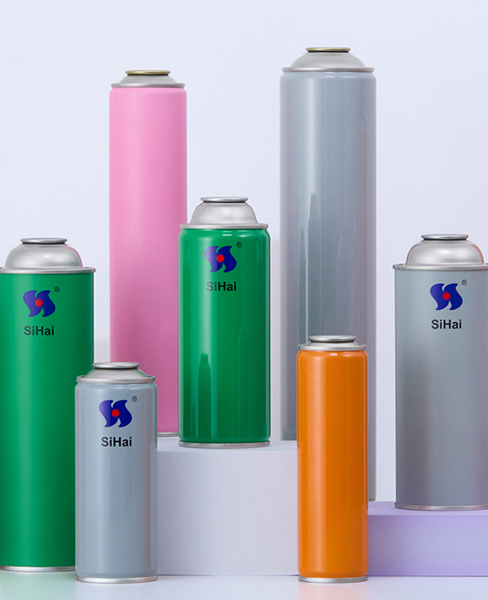
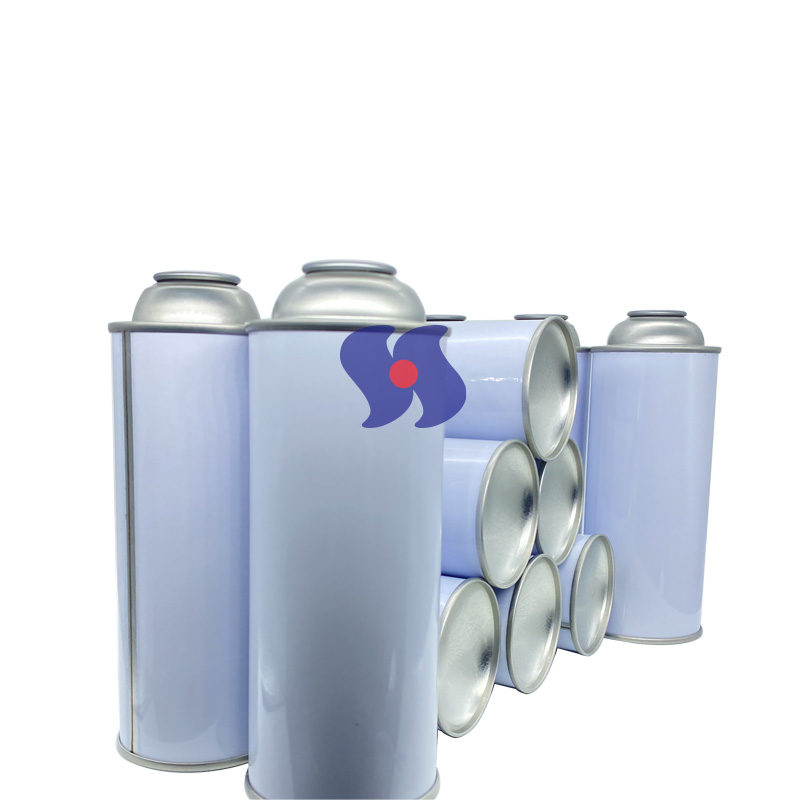
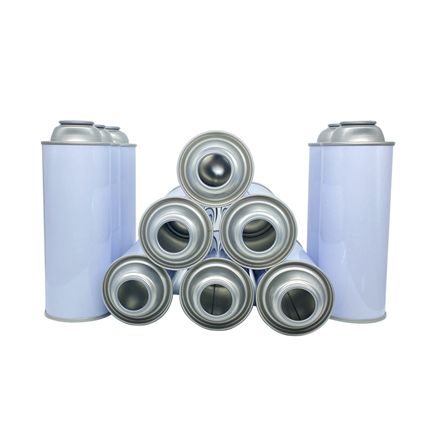
Three-piece aerosol cans remain one of the most trusted packaging solutions for aerosol products worldwide. At Guangdong Sihai Iron-Printing & Tin-Making Co., Ltd. (Sihai), we have specialised in aerosol can manufacturing for over 28 years since our founding in 1998, with an integrated factory located in Zengcheng, Guangzhou. Our three-piece aerosol can is built with three separate components: a welded can body, a top cone, and a bottom dome, precision-assembled to form a pressure-safe container for all kinds of spray formulations.
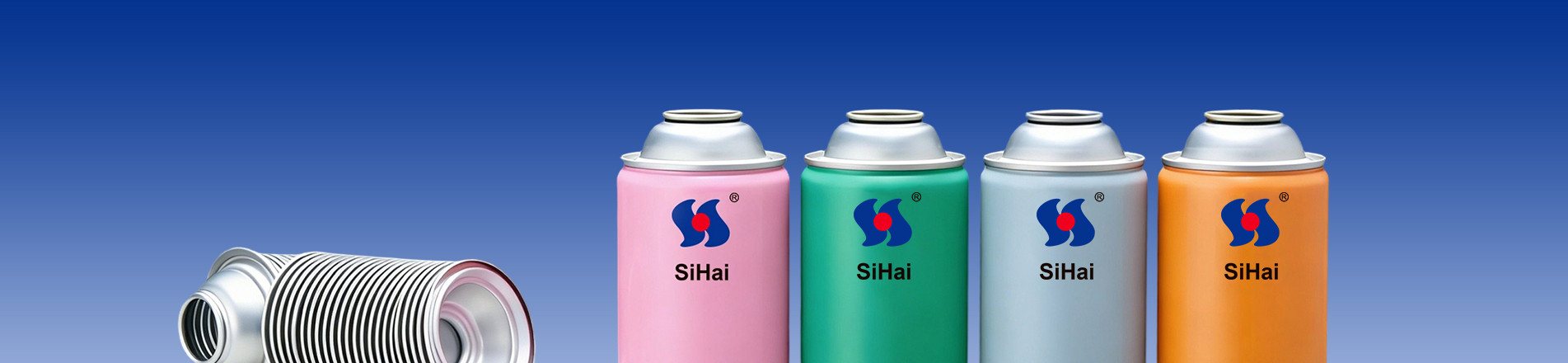
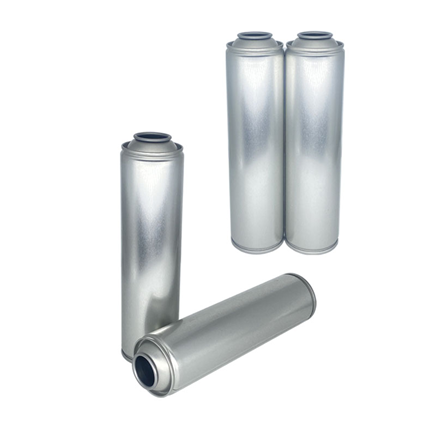
What makes Sihai three-piece aerosol cans stand out is our outstanding flexibility and in-house capability. As an integrated tinplate printer and can maker, we handle tinplate cutting, coating, offset printing and can fabrication under one roof. We supply both straight and necked-in aerosol cans, with multiple standard diameters including 45mm, 52mm, 57mm, 60mm, 65mm and 70mm. We can adjust heights and inner linings to match your formula, whether for automotive cleaners, lubricants, spray paints, insecticides, air fresheners or industrial sprays. High-quality side seam welding eliminates leakage risks, while our controlled internal coating protects the tinplate from chemical corrosion and keeps your product stable during storage and ocean transport.
Great branding potential is another key benefit of working with Sihai. Matte or gloss varnish, custom CMYK artwork and special finishes are all supported, helping your spray products stand out on retail shelves. Our tin aerosol cans are fully recyclable, aligning with global sustainable packaging trends.
Sihai provides full OEM & ODM service for empty three-piece aerosol cans, covering standard sizes and custom development. Strict pressure testing and leak inspection are carried out for every batch to meet international safety standards. We also support cone & dome supply to complete your aerosol packaging set.
If you are sourcing dependable aerosol packaging for your brand, Sihai delivers consistent quality, stable lead times and tailored support for your aerosol business. We serve global buyers with reliable export service and welcome sample requests and specification discussions.
Contact our Sihai sales team today to get your quotation and samples.
You should verify six factors before sourcing: material and construction quality, dimensional accuracy, pressure and safety compliance, lining compatibility, supplier qualifications, and total cost. Each factor affects product safety, filling line performance, and long-term costs. A systematic evaluation prevents costly rework and recalls. SiHai supplies empty aerosol tin cans built to these criteria, so you can benchmark every factor against a known standard and compare each empty aerosol tin can supplier with confidence.
Key Takeaways
Check can specifications like thickness, dimensions, and pressure ratings before you buy.
Choose suppliers with certifications and documented quality controls to ensure safety and consistency.
Compare total costs, not just unit price, to avoid hidden expenses from defects or delays.
Technical Specifications to Verify
Technical specifications form the foundation of every sourcing decision. You need to confirm five areas before you discuss price: the tinplate itself, the can dimensions, the pressure performance, the internal lining, and the integrity test results. Each area carries its own data points. Each one also connects to the others. A thin wall weakens pressure performance. A poor lining ruins a strong can. You should treat these specifications as a single system, not a checklist of isolated numbers.
Tinplate Material and Coating Quality
Tinplate grade and thickness drive the mechanical behavior of the entire can. You should ask for the steel substrate grade, the tin coating weight, and the exact wall thickness in millimeters. These three values tell you how the can will perform in transit, on the filling line, and under pressure.
Thickness deserves special attention because it creates a direct trade-off between cost and durability. The table below shows how gauge choice changes performance.
Tinplate Thickness Scenario
Effect on Durability
Effect on Pressure Resistance
Thicker gauge (0.20 mm and above)
Substantially boosts durability
Exponentially raises burst-pressure tolerance
Downgauging (e.g., to 0.18 mm)
Lowers cost but increases risk of denting in transit unless bottom profiling is applied
Reduced pressure tolerance compared with thicker gauge
You can see the pattern clearly. A thicker gauge buys you margin. A thinner gauge saves money on the unit price. That saving disappears fast when dented cans jam your filling line or fail in a customer's hands. If you choose a lighter gauge for cost reasons, confirm that the supplier applies bottom profiling to recover dent resistance.
Coating quality matters just as much as the steel beneath it. Ask how the supplier controls tin coating weight and how they inspect for coating continuity. Uneven coating leaves bare spots. Bare spots become corrosion sites. Corrosion sites become leaks. SiHai documents coating weight and substrate grade for every production lot, so you can verify these values against your own specification sheet.
Dimensional Accuracy and Valve Fit
A can that measures correctly on paper can still fail on your line. You need to verify the critical dimensions that govern valve crimping and filling equipment performance. The key values include the neck diameter, the curl dimensions, the body diameter, and the overall height. Each one carries a tolerance. You should request those tolerances in writing and compare them against your valve supplier's crimping recommendations.
Valve fit deserves its own test. Order a small batch of cans and crimp your actual valves onto them. Then run a leak check. A mismatch of a few tenths of a millimeter at the neck can produce a poor crimp seal. That seal may pass a quick visual check and fail weeks later in storage. Dimensional accuracy also affects your filling line speed. Cans that sit slightly out of round cause jams, mis-feeds, and downtime. Downtime costs more than the cans themselves.
Ask the supplier for a dimensional control plan. The plan should show which dimensions they measure, how often they measure them, and what tolerance limits trigger rejection. SiHai provides dimensional reports with sample shipments, so you can confirm neck and curl accuracy before you commit to volume production.
Pressure Ratings and Burst Safety Margins
Pressure performance separates a safe aerosol package from a hazard. You should collect four numbers from every supplier: the working pressure at 55°C, the hydrostatic burst pressure, the test pressure multiplier, and the expected vapor pressure of your propellant system. The table below shows typical values across common can types.
Parameter
Tinplate Cans
Aluminium Monobloc Cans
Working pressure (at 55°C)
≈ 8–10 bar
≈ 12–15 bar
Hydrostatic burst pressure
≈ 18–22 bar
> 18–20 bar
Test pressure multiplier
1.5× working pressure
1.5× working pressure
Propellant vapor pressure (propane–butane, 20°C)
≈ 6–8 bar (rises with temperature)
≈ 6–8 bar (rises with temperature)
Read the table as a safety chain. Your propellant vapor pressure sits at the bottom, around 6–8 bar at room temperature. That pressure rises as temperature climbs. The working pressure rating must cover the hottest condition your product will realistically meet. The burst pressure must sit well above the working pressure, and the standard test multiplier of 1.5× working pressure gives you a defined verification point.
You should also confirm how the supplier tests burst performance. Ask whether they test every lot or sample by batch. Ask for the test method and the acceptance threshold. A supplier who shares burst test data openly gives you a verifiable safety margin. A supplier who quotes only a single pressure number gives you nothing you can check.
Internal Lining Compatibility
The internal lining protects both your formula and the can. It separates reactive ingredients from the bare metal beneath. That separation preserves formulation integrity from filling to end use. It prevents color drift, off-odor, gas pressure changes, and metallic after-notes that surface months later. It also maintains a stable metal-formula interface under fluctuating temperatures and long storage, which reduces late-stage failure risk during storage and transport.
A good lining limits corrosion pathways such as pinholes, micro-leaks, and pressure instability. It keeps can integrity intact and protects packaged product quality. Batch-to-batch coating uniformity in thickness and cure quality maintains a uniform sensory profile, pressure retention, and discharge behavior. That uniformity means fewer quality holds and less revalidation burden for you. The lining must also withstand filling, crimping, pressure testing, and warehousing stress. Hidden defects from these steps can degrade field performance long after the cans leave your plant.
The table below maps each compatibility mechanism to its effect on stability and shelf life.
Mechanism of Internal Lining Compatibility
Effect on Product Stability & Shelf Life
Separates reactive formula (solvents, propellants, fragrances, actives, water phases) from bare aluminum
Preserves formulation integrity from filling to end use; prevents color drift, off-odor, gas pressure changes, and metallic after-notes that surface months later
Maintains a stable metal-formula interface under fluctuating temperatures and long storage
Reduces delayed/late-stage failure risk during storage and transport
Limits corrosion pathways (pinholes, micro-leaks, pressure instability)
Keeps can integrity intact, protecting package safety and packaged product quality
Provides batch-to-batch coating uniformity (thickness, cure quality)
Maintains uniform sensory profile, pressure retention, and discharge behavior; fewer quality holds and revalidation burden
Withstands filling, crimping, pressure testing, and warehousing stress
Prevents hidden defects that later degrade field performance; supports long-run stability
Enables compatibility validation and documented process controls
Stronger barrier performance means fewer shelf-life-related complaints and better lot consistency
You should treat lining selection as a compatibility exercise, not a catalog pick. Aerosol systems combine pressurization, active formulations, and long storage. The lining must resist chemical contact while keeping barrier integrity under pressure changes. Base metal quality cannot replace the lining. Aluminum provides structure, while the internal barrier prevents the chemical interaction that degrades both product and package.
Before you commit, prioritize three things: compatibility validation with your actual formula, coating consistency across batches, and documented process controls. These three items carry the most weight for reliable shelf-life performance. SiHai offers chemical-resistant and food-grade lining options and supports compatibility validation with your formula, so you can confirm barrier performance against real product rather than a generic data sheet.
Container Integrity Testing Before Filling
Integrity testing closes the loop on everything above. You should confirm which tests the supplier runs before cans leave their facility, and you should repeat key checks when the cans arrive at yours. A practical pre-filling program covers four checks: a pressure hold test on a sample from each lot, a visual inspection for coating defects and dents, a dimensional spot check on neck and curl, and a leak check after crimping your valves onto sample cans.
Ask for the supplier's sampling plan. How many cans per lot do they test? What defect rate triggers a lot rejection? Do they retain test records, and can they send them with the shipment? Documented test records turn a verbal promise into evidence you can audit. They also give you a baseline for incoming inspection, so you can compare what you receive against what the supplier certified.
Run your own incoming checks even when the supplier's reports look clean. A simple pressure hold test and a visual sweep catch handling damage from shipping. Catching damage at goods-in costs you a phone call. Catching it after filling costs you a full batch of product.
SiHai ships sample cans with test reports covering pressure, dimensions, and coating, so you can run your own verification against documented values before you place a full order.
Compliance, Supplier Vetting, and Cost
Technical specifications tell you whether a can will perform. Compliance and supplier reliability tell you whether it will perform legally, consistently, and at a cost you can live with. You should treat this second layer as a gate. A can that meets every dimensional target but lacks the right certification will stop at customs or fail an audit. A supplier who quotes the lowest price but ships late will cost you more than the price difference. Work through compliance first, vet the supplier second, and evaluate cost last.
Regulatory and Safety Standards
Aerosol packaging crosses borders, and each market applies its own rules. You need to map the standards that apply to your destination before you sign a purchase order. The table below summarizes the main requirements you will meet in major markets.
Standard / Regulation
Market / Jurisdiction
Key Requirement for Empty Aerosol Tin Cans
ADR Special Provision 327
International (cross-border)
Partially spent sprays remain classified as aerosol hazmat, not scrap; requires verified depressurization, rigid outer packaging, palletization, manifests stating drained/punctured/empty condition, and lane-specific markings
DOT (49 CFR)
United States
Governs "empty" cans lacking total depressurization (especially former flammable containers); requires pressure ratings aligned with can specs, wall thickness and crimp integrity inspection, aluminum segregation, full depressurization before baling, and separation of punctured from intact cans
REACH
European Union
Coatings contain restricted compounds; recyclers require declarations for inconsistent inbound material
ISO 14001
International (environmental management)
Non-sparking puncture systems, pass/fail leakage screening to isolate damaged valves before baling, and logged test times/dates/failures for audit trails
EPA / CPSC
United States
Enforce aerosol product regulations including limits on volatile organic compounds (VOCs) to reduce air pollution and minimize accident/injury risk
FEA standards
Industry (bulk storage)
Bulk storage and ventilation requirements; storage/segregation alignment
The U.S. market adds a second layer through the Environmental Protection Agency (EPA) and the Consumer Product Safety Commission (CPSC). These agencies enforce aerosol product regulations, including limits on volatile organic compounds (VOCs) to reduce air pollution. Practical compliance also covers daily operations. Store aerosol cans away from heat sources. Monitor expiration dates and follow usage instructions carefully. Conduct regular training so employees understand handling and disposal protocols. Test for leaks regularly to prevent hazardous situations. Review compliance with current regulations frequently to maintain safety and trust.
Transport rules deserve separate attention. Aerosol tinplate cans are specified to US DOT 2N/2P/2Q and EU standards I, II, III. The DOT framework sets clear limits for non-reusable metal containers. DOT-2P covers cans under 1 liter with an inside diameter under 3 inches, a wall thickness above 0.007 inches, and a burst pressure above 240 PSI. DOT-2Q raises the wall thickness floor to 0.008 inches and the burst pressure floor to 270 PSI. DOT-2Q1 tightens the volume limit to 0.4 liters and pushes burst pressure above 320 PSI. You should confirm which DOT designation your can carries and match it to your product's pressure profile.
Choosing a Reliable Empty Aerosol Tin Can Supplier
Supplier selection decides whether your specifications hold over thousands of units and dozens of shipments. You should evaluate an empty aerosol tin can supplier on four dimensions: documented process control, certification coverage, traceability, and honesty about failures.
Start with process control. Ask how the supplier inspects steel from incoming coils through to valve fitting and final filling checks. Request batch records, calibration dates, and evidence of corrective actions. A supplier who tracks these items can show you where a problem started and what they changed. A supplier who cannot produce them is guessing.
Move to certification coverage. ISO 9001 supports consistent production quality through documented procedures. ISO 14001 adds practical environmental controls such as solvent handling, energy monitoring, waste separation, and recyclable packaging. Ask for measurable data rather than vague "eco-friendly" claims. UN 1950 covers aerosol transport safety, and a qualified manufacturer should provide pressure-test results, leak testing, closure inspections, and clear classification documents. Inspectors may also review seam strength, internal coating quality, and carton markings.
Traceability closes the loop. A strong supplier can trace every can to its steel coil and production shift. They repeat tests after equipment changes. They explain failed samples honestly instead of hiding them. Certifications alone are insufficient. Factory audits, sample inspections, and independent laboratory reviews confirm that daily controls match documented standards. SiHai supports this vetting process with batch records, traceability data, and open test documentation, so you can verify claims rather than accept them.
Quality Assurance and Certifications
Certifications give you a common language with your supplier. They also give you a paper trail for your own customers and auditors. You should confirm which certifications apply to your product category and request the supporting documents.
The core set covers quality, environment, safety, and market access. ISO 9001 ensures consistent production quality through documented procedures. DOT compliance confirms aerosols travel safely under transport regulations. REACH certification is required for products sold into the EU to meet chemical standards. CARB compliance limits VOC emissions for spray products sold in California. TSCA compliance confirms ingredient safety for U.S. markets.
Food-grade and regulated applications add more. FDA compliance and European food contact regulations apply when the can touches edible products. OHSAS 18001 covers occupational health and safety management. The table below shows how testing frequency and documentation line up across common standards.
Standard
Requirement
Testing Frequency
Documentation
FDA cGMP
Full batch testing
Every production run
Complete batch records
EPA Standards
Environmental impact
Monthly
Emissions reports
ISO 9001
Process validation
Quarterly
Audit reports
You should also map certifications to their purpose. ISO 9001 covers the quality management system. ISO 14001 covers environmental management. OHSAS 18001 covers occupational health and safety. DOT approval covers pressure vessel and transport safety. FDA compliance and European food contact regulations cover food-grade applications. Request the certificate scope, not just the certificate number. A certificate that excludes your can type tells you nothing useful.
Production Capacity and Lead Times
Capacity determines whether your supplier can meet your forecast without stretching. Lead time determines whether your launch schedule survives. You should ask for both in writing and test them with a trial order.
Capacity questions should cover monthly output per can size, the number of production lines, and the supplier's ability to absorb seasonal peaks. A supplier running near full capacity has little room for your growth or for recovery after a line stoppage. Ask how they schedule orders when demand spikes. Ask what happens to your delivery date when a larger customer places an urgent order.
Lead time breaks into two parts. Sample lead time covers the first physical can you hold in your hand. Simple product samples typically run 7–15 days. Complex or tooled product samples run 15–30 days. Production lead time covers the full order. Conventional standard cans typically run 15–20 days. Custom printed cans including plate making run 20–30 days. Expedited orders can run 10–15 days with terms to be confirmed. For reference, most Chinese aerosol can factories set production runs at 25–35 days, with ocean freight adding 30–40 days to U.S. ports plus customs clearance and inland transit. Build these numbers into your launch plan rather than discovering them after you order.
Unit Price Versus Total Cost
Unit price is the easiest number to compare and the least useful on its own. Total cost captures everything the can touches: filling line performance, defect rates, storage, freight, and the cost of a recall. You should build a total cost model before you choose between quotes.
Start with the visible costs. Unit price per can, freight per container, duties, and packaging all belong in the model. Add the hidden costs. A can with a thin wall dents in transit and jams your line. A can with inconsistent neck dimensions causes crimp failures and product loss. A can with a poor lining triggers shelf-life complaints and returns. Each of these events carries a cost that never appears on the supplier's invoice.
Downgauging illustrates the trade-off. A thinner tinplate lowers the unit price. It also raises the risk of denting unless the supplier applies bottom profiling. The saving per can may look attractive across a large order. The cost of one jammed filling line shift can erase it. You should weigh unit price against the defect rate you can tolerate and the line speed you need to hit.
SiHai prices cans against documented specifications, so you can compare quotes on equal terms. A quote built on verified thickness, coating weight, and pressure ratings gives you a real basis for total cost analysis. A quote built on unspecified values gives you a number you cannot trust.
Order Volume, MOQ, and Delivery Terms
Order volume shapes your unit price, your lead time, and your flexibility. You should understand the MOQ structure before you negotiate, because the threshold changes with can type and customization level.
The table below shows typical MOQ ranges across can categories.
Can Type
Minimum Order Quantity (MOQ)
Blank aluminum empty cans
5,000–10,000 pcs
Printed aluminum empty cans
10,000–20,000 pcs
Standard specification empty cans
5,000–10,000 cans
Custom printed or special shaped cans
30,000–50,000 cans
New mold custom cans
Negotiable based on cooperation plans
Delivery terms carry equal weight. You should confirm five items before you sign. Confirm the deposit percentage, the balance trigger, and the currency for payment terms. Confirm FOB, CIF, or DDP, the port of loading, and the Incoterms version for shipping terms. State sample lead time and production lead time separately. Clarify one-time tooling and setup fees and who owns the tooling. Specify carton, pallet, labeling, and UV coding requirements for packaging.
Payment terms commonly run T/T 30% advance plus 70% against bill of lading copy. Flexible terms are negotiable for long-term buyers. You should treat every term as a point to verify in writing, not a detail to settle after the order. A clear MOQ and delivery agreement protects both sides and prevents disputes when volumes shift or schedules tighten.
Verify technical specifications first, confirm compliance and supplier reliability second, and evaluate cost last. The right can balances technical fit, regulatory compliance, and total cost, not lowest price alone. Request samples and test reports before you commit to a full order. SiHai supports this process with documented specifications, sample cans, and test reports, so you can verify every factor before choosing an empty aerosol tin can supplier.
FAQ
What is the typical minimum order quantity for empty aerosol tin cans?
Standard cans usually start at 5,000 to 10,000 pieces. Custom printed or special-shaped cans typically require 30,000 to 50,000 pieces. SiHai confirms exact MOQ terms before you order.
How long does production and delivery take for empty aerosol tin cans?
Standard cans take 15–20 days to produce. Custom printed cans take 20–30 days. Ocean freight adds 30–40 days to U.S. ports. SiHai provides written lead times with every quote.
How do you verify can quality before placing a full order?
Request sample cans with test reports covering pressure, dimensions, and coating. Run your own pressure hold and valve crimp checks. SiHai supplies documented samples so you verify every specification first.
In today's fast-paced consumer market, packaging plays a vital role in protecting products, preserving freshness, and presenting brands in the best possible light. At Guangdong Sihai Iron-Printing and Tin-Making Co., Ltd., we specialize in the manufacturing of empty aerosol tin cans — a product that combines precision engineering, high-quality printing, and reliable performance.
What Are Empty Aerosol Tin Cans?
Empty aerosol tin cans are specially designed metal containers used to hold pressurized products before they are filled. They are widely used across industries such as:
Personal care – deodorants, hairsprays, shaving foams
Household products – air fresheners, insect repellents, cleaning sprays
Automotive – lubricants, spray paints, tire sealants
Industrial applications – adhesives, solvents, and specialty coatings
These cans must meet strict standards for pressure resistance, sealing, and durability, which is why choosing the right manufacturer matters.
Why Choose Guangdong Sihai?
With years of experience in iron-printing and tin-making, we have built our reputation on:
1. Superior Printing Quality
Our advanced iron-printing technology allows for vibrant, accurate, and durable designs. Whether you need bold branding or detailed graphics, we bring your artwork to life on every can.
2. Precision Manufacturing
Every empty aerosol tin can is produced with strict tolerance control to ensure a perfect fit with valves, caps, and filling equipment.
3. Customization Options
We offer a wide range of sizes, shapes, and specifications to match your product's needs. From standard dimensions to fully customized designs, our team works closely with clients to deliver the right solution.
4. Reliable Production Capacity
Our facilities are equipped to handle both small and large orders, ensuring timely delivery without compromising on quality.
5. Quality Assurance
From raw material inspection to final product testing, every stage of production is carefully monitored to meet international standards.
Applications Across Industries
Empty aerosol tin cans are versatile packaging solutions. Whether you're launching a new personal care line or expanding an industrial product range, our cans provide a safe, attractive, and functional packaging option.
Partner with Us
At Guangdong Sihai Iron-Printing and Tin-Making Co., Ltd., we are committed to delivering packaging solutions that help your products stand out. If you're looking for a trusted partner for empty aerosol tin cans, we'd love to hear from you.
Contact us today to discuss your requirements and discover how we can support your business.
At Guangdong SIHAI Iron-Printing & Tin-Making Co., Ltd., we understand that the packaging is just as important as the product inside it. For decades, we have specialized in the precision manufacturing of high-quality metal packaging, specifically empty aerosol tin cans and empty aerosol aluminum cans.
But what is the difference between these two materials, and why does it matter for your business? As a leading supplier in the industry, we believe that understanding these nuances is key to selecting the right packaging solution for your brand.
Understanding Empty Aerosol Tin Cans
Tinplate (tin) cans are the traditional workhorse of the aerosol industry. At SIHAI, we utilize advanced iron-printing technology to ensure our empty aerosol tin cans are not only durable but also visually stunning.
The SIHAI Advantage with Tin:
· Superior Printability: Because we are an integrated iron-printing factory, we have total control over the decoration process. Tin cans offer a brilliant canvas for high-definition lithographic printing, allowing your product to stand out on crowded shelves.
· Unmatched Strength: Tinplate is highly resistant to physical damage, making it ideal for products that require high-pressure filling or robust shipping conditions.
· Cost-Effectiveness: For high-volume production runs, tin cans offer a highly economical solution without compromising on quality or aesthetics.
The Benefits of Empty Aerosol Aluminum Cans
In recent years, aluminum has taken the packaging world by storm. Our empty aerosol aluminum cans are engineered for modern demands, offering a sleek, seamless design that appeals to the premium market.
The SIHAI Advantage with Aluminum:
· Lightweight & Sustainable: Aluminum is lightweight, which reduces shipping costs and carbon footprints. Furthermore, it is infinitely recyclable, helping our clients meet their ESG (Environmental, Social, and Governance) goals.
· Corrosion Resistance: Aluminum naturally resists rust, making it the preferred choice for toiletries, pharmaceuticals, and high-moisture environments.
· High Pressure Tolerance: The seamless design of aluminum cans allows for thinner walls with high burst strength, making them perfectly suited for products like deodorants, hairsprays, and air fresheners.
Why Choose Guangdong SIHAI?
As a manufacturer, we do not just "supply" cans; we provide comprehensive packaging solutions. Here is what sets us apart:
1. Integrated Production: As our name (Iron-Printing & Tin-Making) suggests, we are a fully integrated factory. We handle the printing and manufacturing in-house, ensuring faster lead times and strict quality control from start to finish.
2. Quality Assurance: We adhere to the highest international standards, ensuring that every can that leaves our factory is hermetically sealed and structurally flawless.
3. Customization: Whether you require a specific diameter, height, or a complex 8-color print, we have the technical expertise to bring your vision to life.
Choosing between an empty aerosol tin can and an empty aerosol aluminum can depends on your specific product needs, budget, and brand positioning. At Guangdong SIHAI Iron-Printing & Tin-Making Co., Ltd., we are committed to helping you find the perfect fit.
Ready to start your next packaging project? Contact us today to discuss your specific requirements. Let our tin and aluminum expertise power your brand’s success.
For nearly three decades, the aerosol industry has evolved dramatically. Yet, one constant remains: the need for reliable, high-quality packaging. As a manufacturer with 28 years of experience in air-pressurized tin cans, we have witnessed trends come and go, but our commitment to precision engineering and sustainable practices has never wavered.
Today, we want to take a closer look at the unsung hero of the consumer goods world: the empty aerosol tin can.
What Makes an Empty Aerosol Tin Can "Premium"?
Not all aerosol cans are created equal. When you choose a can for your product—whether it is personal care, household cleaning, automotive, or industrial lubricants—the integrity of the container is non-negotiable. Our journey of 28 years has taught us that a premium empty aerosol tin can must excel in three key areas:
1. Internal Coating Integrity: The inside of the can must be perfectly coated to prevent chemical reactions between the product and the tinplate. A flawed coating leads to corrosion, which ruins the product and damages the brand reputation.
2. Valve Compatibility: The curl and neck of the can must be engineered to micro-precision. Even a 0.1mm deviation can cause valve leakage or improper crimping.
3. Pressure Resistance: Whether you are using hydrocarbon or compressed air propellants, the can must withstand high internal pressures without deforming.
The Sustainability Angle: Tin vs. Plastic
In an era where sustainability is paramount, metal packaging is experiencing a renaissance. Empty aerosol tin cans are 100% recyclable, and tinplate is one of the most recycled materials in the world.
Unlike plastic alternatives, tin does not degrade in quality during the recycling process. By choosing our tin cans, you are not just choosing a container; you are making a statement about your brand’s commitment to the circular economy.
The "28-Year" Difference Experience matters. We are not a startup trying to figure out the nuances of the industry. We are the experts who have survived and thrived through economic shifts, regulatory changes, and technological revolutions. Here is what our 28-year history brings to your doorstep:
· Tried-and-Tested Materials: We source the highest-grade tinplate from trusted mills, ensuring consistency in thickness and ductility.
· Rigorous Quality Control: Our production lines feature advanced leak-testing equipment. We reject defects at the source, ensuring that every "empty" can you receive is actually "perfect."
· Industry Insight: We understand the logistics of shipping empty aerosol cans. We know how to pack them to prevent dents and how to manage supply chains to ensure you never run out of stock.
Customization and Versatility
Our "empty" cans are a blank canvas. We offer a variety of standard sizes and finishes. Furthermore, we can work with you on custom shaping, decorative printing, and specialized necks to set your product apart in a crowded marketplace.
As we look ahead, we see a continued shift towards "air-pressurized" (bag-on-valve) systems that separate the product from the propellant. Our 28 years of manufacturing experience has allowed us to adapt our tin can specifications to suit these advanced technologies seamlessly.
An empty aerosol tin can is more than just a package; it is a critical component of your product's performance and your brand's image. When you partner with a manufacturer with 28 years of pedigree, you gain peace of mind, quality assurance, and a partner who understands your business.
Are you ready to upgrade your packaging? Contact us today to discuss your specific requirements and let our experience work for you.
Empty aerosol tin cans are more than just containers—they’re the foundation of countless products, from paints and lubricants to cosmetics and household sprays. As a leading supplier, we understand that the right can make all the difference in performance, safety, and market appeal.Why Quality MattersA well-engineered aerosol tin ensures:· Perfect Seal: Prevents leaks and preserves propellant integrity.· Durability: Withstands internal pressure and handling.· Smooth Functionality: Consistent valve operation for reliable spray every time.· Customization: Ready for branding with prints and finishes that attract eyes on shelves.Versatile ApplicationsThese cans are indispensable across industries:· Automotive (degreasers, tire inflators)· DIY & Paints· Cosmetics (hairsprays, mousses)· Industrial & Cleaning products· Gardening & InsecticidesPartner with a Trusted SupplierChoosing the right supplier means securing:· Consistent quality and timely delivery· Compliance with international safety standards· Options for sizes, valves, and custom designs· Expert support from prototype to productionEmpty aerosol tins are your product’s first impression. Make it strong, safe, and sustainable.
Ready to package your next big idea? Contact us for premium empty aerosol tin solutions tailored to your needs.
Aerosol cans are single-use metal containers for aerosol products. When in use, the aerosol product is ejected from the can under pre-pressurization through a valve in a controlled form. Guangdong Sihai is a professional manufacturer of empty tinplate aerosol cans with 27 years of experience. The main products that use aerosol cans are: air fresheners, car care products, spray paints, insecticides and so on.The capacity of Tinplate aerosol cans is usually between 100 ml to 1000 ml. Below are the common sizes of some products: Air Fresheners: Diameter 52x195mm 300ml/350ml necked-in cans Insecticides: Diameter 52x190mm 300ml/350ml and Diameter 57x216mm 400ml/450ml necked-in cans Deodorants: Diameter 45/52mm necked-in cans Shaving Foam Products: Diameter 65x158mm 400ml and Diameter 52x160mm 300ml necked-in cans Spray Paint Products: Diameter 65x158mm 400ml/450ml necked-in cans Cassette Oven Products: Diameter 65x159mm 220g/250g straight-wall cans Snow spray/colorful ribbon products: Diameter 45/52mm necked-in cans Hair spray products: Diameter 52*220/230/240mm necked-in cans Car care/Rust remover/Anti-rust agent products: Diameter 65mm necked-in cans
The specific capacity can be considered according to the amount of products used, the convenience of carrying and storage space and other factors. If you have any interest in the empty aerosol tin cans, please feel free to contact us!
The reasons for the use of empty aerosol tin cans for insecticidal water include, among others, their high level of sealing, their portability and ease of use, and their ease of spraying.
First, most of the active ingredients in insecticides are pyrethroids, which are insoluble in water but soluble in oil. The design of the aerosol can well isolate oxygen and prevent volatilization, ensuring the effectiveness of the insecticide. In addition, the propellant in the aerosol can, such as hydrocarbons, carbon dioxide, nitrous oxide, etc., is compressed in the can and the agent can be ejected by a simple press. This design makes the use of the insecticide extremely convenient.
Secondly, the sealing of the aerosol can is good, which can effectively prevent the volatilization of the agent and maintain the effectiveness of the insecticide. At the same time, due to the characteristics of convenient carrying and storage, the utility model can be used by users anytime and anywhere, especially in the crevices where pests hide, and the aerosol spraying method can effectively apply the medicine.
Finally, the aerosol cans are designed with safety in mind. The spray droplets are very small, and attention should be paid to avoid the risk of inhalation when using it, so it is recommended to wear an anti-inhalation mask when using it to ensure the safety of use.
In summary, the use of empty aerosol tin cans for insecticidal water is mainly based on its high sealing, easy to carry and use, and the convenience and safety of spraying.
There are four major components of an aerosol products, the aerosol can, the valve, the feed, and the ejector gas. Factors affecting the quality of aerosol cans, from raw materials, can-making equipment and processes to quality testing, there are many, the following is a brief introduction:1、The quality of tinplate materials:Tinplate substrate for the manufacture of cans requires high purity, such as impurity content is too high, affecting the ductility, brittleness, hardness and other processing properties and corrosion resistance.The tinplate materials we use are of the highest quality, one of the best tinplate, the quality is guaranteed! 2、The quality of cans body welding and repainting:For tinplate cans, one of the weaker links is the weld, which requires strict mechanical properties. The welding machine used in our Sihai factory is the world famous Switzerland SOUDRONIC machine, the quality is guaranteed.
3、Leak detection:
Aerosol products are mostly flammable and explosive products, each factory empty aerosol cans must be tested by online pressure leakage detection machine, and at the same time must be in accordance with the provisions of the deformation pressure and bursting pressure sampling, in order to ensure the safety of the product production, storage, transportation and use. Our Sihai factory not only has automated gas detection, but also manual hand inspection link, product safety can be assured.
If you have any needs for the empty aerosol tin cans, please feel free to inquire, we will provide you with the best quality service.
In today's world, empty aerosol tin cans are not just disposable tools, but versatile materials that can be used in various creative ways. Whether in art, crafts, or daily life, empty aerosol tin cans demonstrate their unique value and utility.
Applications in Artistic Creation
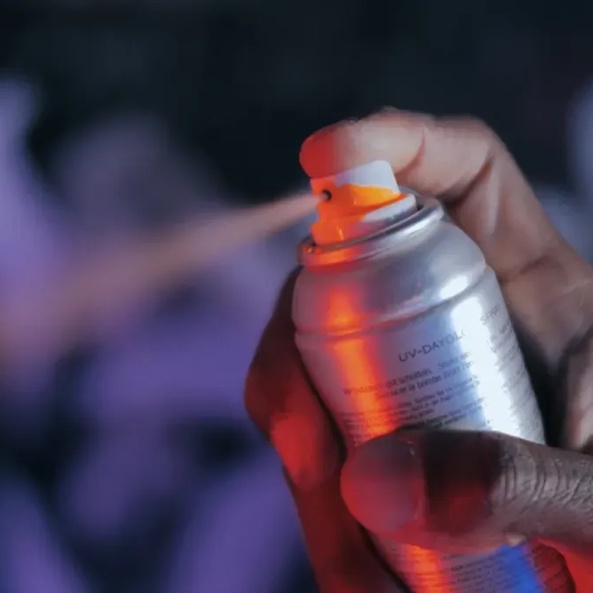
Empty aerosol tin cans play a significant role in artistic creation. Many artists use them for graffiti, murals, and sculpture. Their unique spraying effects and a wide range of color options provide artists with infinite creative possibilities. By skillfully manipulating the pressure and angle of the spray paint, artists can create lifelike images and stunning effects.
Utilization in Handicrafts
Empty aerosol tin cans are also widely used in the field of handicrafts. People use them to add color and enhance aesthetics to handicrafts. For example, using empty aerosol tin cans to color handmade flowers, decorations, and crafts can give them a vivid and appealing appearance.
Practical Uses in Daily Life
Apart from art and handicrafts, empty aerosol tin cans also have various practical uses in daily life. For instance, they can be used to repair and paint furniture, walls, and decorations, giving them a fresh look. Additionally, empty aerosol tin cans can be used for temporary marking, warning signs, and DIY decorations, adding fun and creativity to life.
Conclusion
In conclusion, empty aerosol tin cans are not just simple spraying tools but creative and versatile materials. In art, crafts, and daily life, they exhibit their unique charm and practicality. With the growing demand for creativity and personalization, it is believed that the application of empty aerosol tin cans will become increasingly widespread, bringing more surprises and joys to our lives.




 en
 ru
 es
 pt
 zh-CN