You verify a reliable aerosol can manufacturer China search through four checks: certifications and audits, references and online presence, quality and production standards, and pricing and logistics terms. Skip any one check, and sourcing problems begin.
A skipped verification step — rather than a "bad factory" — was identified as the root cause of most failures in the 2023–2026 review sample.
Key Takeaways
Always verify the supplier's certificates and audit reports to confirm they are legitimate and match the factory.
Check the supplier's online presence and ask for customer references to ensure they are a real manufacturer.
Evaluate quality by requesting material data sheets, pressure test results, and pre-production samples before placing a large order.
Verify Certifications and Audits for Your Aerosol Can Manufacturer China Search
Certifications give you the first hard evidence that an aerosol can manufacturer China search has surfaced a serious operation. A certificate is a claim. Your job is to test that claim against the issuing body, the legal entity, and the production site. This section walks you through the three checks that separate verified suppliers from polished sales decks.
Check Core Quality Certifications
Start with the standards that govern aerosol can production and distribution. Each one answers a different question about the factory.
Certification / Standard
Governing Body
Scope / Purpose
ISO 9001:2015
International Organization for Standardization
Quality management best practices for product safety and quality in packaging manufacturing; supports global market entry
ISO 14001:2015
International Organization for Standardization
Environmental management system standard referenced alongside ISO 9001
DOT standards
US Department of Transportation
Ensures aerosol cans withstand distribution and end-use rigors; packaging and labeling for pressurized or flammable goods
FDA regulations
US Food and Drug Administration
Governs aerosol packaging for pharmaceuticals, cosmetics, food, and health-claim products
EPA guidelines
US Environmental Protection Agency
Environmental impact, VOC emission limits, and sustainable packaging practices
ISO 9001 deserves your closest attention. Certified plants show defect rates near 0.8% against 3.7% for uncertified plants, and they field fewer customer returns. Ask for the certificate scope to confirm it covers metal packaging production, not just trading activity.
Market-specific rules matter just as much. DOT compliance is mandatory for shipping pressurized or flammable aerosol products into the United States. REACH registration is required for European sales, and over 22% of imported aerosols failed basic chemical registration in an ECHA review from April 2024. CARB limits apply to consumer products sold in California, with penalties exceeding $500K since 2022. TSCA governs US chemical ingredients. Match the certificate list to your destination market before you shortlist any supplier.
Technical standards round out the picture. Ask whether the factory tests to ASTM F1140 for internal pressurization failure resistance. Confirm it tracks ISO TC 52 for light gauge metal containers and UN Sub-Committee guidance on transport of dangerous goods. A supplier that references EU Aerosol Dispensers Directive 75/324/EEC, US DOT 49 CFR Part 173, and the OSHA Hazard Communication Standard speaks your compliance language.
Confirm the Certificate Holder Matches the Factory
A valid certificate proves nothing if it belongs to a different company. This is the most common gap in an aerosol can manufacturer China search, and it is easy to close with a document check.
Pull the certificate PDF from the supplier and compare five fields against what you were sold.
Certificate Field
What the Buyer Should Verify
Red Flag to Watch
Holder
Match the legal name on the certificate against the contracting supplier's legal name
Brand name only, or an unexplained entity mismatch
Sites
Confirm the listed production or processing location is where the goods are actually made
Production moved to an unverified location
Scope
Check the certified activities cover the required processing
Required activity falls outside the certified scope
Product Groups
Confirm the purchased product matches a listed category
Proposed product is not listed or cannot be matched
Status
Confirm the record is current and live
Suspended, terminated, or expired status
Run the verification in a fixed order. Download the certificate PDF and copy the certificate number. Check that the company name, scope, and issue dates match the supplier's claims. Open the certification body's website or use IAF CertSearch to validate accredited status. Contact the supplier for updated PDFs, product compliance documents, or order-specific paperwork. Record the verification date and keep it in your sourcing file.
Then connect the paperwork to the physical operation. Request the full legal company name, credit code, business license, and bank account details. Confirm the bank account name matches the contracting entity. Ask which legal entity manufactures the order, which processes stay in-house, and which are outsourced. A registered office, a showroom, and a factory are often three different addresses. Verify the real production site through a buyer-directed live video tour that starts outside the main gate and shows the factory sign, warehouses, production lines, QC stations, and loading area. An onsite visit or third-party audit works equally well.
Treat any request to pay a personal bank account as an immediate stop. The same applies to a mismatch between the contract entity, the invoice entity, and the bank account without a documented legal explanation. Never rely on a single document, factory photo, or certificate. Compare information from several sources until the legal entity, the production site, and the product evidence all align.
Request Recent Audit Reports
Certificates describe a management system. Audit reports show you what actually happened on the floor. Ask for reports from the last twelve months and read the findings, not just the cover page.
A credible audit package covers raw material inspection, in-process controls, product testing, and equipment calibration. Expect container quality verification at a 0.01% defect tolerance, valve component testing at a 100% inspection rate, and propellant purity checks at a 99.99% minimum. In-process controls should include continuous monitoring, real-time data analytics, and automated quality alerts. Product testing should cover leak detection, pressure testing, spray pattern analysis, and chemical composition verification, with at least 12 quality control checkpoints during production. Equipment calibration should run daily for critical parameters, weekly for comprehensive checks, and hourly under continuous monitoring.
Standard
Testing Scope
Frequency
Required Records
FDA cGMP
Full batch testing
Every production run
Complete batch records
EPA Standards
Environmental impact
Monthly
Emissions reports
ISO 9001
Process validation
Quarterly
Audit reports
Read the nonconformities section first. A factory that documents open findings and shows closed corrective actions is more trustworthy than one with a spotless report and no detail. Ask for a sample burst test report with raw data, not just a pass or fail stamp. Confirm the report includes controlled pressure ramp testing.
Match the audit scope to your product. Cosmetic fills call for ISO 22716 certification. Inhalation products need validated pharmaceutical-grade coating and dimensional tolerance documentation. European buyers now expect recycled-content verification, and the European Commission Packaging and Packaging Waste Regulation, in force since February 2025, sets a 2030 recyclability deadline with fee modulation that favors mono-material metal bodies. UNECE GHS Revision 11 from July 2025 tightened classification language for pressurized hydrocarbon systems, so ask whether the supplier has reassessed its labels. Budget up to twelve months for audit, trial fills, and stability testing, and prioritize suppliers with documented chain-of-custody data for sustainability reporting.
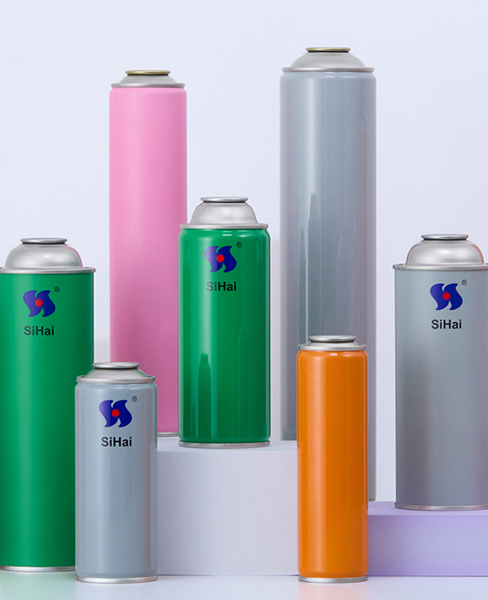
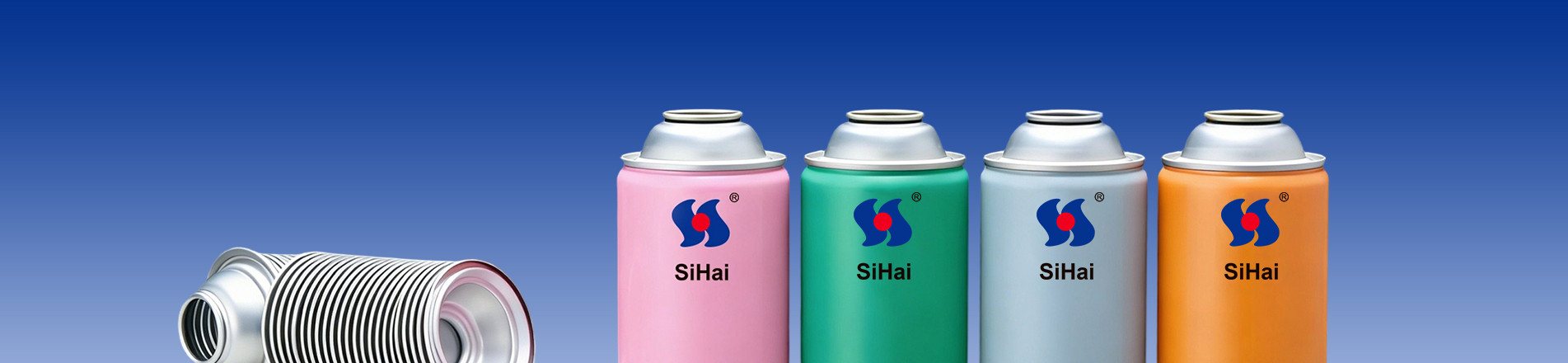
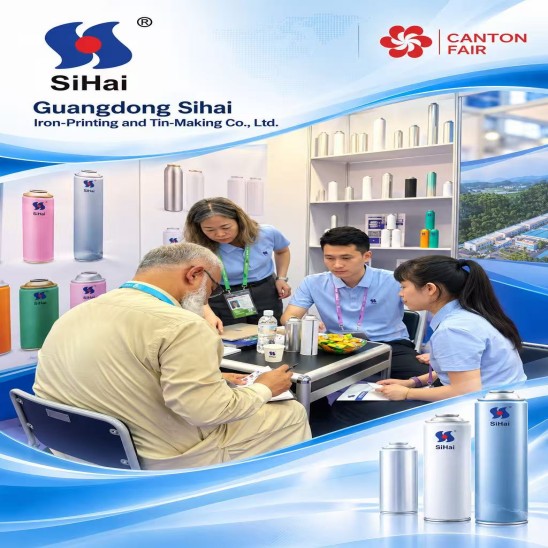
A transparent partner makes this stage simple. SiHai provides verifiable certifications, in-house testing records, and customizable tinplate components, so you can check every claim against a document and a production line.
Check Online Presence and Industry References
Paperwork alone does not tell the full story. A credible aerosol can manufacturer China search also leaves a visible trail online and in the industry. You can confirm that trail with a few focused checks.
Verify the Business License and Factory Identity
Request a clear, complete scan of the supplier's business license issued by the local Administration for Market Regulation. Then work through the verification in order:
Extract the 18-character Unified Social Credit Code, the official Chinese company name, the legal representative, registered capital, establishment date, business scope, and registered address.
Cross-reference the Chinese name and credit code against the GSXT government database at www.gsxt.gov.cn, which covers over 180 million registered entities.
Confirm the entity is active and free of abnormal business listings.
Compare every field against the contract, invoice, and bank records.
English names are often trade names, not legal identity. A business scope that excludes manufacturing, unusually low registered capital, or a very recent establishment date all deserve a written explanation before you send a deposit. SiHai shares its full license and registration records upfront, so this check takes minutes rather than weeks.
Review Website Credibility and Trade History
A serious factory website shows real production photos, equipment lists, and staffed contact channels. Look for a domain that has aged, consistent company details across platforms, and trade records on platforms like Alibaba or Made-in-China. A polished site with stock photos and no verifiable history signals a trading company, not a manufacturer.
Ask for Customer References and Case Studies
Ask for two or three references in your region or product category, and contact them directly. Request case studies that name the can size, coating, and fill type. A supplier that cannot produce a single verifiable reference has not earned a trial order.
Evaluate Quality and Production Standards
Certifications and references tell you who a supplier is. Quality and production standards tell you what the supplier can actually build. This stage of your aerosol can manufacturer China evaluation moves from documents to metal, tooling, and test data. You want to see how the factory controls tinplate, how it proves pressure integrity, how it matches internal coatings to your formula, and how it handles a sample run before you commit to volume.
Review Tinplate Materials and Can Construction
Tinplate quality decides how the can performs under pressure, how well it prints, and how long it survives on the shelf. Ask for the technical data sheet (TDS) before you discuss price. A good data sheet lists the base steel type, temper, thickness and tolerance, tin coating weight per side, surface finish, oiling, roughness, weld current ranges, lacquer bake windows, and test methods. A supplier that cannot produce a complete TDS is guessing at its own raw material.
Work through the five material factors that shape can performance.
Thickness: Most aerosol bodies run 0.18–0.28 mm, with domes and bottoms slightly thicker. Validate draw ratios, dome strength, and buckle resistance before you finalize a specification.
Temper: T3–T5 suits many single-reduction applications. DR8 and DR9 support higher-strength parts like domes and valve cups. Select temper by the tightest forming radius and the pressure profile of your product.
Tin coating weight: Higher coats improve the corrosion margin and widen the weld window, but they add cost. Pair coating weight with lacquer coverage and product chemistry.
Surface finish: Bright finish gives premium graphics but needs tighter weld control. Matte or stone finish offers robust ink anchorage and handling durability for general-purpose lines.
Lacquer compatibility: Epoxy-phenolic systems are widely used. Polyester and BPA-NI variants are increasingly specified. Test cure windows against the bake schedule, then run immersion and sulfide stain tests.
Construction style matters as much as the steel. Tinplate cans are multi-piece, with a welded side seam and seamed ends. Aluminum cans are seamless one-piece bodies made by impact extrusion. Each design fits different products, and neither is universally better.
Feature
Aluminum Cans
Tinplate Cans
Construction
Seamless one-piece (impact extrusion)
Multi-piece with welded side seam and seamed ends
Joints / Leak Risk
Fewer joints; lower leak-risk interfaces
Multiple joints; higher leak risk due to seams
Rigidity
Ductile, lower rigidity
Higher dimensional rigidity
Mechanical Strength
Relies on wall thickness control and dome geometry for pressure resistance
Higher yield strength; resists deformation at high internal pressure
Corrosion Resistance
Naturally corrosion-resistant base metal
Requires mandatory internal coatings to prevent corrosion
Typical Applications
Cosmetics, pharmaceuticals, food aerosols, premium personal care
Automotive, industrial, household, paint, insecticide aerosols
Tinplate wins on cost per unit, structural rigidity, and print stability for high-volume industrial and household products. Aluminum wins on seamless integrity and 360-degree decoration for premium personal care and pharmaceutical lines. Match the material to your fill, your market, and your volume. Common aluminum grades include 1070, 1050, and 3003, chosen for corrosion resistance, light weight, and durability under pressurization and transport stress.
Defects usually trace back to a specific material or tooling decision. Body wall cracks call for adjusted tooling and softer material. Flange cracks call for optimized tool profiles and ductile edges. Weak welds call for clean surfaces and balanced parameters. Coating failure calls for strict pre-treatment and compatible coatings. Test materials before production to cut scrap and downtime.
A strong aerosol can manufacturer China partner documents all of this. SiHai offers customizable tinplate components and shares full material specifications, so you can confirm temper, coating weight, and finish against your own product requirements.
Compare Pricing, MOQs, and Red Flags
Commercial terms are the last pillar of your aerosol can manufacturer China search, and the one where small misunderstandings become large costs. A quote is not a price until you know what it includes, what it excludes, and what triggers a change.
Benchmark Quotes Line by Line
Never compare a single total number. Break every quote into the same line items and compare them side by side.
Line Item
What to Confirm
Can body
Size, tinplate thickness, temper, tin coating weight
Internal coating
Type, thickness, cure schedule
External coating and print
Number of colors, finish, artwork setup fee
Valve and actuator
Included or excluded, supplier brand
Testing
Burst, leak, and compatibility tests included or billed separately
Tooling and setup
One-time fees, ownership of tooling
Packaging
Carton, pallet, labeling, UV coding
Payment terms
Deposit percentage, balance trigger, currency
Shipping terms
FOB, CIF, or DDP, port of loading, Incoterms version
Lead time
Sample lead time and production lead time, stated separately
A low total often hides a thinner tinplate gauge, a lighter coating, or excluded testing. Ask each supplier to quote the same specification, then compare. If one quote is far below the others, request the TDS and the test plan for that quote. The gap usually explains itself.
Clarify MOQs and Lead Times
Minimum order quantities depend on can type and print setup. Use these benchmarks to plan your first order.
Can Type
Minimum Order Quantity (MOQ)
Blank aluminum empty cans
5,000–10,000 pcs
Printed aluminum empty cans
10,000–20,000 pcs
Standard specification empty cans
5,000–10,000 cans
Custom printed or special shaped cans
30,000–50,000 cans
New mold custom cans
Negotiable based on cooperation plans
Lead times follow the same logic. Simple products need 7–15 days for a first sample. Complex or tooled products need 15–30 days. A standard aerosol product using an existing formulation runs 5–10 business days per round. A custom formulation runs 5–10 business days per round across 2–3 rounds. Add buffer for Chinese New Year.
Spot Common Warning Signs
Some signals should stop a deal regardless of price.
Missing or invalid documentation: without valid test reports and Safety Data Sheets, carriers may reject shipments outright.
Non-compliant packaging and marking: each can must display GHS pictograms and the proper shipping name and UN number.
A scanned certificate that the issuing body cannot confirm.
A low unit price that hides a high total landed cost.
No sample testing under your own filling conditions.
A single-source plan with no qualified second factory.
Any one of these deserves a written explanation. Two or more should end the conversation.
Run all four checks before you commit: certifications, references, quality evaluation, and commercial terms. Start with a small trial order and a signed quality agreement. The cheapest quote rarely delivers the lowest total cost. A transparent aerosol can manufacturer China partner like SiHai — with verifiable certifications, in-house testing, and customizable tinplate components — shows you exactly what reliable looks like.
FAQ
How long does it take to verify an aerosol can supplier?
Plan two to four weeks. Document checks take days. Sample testing and audit review take longer. Start early and keep every verification record in one sourcing file.
What is the single biggest red flag during supplier verification?
A certificate holder that does not match the contracting entity. This gap signals hidden trading layers. Stop the deal until the supplier explains the mismatch in writing.
Do I need a trial order before a full production run?
Yes. A small trial order confirms real production quality under your formula and filling conditions. Sign a quality agreement first, then scale after the trial passes.

 en
 ru
 es
 pt
 zh-CN