Why Artwork Proofing Is Critical for Custom Aerosol Tin Can Printing
In the aerosol packaging industry, product quality is not only determined by can performance and sealing reliability. For brands competing in today’s market, packaging appearance has become equally important. A high-quality printed aerosol tin can directly influences customer perception, brand recognition, and purchasing decisions.
At SiHai, we understand that a flawless final product begins long before mass production starts. Precision in tinplate printing requires strict control, professional communication, and detailed artwork verification. That is why we place great importance on our artwork proofing process to ensure every custom aerosol can perfectly matches our customer’s expectations.
Why Artwork Proofing Matters in Aerosol Tin Can Manufacturing
Printing on tinplate is very different from standard paper or plastic printing. Factors such as metal surface reflection, coating performance, color tolerance, can curvature, and production positioning all influence the final result.
Without a proper proofing process, problems may occur during production, including:
Color differences between design and finished cans
Missing or unclear small details
Incorrect barcode or logo positioning
Text distortion near cone and dome areas
Printing alignment deviation after can forming
For this reason, SiHai follows a strict multi-step verification system before mass production begins.
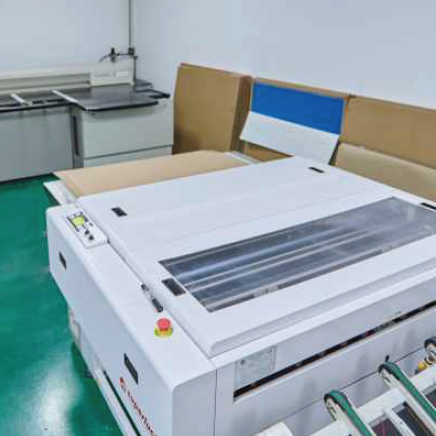
Step 1: Digital Artwork Proofing
After receiving the customer’s artwork file, our professional design and Quality Assurance team immediately conducts a detailed review.
During this stage, we carefully check:
Artwork dimensions and layout
CMYK and PANTONE color settings
Barcode clarity and readability
Font compatibility and missing elements
Printing position on the aerosol can template
Safety margins for rolling and seaming areas
Because aerosol cans are formed from printed tinplate sheets, some areas near the top and bottom must reserve production margins to avoid text or graphics being rolled into the seams during manufacturing.
If any issue is identified, our team communicates with the customer immediately to adjust and optimize the artwork before approval.
Normally, the digital proofing process can be completed within 2–3 working days.
Step 2: Color Range Board Approval
Color consistency is one of the most important requirements for branded aerosol packaging.
After digital artwork approval, SiHai produces physical Color Range Boards based on the actual tinplate printing process. These boards define the acceptable color tolerance range, including:
Light Limit
Dark Limit
Approved production color standard
This process is extremely important because the appearance of colors on tinplate can differ from digital screens due to metal reflection, varnish effects, and printing conditions.
By approving the Color Range Board before production, customers can clearly confirm the expected final printing effect and ensure all future production batches maintain stable color consistency.
Step 3: Pre-Production Sample (PPS)
Before official mass production begins, SiHai creates a Pre-Production Sample using the actual production line and manufacturing process.
This allows customers to review:
Final printing appearance
Color accuracy
Gloss or matte varnish effect
Seam positioning
Overall visual presentation
Compatibility with filling line requirements
The PPS serves as the final confirmation step before large-scale production proceeds.
For urgent orders, and only with customer approval, production may proceed based on approved color boards first, while the PPS is sent together with the first production batch for confirmation.
Why Customers Choose SiHai for Aerosol Tin Can Printing
With nearly 30 years of manufacturing experience, SiHai has built a complete production and quality management system for aerosol packaging.
Our advantages include:
Advanced Japanese Fuji printing equipment
CMYK + PANTONE printing capability
Professional tinplate coating solutions
Strict color control procedures
Experienced technical and QC teams
Fast communication during artwork confirmation
Stable mass production quality
We believe that excellent packaging starts with excellent communication. Every project is treated carefully to ensure the customer’s brand image is accurately reproduced on every aerosol can.
Partner with SiHai for Reliable Aerosol Packaging Solutions
At SiHai, we are committed to helping customers achieve both product safety and premium packaging appearance. Whether you require custom aerosol cans, printed tinplate, cones and domes, or complete aerosol packaging support, our team is ready to assist you professionally and efficiently.
If you are looking for a reliable aerosol tin can manufacturer in China, feel free to contact us for:
Artwork evaluation
Sample support
Printing consultation
Technical recommendations
Customized aerosol packaging solutions
.
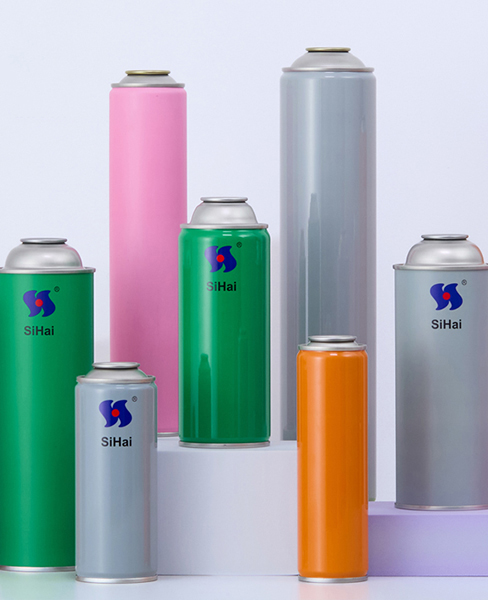
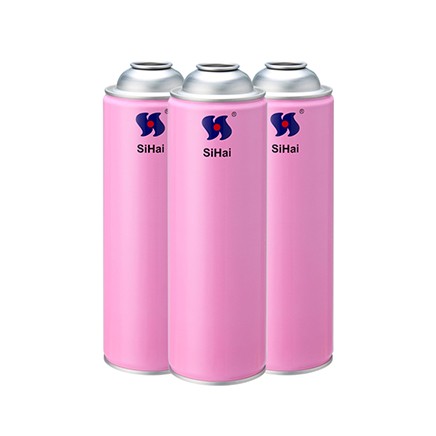
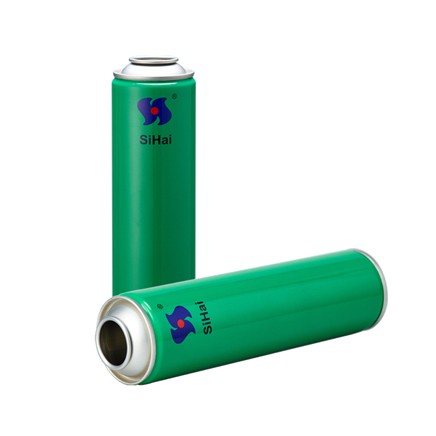
Empty aerosol tin cans are more than just containers—they’re the foundation of countless products, from paints and lubricants to cosmetics and household sprays. As a leading supplier, we understand that the right can make all the difference in performance, safety, and market appeal.Why Quality MattersA well-engineered aerosol tin ensures:· Perfect Seal: Prevents leaks and preserves propellant integrity.· Durability: Withstands internal pressure and handling.· Smooth Functionality: Consistent valve operation for reliable spray every time.· Customization: Ready for branding with prints and finishes that attract eyes on shelves.Versatile ApplicationsThese cans are indispensable across industries:· Automotive (degreasers, tire inflators)· DIY & Paints· Cosmetics (hairsprays, mousses)· Industrial & Cleaning products· Gardening & InsecticidesPartner with a Trusted SupplierChoosing the right supplier means securing:· Consistent quality and timely delivery· Compliance with international safety standards· Options for sizes, valves, and custom designs· Expert support from prototype to productionEmpty aerosol tins are your product’s first impression. Make it strong, safe, and sustainable.
Ready to package your next big idea? Contact us for premium empty aerosol tin solutions tailored to your needs.
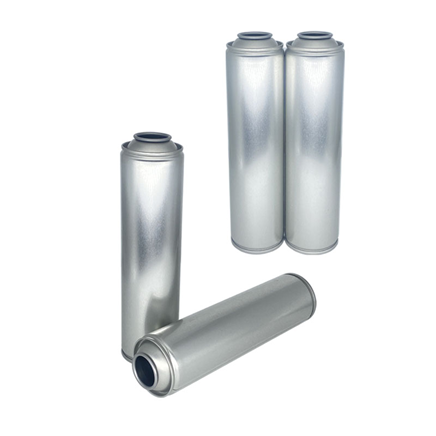
The three-piece tinplate aerosol can consists of a can body, a top cone, and dome. Its manufacturing process begins with cutting tinplate sheets into rectangular blanks. These blanks are then rolled into a cylindrical shape as can body, and the side seam is formed by soldering the two ends together longitudinally. Subsequently, the circular cone and dome are attached to the can body via a welding process to complete the can.
The production steps are as follows: Tinplate Cutting → Coating & Printing → Welding → Can Making → Leak Testing → Packing & Shipping.
Guangdong SIHAI is a specialized manufacturer of empty three-piece tinplate cans, committed to producing the world's safest aerosol cans with 27 years of experience. We operate 3 printing lines, 25 cone and dome pressing lines, and 9 can-making lines, achieving an annual production capacity of 300 million cans.
If you have any requirements for empty aerosol tin cans, please feel free to contact us. Welcome for your inquiry!
You hear that final, sputtering hiss. The paint is spent, the whipped cream is gone, or the last bit of air freshener has been released. You’re left holding an empty aerosol tin can. For most of us, the immediate next step is the trash can.But wait! That humble can has a whole new life waiting for it, provided we handle it with a little care and a lot of creativity.First things first, let's talk about the Golden Rule of Empty Aerosols: Safety First.It might be "empty" to us, but it often contains propellant residue and is technically considered pressurized waste. Never attempt to puncture, crush, or incinerate these cans. They can be dangerous if mishandled.So, before you get crafty, always ensure the can is completely empty and check your local recycling guidelines. In many places, empty aerosol cans are fully recyclable with other metal packaging. Just be sure to remove any plastic caps (which often recycle separately) and don't compact them in your recycling bin.Once you've got the safety and recycling green light, the fun begins! Here are some creative ways to upcycle these versatile little containers:1. The Miniature Storage MarvelsTheir sleek, cylindrical shape is perfect for organizing small items.· Artist's Dream: Store paintbrushes, pencils, pens, or even makeup brushes. A quick coat of spray paint on the outside can unify a mismatched set.· Workshop Hero: Keep nails, screws, bolts, and other small hardware sorted. You can even glue a magnet to the bottom to stick them to a tool board.· Kitchen Helper: Use them to hold kitchen utensils, chopsticks, or even as a unique vase for small, fresh herbs like rosemary or thyme.2. A Pop of Garden CharmWith proper preparation (a good cleaning and drilling a few drainage holes in the bottom), aerosol cans can become quirky additions to your garden.· Mini Planters: They are the perfect size for succulents, small cacti, or herbs. Their metallic look creates a cool, industrial-chic vibe.· Decorative Garden Markers: Paint the outside with chalkboard paint and write the name of your plants. Or, get artistic and paint the names directly onto the can.3. Unleash Your Inner ArtistThe can itself is a fantastic canvas or a component for larger art projects.· Sculptural Elements: Flatten them (if safe to do so without puncturing) and incorporate the metal into mixed-media artwork.· Wind Chimes: Clean, painted cans of different sizes can be hung together to create gentle, tinkling wind chimes.· Festive Lanterns: Carefully punch patterns into the sides of the can with a hammer and nail (while wearing safety glasses!). Place a battery-operated tea light inside for a beautiful, ambient glow.Why Bother?Every time we upcycle, we do a small favor for our planet. We reduce the demand for new raw materials, save energy, and keep waste out of landfills. That empty can of hairspray or paint isn't just trash; it's a potential resource, a tiny blank slate.So, the next time you go to toss one, pause for a moment. Listen to that final, empty hiss not as an end, but as an invitation to imagine something new.What will you create?---Remember:· Always ensure cans are completely empty.· Never puncture, crush, or burn them.· Check local regulations for recycling or disposal as hazardous waste.
· Clean cans thoroughly before any craft project.
Tinplate aerosol cans (3-piece tinplate cans) are classified as pressure packaging containers, so purchasing them requires strict attention to material quality, pressure resistance, welding stability, internal lacquer, valve compatibility, and transport safety.
Below are the essential points every buyer should check before placing an order.
Structure & Specifications
1. Confirm standard dimensions
Common diameters: 45/52/57/60/65/70 mmHeight: 100–300 mmMake sure size and structure meet local market requirements (EU/US/SEA).
2. Tinplate thickness
Typical thickness:
0.18 / 0.20 / 0.22 / 0.23 mm
Recommended:
Daily chemical products: 0.20–0.22 mm
Industrial/automotive chemicals: 0.22–0.23 mm
Pressure & Safety Standards
1. Request a full pressure test report
Reports must include:
Test
Standard Requirement
Leak/Pressure Resistance Test
≥ 12 bar (industrial products 15–18 bar)
Burst Test
≥ 18–22 bar
If a supplier cannot provide these tests, do NOT purchase.
2. Bottom dome quality
Check for:
Uniform deep drawing
No deformation or dents
No sharp edges or burrs
The can bottom supports most of the internal pressure.
Tinplate Material & Internal Lacquer
Correct internal lacquer
Internal coating must match chemical properties:
Product Type
Recommended Internal Lacquer
LPG (propane/butane)
Epoxy lacquer
Brake cleaner / Engine cleaner
Gold anti-corrosion lacquer
Insecticide
Food-grade epoxy
Strong solvents
Epoxy-phenolic lacquer
Cans without proper internal lacquer will corrode over time.
Welding Quality
High-frequency automatic welding is mandatory
Check:
Smooth welding line
Full coating on welding seam
No gaps or pinholes
Printing & Appearance
1. Color consistency & gloss quality
Check for:
Color uniformity
No oil marks, smudging, or misalignment
2. Surface defects
Reject cans with:
Scratches
Dents
Rim deformation
Any damage may affect pressure stability.
Valve & Actuator Compatibility
Even a high-quality can will fail if the valve is incompatible.
1.Valve size
Standard valve: 1-inch (25.4 mm)
2. Actuator selection
Must match the viscosity and application:
Product
Recommended Actuator
Spray paint
Fan-shaped nozzle
Foam
Foaming actuator
Lubricating oil
Straw/extension tube actuator
Supplier Capability & Quality Control
1. Manufacturing automation level
Prefer factories with:
Automatic welding
Automatic leak testing
Vision inspection systems
Automatic seaming & necking
Higher automation = more stable quality.
Top 5 Critical Points You MUST Confirm
To avoid 90% of quality issues:
Pressure test results (Leak & Burst Test)
Tinplate thickness + internal lacquer suitability
Weld seam quality and coating coverage
Valve and actuator compatibility
Printing durability (Rub Test)
If these five areas pass, the product is generally safe and reliable.
The 3-pc aerosol tin can is compised by can body, cone and dome, and customers need to make customized deign on the can body. When the aerosol tin can products on the shelf at market, the printing will be the "first impression" for the products, so the printing is important for aerosol tin can, it's a "brand card" that speaks for itself.
Whether the colors are vibrant and full, the patterns are precise and clear, and the text is sharp and error-free all directly influence consumers' purchasing decisions. More importantly, high-quality ink and printing techniques must ensure safety, and strong adhesion, remaining resistant to wear or detachment during transportation, filling, storage, and other processes.
Guangdong Sihai Iron-Printing and Tin-Making Co., Ltd (Sihai for short below) is a professional factory for empty aerosol tin can, with over 27 years experience for printing and can-making, we focus on supply high quality printing and safe products to customers all over the world. We have diameter 45/52/57/60/65/70mm, annual production capacity over 350 million pieces cans.
Welcome to contact us for more details.
The aerosol cans are a crucial component of aerosol products and serve as pressure-resistant containers. Due to the convenience, speed, and ease of storage offered by aerosol packaging, an increasing number of products are adopting this packaging method. Aerosol cans are widely used across various sectors, including food, industry, daily necessities, cosmetics, pharmaceuticals, and automotive care, etc.
Selecting the appropriate aerosol can requires consideration of the product's specific characteristics, such as: material (steel or aluminum), capacity (how many milliliters to fill), the type of gas to be filled, and whether the solution is corrosive to the can. These are all factors that should be taken into account.
As a criticalpackaging container of Aerosol products, aerosol cans must possess pressure resistance to ensure safety. Since they often contain chemical products, corrosion resistance is also essential. Additionally, the can body must be compatible with gas valves and plastic caps, requiring precise fitment. The can's appearance directly represents the product on store shelves, demanding high-quality, refined design and printing.
As an aerosol can manufacturer, Guangdong Sihai possesses 27 years of specialized experience in producing empty aerosol tin cans andaerosolcans components, consistently dedicated to manufacturing safe and high-quality empty aerosol tin cans.
If you have any requirements regarding empty aerosol cans or can components, please feel free to contact us. Welcome for more inquiry!
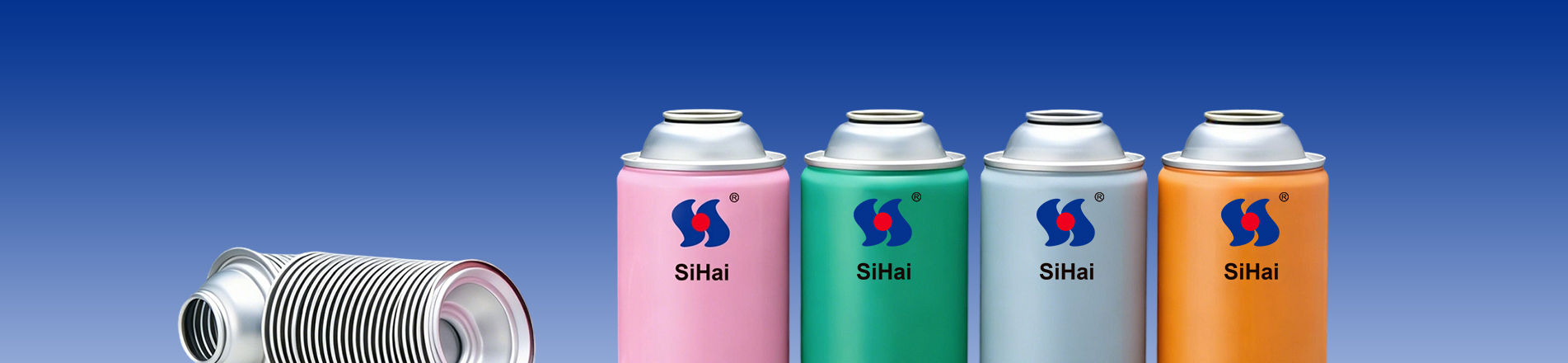
At SiHai, we understand that for a custom aerosol tin can, a flawless final product begins with an uncompromising attention to detail. The art of printing tinplate requires precision, and artwork proofing is the critical step that ensures your design is reproduced perfectly on every single can. We believe that superior quality is born from rigorous pre-production communication. That's why we collaborate closely with you to ensure every detail is perfect before your project moves into full-scale manufacturing.
Our comprehensive proofing process is designed to safeguard your brand's vision and ensure the highest quality in tinplate printing. It consists of three core steps of verification.
Step 1: Digital Artwork Proofing
Upon receiving your digital artwork file, our Quality Assurance Lab conducts an initial review. We meticulously analyze the design for the unique considerations of printing tinplate, checking for potential issues in content, color reproduction, and positioning on the aerosol tin can template. We resolve any needed adjustments with you upfront. The final digital proof is then sent for your approval, a process that typically takes just 2-3 business days.
Step 2: Color Range Board Approval for Tinplate
Following digital approval, we create physical Color Range Boards specific to the printing tinplate process. These boards are essential for defining the approved color tolerance limits—the Light Limit and Dark Limit—for your aerosol tin can. All mass production will be strictly matched to this standard, ensuring vibrant, consistent color that stays within the agreed-upon limits across every production batch.
Step 3: Pre-Production Sample (PPS) – The Final Check
Before mass production begins, we create a Pre-Production Sample (PPS) using the actual manufacturing line. This provides a true-to-life representation of your final aerosol tin can, allowing for a final confirmation that the printing tinplate result meets your exact expectations. For urgent orders, and only with your permission, we may proceed based on approved color boards, with the PPS sent alongside the first batch for your confirmation.
3-piece tinplate aerosol can is a sealed container composed of three independent metal components: the can body, the top and the bottom, which are combined through processes such as welding and crimping.
Parallel development of traditional and emerging fields
The food, pharmaceutical, and daily chemical industries remain core application scenarios, while new categories such as e-cigarettes have become growth highlights. Environmental policies are promoting the substitution of metal aerosol cans for plastic and glass packaging, especially in personal care and cosmetics.
Technological upgrading and green transformation
Optimization of production processes: Enterprises are accelerating the introduction of automated production lines and green technologies (such as energy-saving welding processes) to enhance product quality and production efficiency and reduce carbon emissions.
Material sustainability
The recyclability of tinplate aligns with the trend of a circular economy, and environmental policies are driving industry standardization and the improvement of recycling systems.
Guangdong Sihai Iron-Printing and Tin-Printing Co., Ltd ("Guangdong Sihai" for short below) is a professional empty aerosol tin can factory over 27 years. We have diameter 45/52/57/60/65/70mm, height from 90-300mm.
Our hot sale products are diameter 52mm & 65mm, for diameter 52mm, we can make height 100-240mm. Popular products including deodorant spray can (52x100mm), snow spray can (52x128mm), air freshener can (52x195mm), hair spray (52x240mm).
Guangdong Sihai was founded in 1998, located in the beautiful tourist city of Zengcheng, Guangzhou. Our company covers an area of 38,000 square meters and our main business is tinplate trading, coil cutting, coating, printing and tin-making. We have 9 aerosol can production lines with SOUDRONIC welding machines from Switzerland, annual production capacity over 350 million pieces cans.
Welcome to contact us for more sizes and details for empty aerosol tin can.
Yarlung Tsangpo River hydropower project as a major national infrastructure projects, if the full start, may indeed have a phased impact on the steel industryThe main material of empty aerosol tin can is tinplate, now the price of tinplate will be increased, we have to adjust the price of our cans.
Please let us know if you have any plan, we can prepare the material in advance.
Guangdong Sihai Iron-Printing & Tin-Making Co., Ltd. was founded in 1998, located in the beautiful tourist city of Zengcheng, Guangzhou. Our company covers an area of 38,000 square meters and our main business is tinplate trading, coil cutting, coating, printing and tin-making.
Yarlung Tsangpo River hydropower project as a major national infrastructure projects, if the full start, may indeed have a phased impact on the steel industry.The main material of empty aerosol tin can is tinplate, now the price of tinplate will be increased, we have to adjust the price of our cans.Please let us know if you have any plan, we can prepare the material in advance.
Guangdong Sihai Iron-Printing and Tin-Making Co.,Ltd. was founded in 1998, located in the beautiful tourist city of Zengcheng, Guangzhou. Our company covers an area of 38,000 square meters and our main business is tinplate trading, coil cutting, coating, printing and tin-making.
.jpg)
.jpg)
.jpg)
.jpg)
.jpg)
.jpg)

 en
en ru
ru es
es pt
pt zh-CN
zh-CN