Litchi is the famous fruit in Zengcheng District. Every year when litchi is ripe, Sihai will invite our customers to our factory to have a taste the delicious litchi and exchange aerosol development. After meeting, customers will go to garden to pick litchi.
Guangdong Sihai Iron-Printing and Tin-Making Co.,Ltd. was founded in 1998, located in the beautiful tourist city of Zengcheng, Guangzhou. Our company covers an area of 38,000 square meters and our main business is tinplate trading, coil cutting, coating, printing and tin-making.
Why Choose Us
27 years experienced in aerosol industry
In aerosol can factory, 6 sizes with various pressure need can be specific customized based on your requirements!
Even we can customize can tops to make your cans specific.
Here you will get one stop service for your order!
All process of aerosol production are made by ourselves.
No matter you place the sample order or mass order, your actual can pictures will always be sent for approval before shipping out!
Any problems regarding the production process will be kept updated to you timely.
Most important, any damage or loss caused by our side, we will be responsible to solve the problem to satisfy you!
Do you needempty aerosol tin can with DOT (Department of Transportation, mainly for USA market) standard? Guangdong Sihai Iron-Printing and Tin-Making Co. Ltd (below "Sihai" for short) can help you.
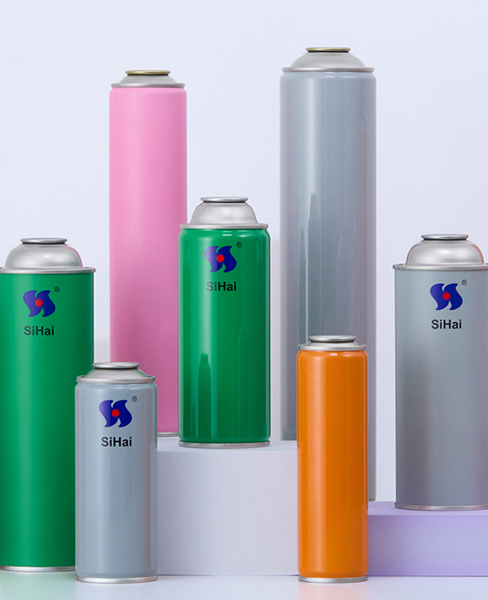
Sihai manufacture diameter 45/52/57/65/70mm, height from 90-300mm, our registration number is M6622.
What is the can pressure for DOT standard?
2N: ≥1.00~1.45Mpa
2P:≥1.10~1.65Mpa
2Q:≥1.24~1.86Mpa
For different pressure standards, we use different thicknesses of tinplate for can body, cone and dome to reach the pressure.
We have more than 27 years of experience in the industry, with advanced iron shearing, printing, stamping and can making technology, annual iron shearing capacity of more than 20,000 tons, annual production of top and bottom lids of more than 550 million pieces, annual production of aerosol cans of 380 million pieces.
We also can sell aerosol can lids and tinplate sheet separately, and we accept customized printing for can body, cone and dome. Welcome to send more details for your request to us.
Aerosol cans are single-use metal containers for aerosol products. When in use, the aerosol product is ejected from the can under pre-pressurization through a valve in a controlled form. Guangdong Sihai is a professional manufacturer of empty tinplate aerosol cans with 27 years of experience. The main products that use aerosol cans are: air fresheners, car care products, spray paints, insecticides and so on.The capacity of Tinplate aerosol cans is usually between 100 ml to 1000 ml. Below are the common sizes of some products: Air Fresheners: Diameter 52x195mm 300ml/350ml necked-in cans Insecticides: Diameter 52x190mm 300ml/350ml and Diameter 57x216mm 400ml/450ml necked-in cans Deodorants: Diameter 45/52mm necked-in cans Shaving Foam Products: Diameter 65x158mm 400ml and Diameter 52x160mm 300ml necked-in cans Spray Paint Products: Diameter 65x158mm 400ml/450ml necked-in cans Cassette Oven Products: Diameter 65x159mm 220g/250g straight-wall cans Snow spray/colorful ribbon products: Diameter 45/52mm necked-in cans Hair spray products: Diameter 52*220/230/240mm necked-in cans Car care/Rust remover/Anti-rust agent products: Diameter 65mm necked-in cans
The specific capacity can be considered according to the amount of products used, the convenience of carrying and storage space and other factors. If you have any interest in the empty aerosol tin cans, please feel free to contact us!
We always prioritize both quality and safety in aerosol packaging. Aerosol cans are widely used in industries for products such as paints, lubricants, cleaners, adhesives, and personal care items. While convenient, they require proper handling to prevent accidents.
Potential Hazards of Aerosol Cans
Aerosol cans contain compressed gas propellants, making them potentially hazardous if misused. Key risks include:
Fire & Explosion – Flammable contents (like solvents or propellants) can ignite if exposed to heat, sparks, or open flames. When atomized, these substances become highly combustible.
Pressure-Related Injuries – If punctured, crushed, or overheated, aerosol cans may rupture violently, causing injuries from flying debris or chemical exposure.
Toxic Exposure – Some aerosols contain harmful chemicals that can cause respiratory issues or skin irritation if inhaled or sprayed directly on the body.
Environmental & Disposal Risks – Improper disposal (e.g., in landfills or incinerators) can lead to leaks, pollution, or compaction hazards.
Best Practices for Safe Aerosol Can Use
To minimize risks, follow these safety guidelines:
1. Proper Storage
Store aerosol cans in a cool, dry, well-ventilated area, away from direct sunlight, heat sources, and open flames.
Keep them upright to prevent leaks or accidental discharge.
Avoid stacking too high to prevent tipping or crushing.
2. Safe Handling & Usage
Do not puncture, crush, or incinerate aerosol cans—even empty ones may retain pressure.
Use in well-ventilated areas to avoid inhaling fumes.
Wear protective gear (gloves, goggles, masks) when handling hazardous aerosols.
Never spray toward the face, skin, or ignition sources.
3. Disposal & Recycling
Follow local regulations for aerosol can disposal.
Empty Tinplate cans can often be recycled with metals—check with your waste management provider.
Never dispose of aerosol cans in regular trash if they still contain product.
Rust is the nemesis of metal surfaces, causing unsightly stains and weakening structures over time. Whether it's your car, tools, or household items, rust can be a persistent problem. Fortunately, rust remover aerosol cans offer a convenient and effective solution. In this blog, we’ll explore the benefits, uses, and tips for getting the most out of your rust remover aerosol can.
What is a Rust Remover Aerosol Can?
A rust remover aerosol can is a pressurized container filled with a specialized chemical solution designed to dissolve and remove rust from metal surfaces. The aerosol format allows for easy application, ensuring the product reaches even the most hard-to-access areas. It’s a must-have for DIY enthusiasts, mechanics, and homeowners alike.
Why Choose an Aerosol Can?
1. Convenience: The spray nozzle ensures even coverage and precise application.
2. Portability: Compact and easy to carry, making it ideal for on-the-go repairs.
3. Efficiency: The formula penetrates rust quickly, saving time and effort.
4. Versatility: Works on a wide range of surfaces, from car parts to garden tools.
How to Use a Rust Remover Aerosol Can?
1. Prepare the Surface: Clean the area to remove dirt and grease. Shake the can well before use.
2. Spray Evenly: Hold the can 6-8 inches away from the surface and apply a generous layer of the rust remover.
3. Wait: Allow the formula to penetrate the rust. This usually takes 10-15 minutes, depending on the severity of the rust.
4. Scrub or Wipe: Use a brush or cloth to remove the loosened rust. For stubborn rust, repeat the process.
5. Rinse and Dry: Rinse the surface with water and dry thoroughly to prevent future rusting.
Tips for Best Results
Safety First: Wear gloves and goggles to protect your skin and eyes from the chemicals.
Ventilation: Use the product in a well-ventilated area to avoid inhaling fumes.
Test First: Apply a small amount to an inconspicuous area to ensure compatibility with the material.
Preventive Maintenance: After removing rust, consider applying a protective coating to prevent future corrosion.
Applications of Rust Remover Aerosol Cans
Automotive: Restore car parts like brake rotors, exhaust systems, and chassis.
Household: Revive metal furniture, railings, and appliances.
Tools and Equipment: Keep your tools rust-free for optimal performance.
Outdoor Gear: Maintain bicycles, grills, and garden tools.
Tinplate, is a tin layer covered in the surface of the sheet, It is a material combining the strength and formability of steel with the corrosion resistance, soldering and aesthetic appearance of tin. Due to the excellent corrosion resistance and anti-corrosion performance, it is widely used in the aerosol can industry.
Our company Guangdong Sihai Iron-Printing and Tin-Making Co.,Ltd. is a professional factory with 27 years experience, focusing on aerosol top & bottom, printing tinplate, aerosol can of diameter 45/52/57/60/65/70mm. We hope to establish deep partnership with you, please feel free to contact us.
An aerosol can is a self-contained dispensing system that stores and releases products in a fine mist,spray, or foam. These cans are widely used for everything from household cleaners and personal care products to industrial lubricants and medical treatments. But how do they work?
The Five Key Elements of an Aerosol Can
1. Active Ingredient– This is the primary substance being dispensed, such as insecticide, paint, deodorant, or even antibiotics in medical inhalers.
2. Solvent – A liquid that keeps the active ingredient at the right consistency, ensuring smooth application. Without it, some products might separate or clog the nozzle.
3. Propellant – A pressurized gas (like butane, propane, or nitrogen) that forces the active ingredient out of the can when the valve is opened.
4. Container – A sturdy, leak-proof canister (usually made of steel or aluminum) that protects the contents from contamination, evaporation, and external pressure changes.
5. Valve – A spring-loaded mechanism (often activated by a button or nozzle) that controls the release of the product. When pressed, it opens to let the propellant push the mixture out.
How Aerosol Cans Work
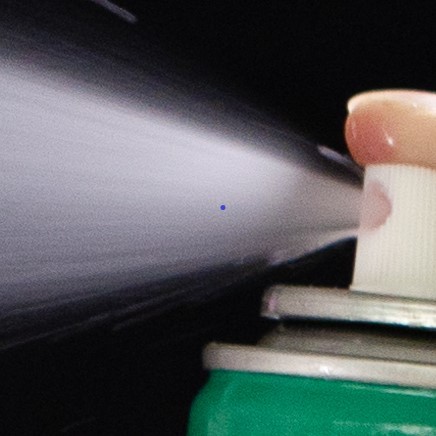
When you press the valve button, the propellant—which is stored under high pressure—forces the active ingredient and solvent out through the nozzle. The design of the nozzle determines whether the product comes out as a fine mist, a steady stream, or a foam.
- Solvent’s Role – The solvent ensures even distribution. For example, in spray paint, it prevents clumping, while in asthma inhalers, it helps deliver medication as a fine, breathable mist.
- Shaking Before Use– Many aerosols require shaking to remix ingredients that may have settled (like paint pigments or sunscreen agents). This ensures the propellant can effectively push out a consistent mixture.
Safety & Environmental Considerations
- Pressurization Risks –Aerosol cans can explode if punctured or exposed to high heat due to the compressed gas inside.
- Environmental Impact – Traditional propellants like chlorofluorocarbons (CFCs) were phased out for harming the ozone layer. Modern aerosols use safer alternatives like hydrocarbons or compressed air.
- Recycling –Empty aerosol cans are often recyclable, but must be completely empty to avoid pressure hazards in recycling facilities.
Aerosol technology continues to evolve, offering precise, convenient, and efficient ways to deliver a wide range of products—making them a staple in homes, industries, and healthcare.
Season's greetings! We wanted to take a moment to send you warm wishes for a delightful Christmas and a prosperous New Year. We are grateful for the trust you have placed in us. May this holiday season bring you joy, happiness, and new opportunities. Thank you for your ongoing partnership. Merry Christmas!
-----------------------------------------------------------------------------------------------------------------------------
The "Snow Aerosol Tin Can" ,which is an essential festive item commonly used during Christmas celebrations.
Our snowflake aerosol tin cans come in different sizes, with the 45mm or 52mm neck cans being the most popular.
-Snow spray is great for any celebration and occasion, such as Christmas, Weddings, birthdays, and surprise parties.
The use of aerosol cans is very extensive, mainly including the following aspects:
Medical industry: aerosol cans are widely used in the medical industry to store and transport medical aerosols, such as inhaled aerosol and aerosol, and medical oxygen. The materials used to make storage cans must comply with hygiene standards to ensure the safety and effectiveness of drugs.
Paper industry: In the paper industry, aerosol cans are used to store chemicals that need to be added during pulp production. These drugs usually exist in gaseous or liquid form, and are stored in aerosol cans to ensure the quality and effectiveness of the drugs, as well as facilitate pipeline transportation.
Industrial field: Aerosol cans are widely used in industrial fields, such as photovoltaic crystalline silicon, semiconductor manufacturing, heavy industry manufacturing, etc., to ensure the safety and efficiency of industrial productionLaboratory: In the laboratory, aerosol cans are used to store liquefied gases and other unstable gases, facilitating the operation of experiments and ensuring their safety.
Other applications: Aerosol cans are also used to store various chemical solvents and cleaning agents, such as isopropanol (IPA), and are widely used for cleaning work in electronic assembly and repair processes. In addition, aerosol canning machines are widely used in industrial, chemical, daily chemical, pharmaceutical and other industries, mainly for self painting, insecticides, cleaning agents and other products.
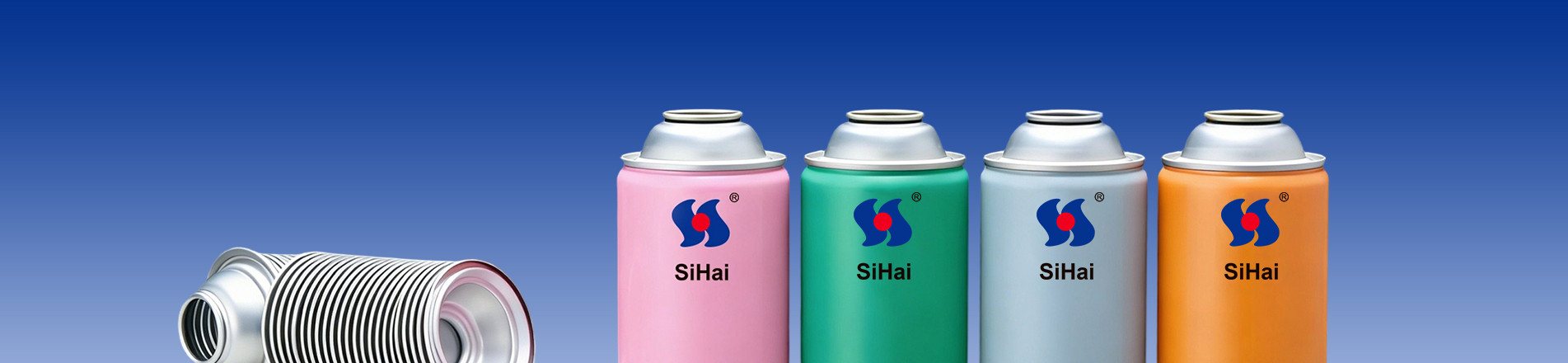
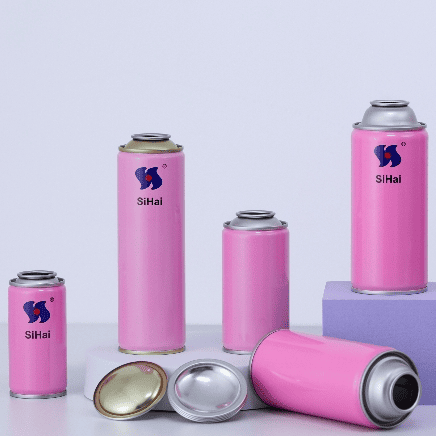
Guangdong Sihai not only sells the empty aerosol tin cans, we also sell other aerosol components, such as the Cone and Domes, Valves and Actuators, Caps, Printed Tinplate Sheets, etc.
Cans Cone and Domes Butane Gas Valve And Cap Printed Tinplate Sheets
So how can you quickly get a quote for these components?When you make an inquiry, you may inform us of the following information:For the Cone and Domes: 1. What size aerosol cans it be used for.
2.The thickness you require. 3.The Pressure Standard you need. 4.Your Printing Requirements 5.The quantity you need.
For the Printed Tinplate Sheets:1.The tinplate thickness you require. 2.The size of Tinplate sheets or What size aerosol cans it be used for. 3.Your Printing Requirements. 4.The quantity you need.
For the Valves and Actuators and Caps:1. Used for what products, spray paint, snow spray, butane gas or others. 2.The length of Dip Tube you need. 3. Some clear product pictures or videos. 4.The quantity you need.
If you have not ordered similar products before, we can provide some samples for you to test before the official order. After confirming all the details, we will proceed with formal cooperation.
The reason why straight-wall cans are more suitable for butane gas products is mainly due to their structure and design. Straight-wall cans typically have a more stable and uniform wall thickness, which allows them to perform better when subjected to internal pressure. In addition, the design of straight-wall cans makes them easier to maintain stability during filling and use, reducing the risk of leakage and explosion.
Secondly, the manufacturing process of straight-wall cans is relatively simple and cost-effective, which makes them more advantageous in large-scale production. Meanwhile, the shape of straight-wall cans also makes them more convenient and space saving during transportation and storage.
Finally, the material of straight-wall cans usually has high strength and corrosion resistance, which makes them more durable during use and extends the product's lifespan. Therefore, straight-wall cans are considered more suitable for use in butane gas products.
Deformation pressure testing refers to the test of the cans can withstand a certain pressure deformation without cracking. During the use of the aerosol cans, it may be affected by external forces, such as collision, extrusion, etc. At this time, if the structure of the aerosol cans cannot withstand a certain deformation pressure, it will be deformed or ruptured, resulting in safety accidents.
Burst pressure testing refers to the limit value of the maximum pressure it can withstand. During the use of the aerosol cans, due to the change of pressure and the influence of the environment, its internal pressure may suddenly rise, resulting in serious accidents such as explosions. Therefore, it is necessary to conduct a burst pressure testing to ensure its safety performance within the normal use pressure range when making the cans.







 en
 ru
 es
 pt
 zh-CN